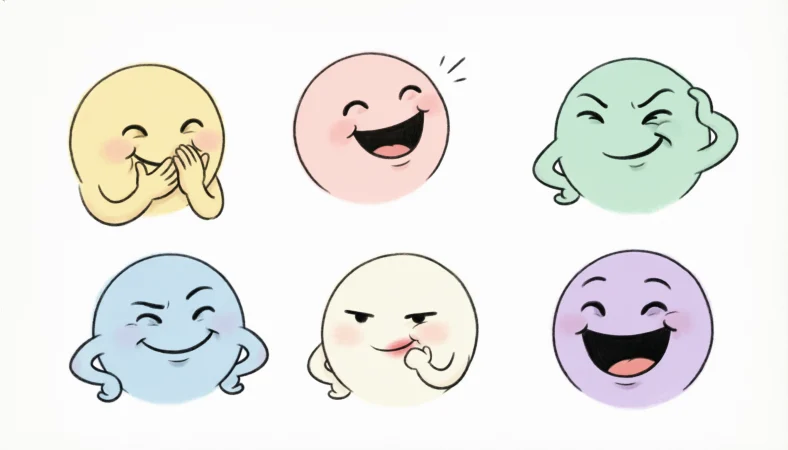
When someone is giggly, they laugh easily, often in a light, playful, or slightly silly way.
The word is commonly used to describe a person who keeps laughing or feels amused by small things.
For example, you might say, “She was feeling giggly after hearing the funny story.”
Learning giggly synonyms can help students, ESL learners, writers, and content creators express laughter and happiness more precisely.
While many words are related to laughing, they do not all have exactly the same meaning or emotional tone.
Some synonyms suggest gentle amusement, while others describe loud laughter, playful behavior, nervousness, or uncontrollable laughter. Understanding these differences allows you to choose the word that best matches your situation.
What Does “Giggly” Mean?
Simple meaning of giggly
Giggly is an adjective that describes someone who laughs frequently, especially in a light, playful, silly, or uncontrolled way.
Example:
“She became giggly when her friends started telling jokes.”
The word often has a friendly and informal feeling. It is especially common when describing children, friends, teenagers, or people who are in a playful mood.
Tone and usage of giggly
“Giggly” usually has a positive, playful, or humorous tone. However, depending on the situation, it can sometimes suggest that someone is being immature, nervous, or unable to stop laughing.
For example:
- Positive: “The children were giggly during the party.”
- Playful: “We were feeling giggly after the movie.”
- Slightly critical: “The students became too giggly during the lesson.”
Because “giggly” is informal, it works well in conversations, personal writing, blogs, stories, and casual descriptions.
30 Giggly Synonyms
Below are 30 useful alternatives to “giggly.” Each word has a slightly different meaning, so check the usage context before replacing one word with another.
1. Amused
Meaning: Feeling entertained or finding something funny.
Example sentence:
“Maria looked amused by her brother’s silly joke.”
Best usage context: Use “amused” when someone finds something funny but is not necessarily laughing a lot.
2. Cheerful
Meaning: Happy, positive, and in a good mood.
Example sentence:
“Tom was cheerful throughout the entire afternoon.”
Best usage context: Best for describing a generally happy mood rather than frequent laughter.
3. Playful
Meaning: Fun-loving, lighthearted, and ready to joke or have fun.
Example sentence:
“Her playful personality made everyone smile.”
Best usage context: Use it when the person’s behavior is fun and energetic.
4. Jovial
Meaning: Very cheerful, friendly, and happy.
Example sentence:
“The jovial host welcomed everyone with a big smile.”
Best usage context: Good for describing a warm, cheerful person, especially in formal or literary writing.
5. Mirthful
Meaning: Full of happiness, amusement, or laughter.
Example sentence:
“The room was filled with mirthful laughter.”
Best usage context: Useful in creative, literary, or descriptive writing.
6. Merry
Meaning: Happy, lively, and full of good humor.
Example sentence:
“The merry group sang songs around the table.”
Best usage context: Works well in festive, cheerful, or traditional contexts.
7. Lighthearted
Meaning: Relaxed, cheerful, and free from serious worry.
Example sentence:
“They enjoyed a lighthearted conversation over coffee.”
Best usage context: Excellent when you want to emphasize a relaxed and carefree mood.
8. Laughing
Meaning: Making the sound or action of laughter.
Example sentence:
“The laughing children ran across the playground.”
Best usage context: A direct and simple choice when someone is actually laughing.
9. Chuckling
Meaning: Laughing quietly or softly.
Example sentence:
“He was chuckling at the funny comment.”
Best usage context: Use it for quiet, controlled laughter.
10. Chortling
Meaning: Laughing with pleasure, often in a hearty or expressive way.
Example sentence:
“Grandfather was chortling at the old family story.”
Best usage context: Often used in humorous or informal writing.
11. Snickering
Meaning: Laughing quietly, often because something is silly, embarrassing, or inappropriate.
Example sentence:
“The students were snickering at the joke.”
Best usage context: Use carefully because it can suggest childish, secretive, or slightly disrespectful laughter.
12. Tittering
Meaning: Laughing quietly or nervously.
Example sentence:
“She responded with a nervous titter.”
Best usage context: Useful when laughter is restrained, awkward, or nervous.
13. Smiling
Meaning: Showing happiness or amusement with a smile.
Example sentence:
“He was smiling while listening to the story.”
Best usage context: Use when the person is happy but may not actually be laughing.
14. Grinning
Meaning: Smiling broadly because of happiness, amusement, or excitement.
Example sentence:
“She was grinning after receiving the good news.”
Best usage context: Best when describing a wide or obvious smile rather than laughter.
15. Gleeful
Meaning: Extremely happy and excited, often in a playful way.
Example sentence:
“The children gave gleeful cheers when the game began.”
Best usage context: Great for strong, playful happiness.
16. Delighted
Meaning: Very pleased or happy about something.
Example sentence:
“Emma was delighted by the surprise.”
Best usage context: Use when someone is very pleased, not necessarily laughing.
17. Buoyant
Meaning: Cheerful, confident, and emotionally positive.
Example sentence:
“Despite the difficult week, he remained buoyant.”
Best usage context: Better for describing an optimistic emotional state.
18. Vivacious
Meaning: Lively, energetic, and full of life.
Example sentence:
“The vivacious speaker quickly captured the audience’s attention.”
Best usage context: Suitable for describing energetic and lively personalities.
19. Bubbly
Meaning: Very cheerful, friendly, and energetic.
Example sentence:
“She has a bubbly personality that makes people feel welcome.”
Best usage context: Common in casual descriptions of friendly and enthusiastic people.
20. Carefree
Meaning: Free from worry or serious concerns.
Example sentence:
“They spent a carefree afternoon at the beach.”
Best usage context: Use when happiness comes from feeling relaxed and without worries.
21. Silly
Meaning: Funny, playful, or lacking seriousness.
Example sentence:
“The friends were being silly during the photo session.”
Best usage context: Excellent for playful behavior, especially when someone is acting in a funny way.
22. Waggish
Meaning: Playfully humorous or fond of making jokes.
Example sentence:
“His waggish comments kept the conversation entertaining.”
Best usage context: More literary or advanced; useful for describing a person with a playful sense of humor.
23. Hilarious
Meaning: Extremely funny.
Example sentence:
“The comedian’s story was hilarious.”
Best usage context: Describes something that causes strong amusement rather than directly describing a person’s mood.
24. Humorous
Meaning: Funny or likely to make people laugh.
Example sentence:
“She wrote a humorous article about everyday life.”
Best usage context: Useful for writing, speech, stories, comments, and situations involving humor.
25. Amusing
Meaning: Funny or entertaining in a pleasant way.
Example sentence:
“He shared an amusing story about his first day at college.”
Best usage context: A flexible choice for things, stories, situations, or comments that make people smile or laugh.
26. Comical
Meaning: Funny in an unusual, silly, or entertaining way.
Example sentence:
“The actor’s comical expression made the audience laugh.”
Best usage context: Good for funny situations, appearances, actions, and performances.
27. Buoyant-spirited
Meaning: Cheerful and emotionally lively.
Example sentence:
“Her buoyant-spirited attitude helped the team stay positive.”
Best usage context: More descriptive than conversational; useful in creative or formal writing.
28. Exuberant
Meaning: Showing a lot of energy, excitement, and happiness.
Example sentence:
“The children gave an exuberant response to the announcement.”
Best usage context: Use when happiness is energetic, enthusiastic, and highly expressive.
29. High-spirited
Meaning: Energetic, lively, and cheerful.
Example sentence:
“The high-spirited children played outside all morning.”
Best usage context: Great for describing lively people, especially children or groups.
30. Merry-hearted
Meaning: Happy, cheerful, and full of good humor.
Example sentence:
“The merry-hearted friends enjoyed every moment of the celebration.”
Best usage context: Mostly literary or creative; useful when you want a warm, expressive description.
Giggly Synonyms Comparison Guide
Not every synonym for “giggly” can be used in exactly the same situation. The best word depends on whether you want to describe laughter, happiness, playfulness, nervousness, or energy.
| Word | Main idea | Tone | Best for |
|---|---|---|---|
| Giggly | Frequent light laughter | Informal/playful | Casual descriptions |
| Amused | Finds something funny | Neutral | Reactions |
| Playful | Fun and teasing | Positive | Personality/behavior |
| Cheerful | Generally happy | Positive | Mood |
| Jovial | Warm and very cheerful | Positive/formal | People |
| Lighthearted | Relaxed and carefree | Positive | Conversations/moods |
| Chuckling | Quiet laughter | Neutral | Gentle laughter |
| Snickering | Quiet, often childish laughter | Slightly negative | Secretive laughter |
| Tittering | Nervous or restrained laughter | Neutral/negative | Awkward situations |
| Gleeful | Very happy and excited | Strongly positive | Children/excitement |
| Bubbly | Energetic and friendly | Positive | Personality |
| Vivacious | Lively and energetic | Positive | Personality |
| Silly | Playfully foolish | Informal | Friends/children |
| Exuberant | Highly energetic and joyful | Strong | Excitement |
| High-spirited | Lively and energetic | Positive | People/groups |
How to Choose the Right Synonym
For gentle laughter
Choose chuckling, amused, or mirthful when the person is enjoying something without loud or uncontrolled laughter.
Example:
“He was chuckling at the humorous story.”
For playful behavior
Choose playful, silly, waggish, or high-spirited when someone is joking, teasing, or behaving in a fun way.
Example:
“The playful children kept making each other laugh.”
For general happiness
Choose cheerful, merry, delighted, carefree, or lighthearted when the main idea is happiness rather than laughter.
Example:
“She was cheerful after receiving the good news.”
For energetic happiness
Choose exuberant, gleeful, vivacious, bubbly, or buoyant when someone shows strong energy and enthusiasm.
Example:
“The exuberant crowd celebrated the team’s victory.”
For nervous laughter
Choose tittering when laughter comes from nervousness, awkwardness, or embarrassment.
Example:
“She gave a nervous titter before answering the question.”
For slightly negative laughter
Choose snickering when people laugh quietly in a way that may seem childish, disrespectful, or secretive.
Example:
“The students were snickering while the teacher was speaking.”
Giggly vs. Similar Words
Giggly vs. cheerful
Giggly focuses more on frequent laughter or playful amusement.
Cheerful describes a generally happy and positive mood.
- “She was giggly during the party.” → She laughed a lot.
- “She was cheerful during the party.” → She was generally happy.
Giggly vs. playful
Giggly mainly describes laughter.
Playful describes behavior that is fun, joking, or teasing.
Someone can be playful without laughing.
Giggly vs. amused
Amused means finding something entertaining or funny.
Giggly suggests that the amusement is causing repeated or noticeable laughter.
Giggly vs. silly
Silly describes behavior that is funny, foolish, or not serious.
Giggly specifically focuses more on laughing.
Giggly vs. bubbly
Bubbly usually describes someone’s personality as cheerful, friendly, and energetic.
Giggly describes a temporary or noticeable tendency to laugh.
Why Learning Giggly Synonyms Matters
Better vocabulary
Knowing several alternatives prevents you from repeating the same word. Instead of using “giggly” every time, you can choose a word that expresses the exact feeling.
More accurate writing
Writers need precise vocabulary. “Snickering,” “chuckling,” and “tittering” all describe laughter, but each creates a different image in the reader’s mind.
Stronger ESL skills
For English learners, synonyms provide a useful way to understand tone and context. Learning words in groups makes it easier to recognize them when reading and use them naturally when speaking.
More engaging content
Content creators can use varied vocabulary to make descriptions, stories, captions, and articles more interesting.
Tips for Using Giggly Synonyms Naturally
Think about the emotion first
Ask yourself what the person is actually feeling.
Are they:
- Happy?
- Amused?
- Nervous?
- Playful?
- Excited?
- Relaxed?
- Laughing quietly?
The answer will help you select the right synonym.
Consider the level of laughter
If someone is laughing softly, chuckling may work better.
If they are laughing because they feel nervous, tittering may be more accurate.
If they are simply happy and energetic, bubbly or exuberant may be better.
Match the word to your audience
For everyday English, simple words such as happy, playful, cheerful, amused, and silly are easy and natural.
For creative or advanced writing, words such as mirthful, jovial, waggish, vivacious, and exuberant can add variety.
Do not treat every synonym as interchangeable
A synonym can have a similar meaning without having the exact same use.
For example, “hilarious” normally describes something extremely funny, while “giggly” describes a person who laughs easily. Replacing one with the other can change the meaning of the sentence.
Frequently Asked Questions About Giggly Synonyms
What is the closest synonym for giggly?
Some of the closest alternatives are playful, amused, laughing, merry, and mirthful. The best choice depends on whether you want to emphasize laughter, happiness, or playfulness.
What is a positive synonym for giggly?
Playful, cheerful, bubbly, gleeful, merry, and lighthearted can all express positive feelings related to being giggly.
What is a synonym for giggly laughter?
Depending on the type of laughter, you can use chuckling, tittering, snickering, or simply laughing.
Is “happy” a synonym for giggly?
Not exactly. “Happy” describes a positive emotional state, while “giggly” usually suggests frequent or playful laughter. A person can be happy without being giggly.
Is “playful” the same as “giggly”?
No. “Playful” describes fun or joking behavior, while “giggly” specifically emphasizes laughing easily or repeatedly. However, the two words can overlap in some situations.
What is a formal synonym for giggly?
There is no perfect formal replacement for “giggly.” Depending on the meaning, mirthful, jovial, cheerful, or lighthearted may work better in formal writing.
Final Thoughts on Giggly Synonyms
Learning giggly synonyms is not simply about memorizing a list of similar words.
It is about understanding the small differences between laughter, happiness, amusement, playfulness, nervousness, and excitement.
Words such as chuckling and tittering focus on types of laughter, while cheerful, merry, and lighthearted describe a person’s mood.
Words such as bubbly, vivacious, and exuberant emphasize energy and personality.
For the best results, always consider the meaning, tone, and context before choosing a synonym.
The right word can make your English more natural, your writing more precise, and your descriptions much more interesting.
Key takeaway: “Giggly” usually describes someone who laughs in a light, playful, or slightly silly way. Its best synonym depends on exactly what you want to express.