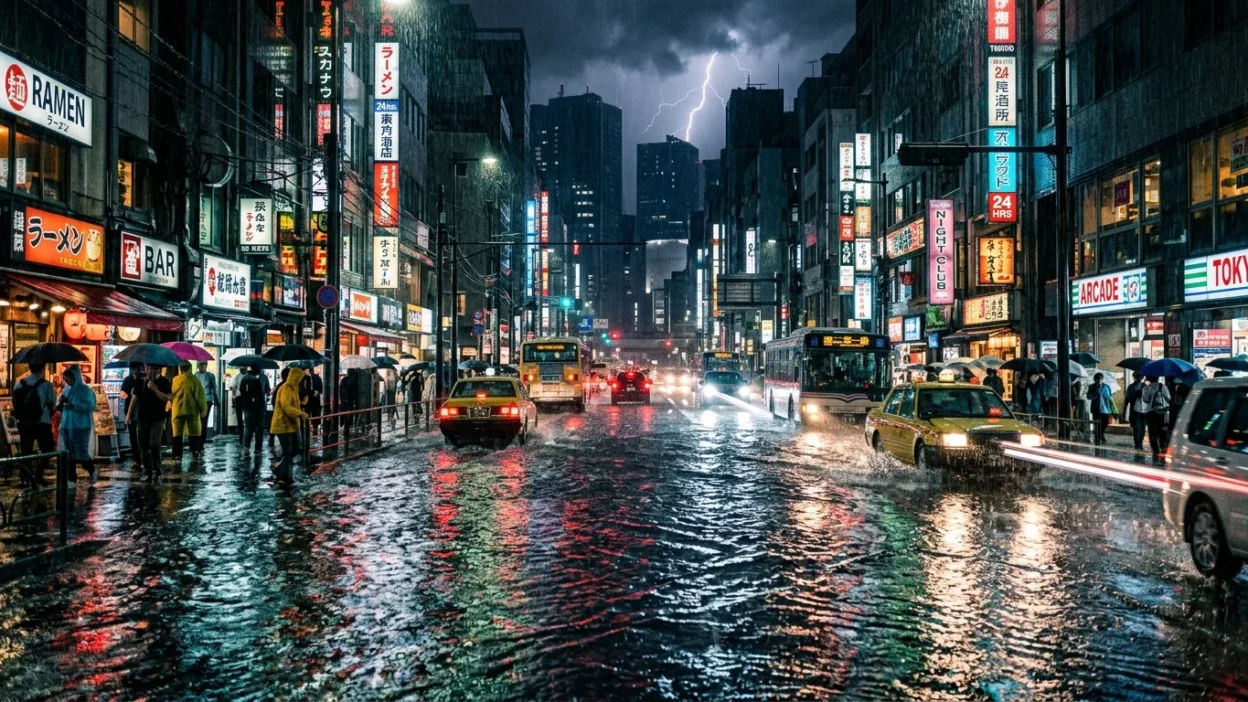
When something is drenched, it is extremely wet because it has been covered or soaked with a large amount of liquid
. We often use the word for people caught in heavy rain, clothes soaked with water, or objects covered in another liquid.
Learning synonyms for drenched can make your English more expressive and precise. Instead of repeating the same word, you can choose alternatives that show exactly how wet something is and why it became wet.
For students and ESL learners, these words are especially useful because they appear in everyday conversations, descriptive writing, stories, news reports, and online content.
Writers can also use them to create stronger mental images without making their language unnecessarily complicated.
What Does “Drenched” Mean?
Simple Definition of Drenched
Drenched means completely or extremely wet.
It usually suggests that something has been exposed to a lot of water or another liquid. For example:
“I was drenched after walking home in the storm.”
Here, “drenched” tells us that the person was not simply a little wet. Their clothes and body were probably soaked through.
Tone and Usage of Drenched
“Drenched” is a common and natural English word. It works well in both everyday and descriptive language.
You can use it for:
- People caught in rain
- Clothes and fabric
- Hair
- Objects exposed to water
- Surfaces covered with liquid
- Food or ingredients soaked in liquid
The word can also be used figuratively, as in “drenched in sunlight,” where it means completely filled or covered with something rather than literally wet.
30 Synonyms for Drenched
1. Soaked
Meaning: Completely wet because a lot of liquid has been absorbed.
Example sentence: “My shoes were soaked after I walked through the flooded street.”
Best usage context: Everyday English; one of the closest and most common alternatives to “drenched.”
2. Sopping Wet
Meaning: Extremely wet, with so much water that something may drip.
Example sentence: “His jacket was sopping wet after the sudden downpour.”
Best usage context: Informal and conversational English.
3. Sodden
Meaning: Very wet and heavy because something has absorbed a lot of water.
Example sentence: “The hikers returned with sodden clothes.”
Best usage context: Descriptive, literary, and somewhat formal writing.
4. Saturated
Meaning: Holding as much liquid as something can possibly absorb.
Example sentence: “The soil was completely saturated after several hours of rain.”
Best usage context: Scientific, technical, academic, and precise descriptions.
5. Waterlogged
Meaning: Filled or saturated with too much water.
Example sentence: “The heavy rain left the garden waterlogged.”
Best usage context: Land, soil, wood, buildings, and other objects rather than people.
6. Dripping
Meaning: Covered with enough liquid for drops to fall from it.
Example sentence: “She entered the room with dripping hair.”
Best usage context: Descriptive everyday English.
7. Wet Through
Meaning: Wet from the outside all the way through the material.
Example sentence: “The rain left my coat wet through.”
Best usage context: British English and everyday descriptions.
8. Wet
Meaning: Covered or filled with water or another liquid.
Example sentence: “My clothes were wet after the rain.”
Best usage context: Basic, neutral English; less intense than “drenched.”
9. Moist
Meaning: Slightly or moderately wet, but not completely soaked.
Example sentence: “The soil should remain moist while the seeds grow.”
Best usage context: Everyday, scientific, and food-related descriptions.
10. Damp
Meaning: Slightly wet, often in a way that is unpleasant or noticeable.
Example sentence: “The towels were still damp after being left in the bathroom.”
Best usage context: Mild wetness; not a strong synonym for “drenched.”
11. Clammy
Meaning: Slightly wet and unpleasantly sticky, especially because of sweat.
Example sentence: “His hands felt clammy before the interview.”
Best usage context: Skin, hands, weather, and uncomfortable physical sensations.
12. Dripping Wet
Meaning: Extremely wet, with liquid actively falling in drops.
Example sentence: “The dog came inside dripping wet.”
Best usage context: Casual and vivid descriptions.
13. Rain-Soaked
Meaning: Completely wet because of rain.
Example sentence: “The rain-soaked travelers searched for shelter.”
Best usage context: Rain-related writing and descriptive storytelling.
14. Rain-Drenched
Meaning: Covered or saturated with rain.
Example sentence: “The rain-drenched streets reflected the city lights.”
Best usage context: Creative, descriptive, and journalistic writing.
15. Soaking Wet
Meaning: Extremely wet.
Example sentence: “I was soaking wet by the time I reached the bus stop.”
Best usage context: Everyday conversation and informal writing.
16. Saturated With Water
Meaning: Filled with as much water as something can absorb.
Example sentence: “The sponge was saturated with water.”
Best usage context: Precise explanations and educational writing.
17. Swamped
Meaning: Covered or overwhelmed with a large amount of water.
Example sentence: “The basement was swamped after the storm.”
Best usage context: Flooding and informal descriptions; it can also mean “very busy” in another context.
18. Flooded
Meaning: Covered with a large amount of water.
Example sentence: “Several roads were flooded after the storm.”
Best usage context: Places, roads, buildings, and areas affected by excessive water.
19. Submerged
Meaning: Completely covered by or placed under water.
Example sentence: “The lower part of the boat was submerged.”
Best usage context: Objects or people actually under water.
20. Immersed
Meaning: Completely placed in or surrounded by liquid.
Example sentence: “The cloth was immersed in warm water.”
Best usage context: Formal, technical, or deliberate descriptions of being placed in liquid.
21. Water-Soaked
Meaning: Completely soaked with water.
Example sentence: “The water-soaked newspaper fell apart in my hands.”
Best usage context: Objects, materials, clothing, and descriptive writing.
22. Dripping
Meaning: Releasing drops of liquid.
Example sentence: “His dripping umbrella left water on the floor.”
Best usage context: Objects, hair, clothing, and surfaces with visible drops.
23. Soggy
Meaning: Very wet, soft, and unpleasant because of absorbed liquid.
Example sentence: “The sandwiches became soggy in the rain.”
Best usage context: Food, paper, ground, and soft materials.
24. Pulpy
Meaning: Soft and wet because of absorbed liquid, especially when describing paper or food.
Example sentence: “The wet newspaper had become pulpy after the storm.”
Best usage context: Paper, fruit, food, and materials that have lost their firmness.
25. Sloshing Wet
Meaning: Extremely wet in a way that suggests a large amount of liquid is present.
Example sentence: “The passengers stepped out of the boat with clothes that were sloshing wet.”
Best usage context: Highly informal and vivid descriptions; less common than “soaking wet.”
26. Drenched in Rain
Meaning: Completely covered or soaked by rainfall.
Example sentence: “The cyclists were drenched in rain before they found shelter.”
Best usage context: Descriptive writing and storytelling.
27. Heavy With Water
Meaning: So full of water that something has become noticeably heavier.
Example sentence: “The towel was heavy with water after being left outside.”
Best usage context: Descriptive writing, especially for fabric or absorbent materials.
28. Water-Sodden
Meaning: Extremely wet and heavy because it has absorbed a great deal of water.
Example sentence: “The water-sodden clothes made the climber uncomfortable.”
Best usage context: Literary, descriptive, and formal writing.
29. Dripping With Water
Meaning: So wet that water is falling from the surface in drops.
Example sentence: “The children came inside dripping with water.”
Best usage context: Vivid everyday and narrative descriptions.
30. Steeped
Meaning: Soaked or immersed in a liquid for a period of time.
Example sentence: “The fabric was steeped in dye before it was washed.”
Best usage context: Food, dyeing, cooking, and deliberate immersion; not a direct synonym for rain-soaked people.
Comparison Guide: Which Synonym for Drenched Should You Use?
| Word or phrase | Intensity | Main idea | Best context |
|---|---|---|---|
| Soaked | Very high | Completely wet | Everyday English |
| Sopping wet | Very high | Extremely wet | Casual speech |
| Sodden | Very high | Wet and heavy | Descriptive writing |
| Saturated | Very high | Holding maximum liquid | Technical/scientific |
| Waterlogged | Very high | Filled with excess water | Soil, land, objects |
| Dripping wet | Very high | Water visibly falling | Vivid descriptions |
| Wet through | Very high | Wet all the way through | Everyday/British English |
| Damp | Low | Slightly wet | Mild wetness |
| Moist | Low–medium | Slightly wet | Food, soil, science |
| Soggy | High | Wet and soft | Food, paper, ground |
| Rain-soaked | Very high | Wet from rain | Descriptive writing |
| Submerged | Very high | Completely under water | Water-related situations |
| Flooded | Very high | Covered with water | Roads, buildings, land |
| Clammy | Low–medium | Wet and sticky | Skin and hands |
| Steeped | High | Deliberately soaked | Food, dye, materials |
How to Choose the Right Synonym
For Everyday Conversation
Choose soaked, soaking wet, sopping wet, or dripping wet.
These expressions sound natural and easy to understand.
“I got soaked walking home.”
This is a very natural alternative to:
“I got drenched walking home.”
For Creative Writing
Choose sodden, rain-soaked, rain-drenched, water-sodden, or heavy with water.
These words can create a stronger visual image.
“The rain-soaked road shimmered beneath the streetlights.”
The phrase gives the reader more detail than simply saying the road was “wet.”
For Academic or Scientific Writing
Choose saturated, waterlogged, submerged, or saturated with water when they accurately describe the situation.
For example:
“The soil became saturated after prolonged rainfall.”
“Saturated” is more precise than “drenched” in a scientific context.
For Mild Wetness
Use damp or moist when something is only slightly wet.
These are not strong replacements for “drenched.”
Compare:
“The towel was damp.”
This means it contains some moisture.
“The towel was drenched.”
This means it contains a large amount of water.
For Food and Soft Materials
Use soggy, moist, pulpy, or steeped, depending on the situation.
For example, “soggy bread” means the bread has absorbed too much liquid and has become soft. Saying “drenched bread” would sound unusual in many contexts.
Drenched vs. Soaked
Drenched and soaked are very close in meaning.
Both can describe something that is extremely wet.
“I was drenched by the rain.”
“I was soaked by the rain.”
Both sentences are natural. “Soaked” is often a little more common in everyday conversation.
Drenched vs. Saturated
The main difference is precision.
Drenched emphasizes extreme wetness.
Saturated emphasizes that something has absorbed as much liquid as it can hold.
For example:
“Her clothes were drenched.”
This describes their condition.
“The sponge was saturated with water.”
This emphasizes the sponge’s maximum absorption.
Drenched vs. Damp
These words describe very different levels of wetness.
Damp means slightly wet.
Drenched means extremely wet.
For example:
“The towel was damp.”
The towel has some moisture.
“The towel was drenched.”
The towel is full of water.
Choosing between these words correctly helps make your writing more precise.
Drenched vs. Waterlogged
Waterlogged is generally used for things that have absorbed or accumulated too much water.
Common examples include:
- Waterlogged soil
- Waterlogged fields
- Waterlogged wood
- Waterlogged areas
You would normally say:
“The field was waterlogged.”
rather than:
“The farmer was waterlogged.”
For a person caught in rain, drenched or soaked is much more natural.
Drenched vs. Soggy
Soggy usually describes something that has become soft because it absorbed liquid.
For example:
“The cereal became soggy in the milk.”
“The paper was soggy after the rain.”
“Drenched” focuses mainly on being extremely wet, while “soggy” often adds the idea of softness or loss of texture.
Common Questions About Synonyms for Drenched
What is the closest synonym for drenched?
Soaked is probably the closest everyday synonym. Sopping wet and soaking wet are also very close.
What is a stronger word for wet?
Depending on the context, drenched, soaked, sodden, sopping wet, and saturated can express much stronger wetness than “wet.”
Is “soaked” the same as “drenched”?
In many situations, yes. Both can mean completely wet. However, the exact meaning can change slightly depending on context.
What is a formal synonym for drenched?
Saturated, sodden, or water-sodden can work in formal or descriptive writing, depending on what you are describing.
What is a synonym for drenched in rain?
Natural alternatives include rain-soaked, rain-drenched, soaked by the rain, sopping wet, and dripping wet.
What is the opposite of drenched?
Depending on the context, possible opposites include dry, completely dry, parched, or dehydrated.
Final Takeaways
The word drenched describes something that is extremely wet, usually because it has been exposed to a large amount of liquid
. It is common, expressive, and useful in both everyday and descriptive English.
The best synonym depends on the exact situation. Use soaked for a simple everyday alternative, sopping wet for informal emphasis, sodden for vivid descriptive writing, and saturated when you want to emphasize maximum liquid absorption.