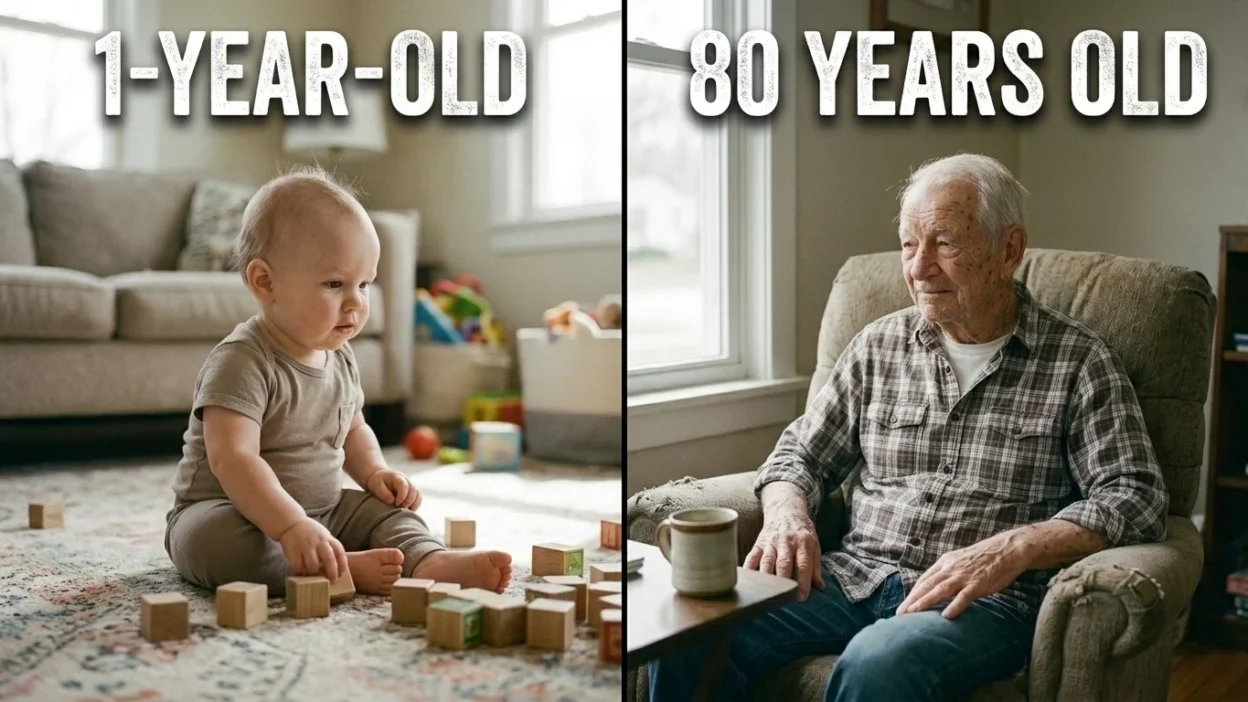
Have you ever wondered whether to write ”?
Both expressions are correct in English, but they are used in different situations.
The right choice depends on the number you are describing and how the age appears in your sentence.
Understanding this simple grammar rule can help you avoid mistakes in school assignments, emails, forms, and everyday conversations.
The basic rule is easy: use “year old” when a singular age expression comes before a noun, as in “a five-year-old child.”
Use “years old” when stating someone’s age after the person or thing, as in “The child is five years old.”
For a one year age, however, write “one year old” because the number is singular. In this guide, you will learn when to use each expression, how hyphens work, and which common mistakes to avoid.
You will also find practical examples, simple memory tricks, and answers to frequently asked questions about writing ages correctly.
Quick Answer: Year Old or Years Old?
Use “years old” when stating an age in a sentence, such as “She is 10 years old.” Use “year old” in a compound adjective before a noun, such as “a 10-year-old girl.” In the second example, year stays singular because it forms part of a hyphenated age expression. For one year, use “one year old.”
Why Do People Confuse “Year Old” and “Years Old”?
People often confuse these expressions because both describe age, and the difference between them can seem small. However, English grammar treats an age stated after a person differently from an age used as an adjective before a noun.
Compare these sentences:
- My brother is 12 years old.
- My brother is a 12-year-old student.
Both sentences describe the same age, but the grammar changes.
In the first sentence, “12 years old” describes how old the person is. In the second, “12-year-old” describes the noun student.
The most important points to remember are:
- Use the plural years when stating an age greater than one.
- Use the singular year in a hyphenated age expression before a noun.
- Do not add s to year in expressions such as “a 12-year-old boy.”
What Does “Year Old” Mean?
“Year old” is used in compound age expressions that describe a noun. When the expression comes directly before a noun, it usually takes hyphens and keeps year singular.
Examples:
- A five-year-old child
- A 10-year-old building
- A 20-year-old student
- A 100-year-old tree
In these examples, the entire expression works as an adjective. It tells the reader the age of the child, building, student, or tree.
Why Is “Year” Singular in “10-Year-Old”?
When an age expression appears before a noun as a compound modifier, the unit of time generally stays singular, even when the number is greater than one.
Correct: She adopted a two-year-old cat.
Incorrect: She adopted a two-years-old cat.
The number two does not change the form of year in this compound adjective.
The same rule applies to other units of measurement:
- A five-mile journey
- A three-hour meeting
- A 10-page report
- A six-month course
These expressions use singular measurement words because they form compound modifiers.
What Does “Years Old” Mean?
“Years old” is used to state how old a person, animal, place, or object is. In this structure, years is plural when the age is greater than one.
Examples:
- My daughter is seven years old.
- The house is 80 years old.
- Their dog is three years old.
- The student is 15 years old.
The expression usually appears after a linking verb, such as is, are, was, or were.
When Should You Use “Year Old” for a Singular Age?
When the age is exactly one year, use the singular form in a normal age statement.
Examples:
- The baby is one year old.
- The puppy is one year old.
- The building is one year old.
You can also use a compound adjective:
- A one-year-old baby
- A one-year-old puppy
- A one-year-old building
Notice that year remains singular in both structures because the age is one.
Year Old vs. Years Old: Comparison Table
| Feature | Year old | Years old |
|---|---|---|
| Main use | Usually before a noun in a compound adjective | Usually after a person or thing when stating age |
| Form | Singular year | Plural years for ages greater than one |
| Hyphens | Usually required before the noun | Not used in ordinary age statements |
| Example | A seven-year-old boy | The boy is seven years old. |
| Example with one | A one-year-old child | The child is one year old. |
| Common mistake | A seven-years-old boy | He is seven year old. |
Important: “Year old” is not limited to ages of one year. In “a seven-year-old boy,” the singular year is required because the expression functions as a compound adjective.
When Should You Use Each Expression?
Choosing the correct expression becomes easier when you look at its position in the sentence.
Use “Year Old” Before a Noun
Use a singular, hyphenated age expression when it comes directly before the noun it describes.
Examples:
- A three-year-old child
- A six-year-old dog
- A 25-year-old woman
- A 50-year-old company
The age expression acts as a unit that describes the following noun.
Example: “We visited a 200-year-old castle.”
Here, “200-year-old” describes the castle.
Use “Years Old” After the Person or Thing
Use years old when stating an age in a sentence.
Examples:
- The child is three years old.
- My sister is 25 years old.
- The company is 50 years old.
- The castle is 200 years old.
Example: “The castle is 200 years old.”
The sentence directly states the castle’s age, so the normal plural form years is appropriate.
What If the Age Is One?
Use one year old when stating the age and one-year-old before a noun.
Examples:
- My son is one year old.
- My son is a one-year-old child.
Both are correct, but the hyphens in the second sentence connect the words into a compound adjective.
12 Examples of “Year Old” and “Years Old”
Here are 12 examples showing how to use both forms correctly.
- My daughter is five years old.
The sentence states her age, so years is plural. - My daughter is a five-year-old girl.
The age expression comes before the noun girl, so year is singular and hyphenated. - The puppy is one year old.
The age is exactly one year, so the singular form is correct. - We adopted a one-year-old puppy.
The age expression describes the puppy, so it uses hyphens. - The building is 30 years old.
This sentence states the building’s age. - They bought a 30-year-old building.
The compound adjective describes the building. - My brother is 18 years old.
The age is stated after the subject. - He is an 18-year-old student.
The age expression describes the student. - The tree is 100 years old.
The plural years is used in the age statement. - We sat under a 100-year-old tree.
The compound modifier uses singular year. - The company is 75 years old.
This sentence states how long the company has existed. - She works for a 75-year-old company.
The age expression comes before the noun company.
These examples show that the number can remain the same while the grammar changes according to the sentence structure.
Common Mistakes With “Year Old” and “Years Old”
A few simple corrections can help you avoid the most common errors.
Mistake 1: Adding “s” Before a Noun
Incorrect: She has a 10-years-old son.
Correct: She has a 10-year-old son.
When an age expression comes before a noun, year stays singular.
Mistake 2: Forgetting the Plural in an Age Statement
Incorrect: My daughter is 10 year old.
Correct: My daughter is 10 years old.
Because the age is greater than one, use years in this sentence structure.
Mistake 3: Leaving Out the Hyphens
Less clear: He is a 15 year old student.
Preferred: He is a 15-year-old student.
Hyphens connect the words in the compound adjective before the noun.
Mistake 4: Using “Years Old” Before a Noun
Incorrect: They adopted a three-years-old dog.
Correct: They adopted a three-year-old dog.
Use singular year in the compound modifier.
Mistake 5: Forgetting That One Takes the Singular
Incorrect: The baby is one years old.
Correct: The baby is one year old.
The number one takes the singular noun year.
Mistake 6: Adding Hyphens to Every Age Expression
Incorrect: My son is 10-years-old.
Correct: My son is 10 years old.
When the age follows the subject and verb, you do not normally hyphenate it. Hyphens are used when the age expression functions as a compound modifier before a noun.
What Is an Easy Memory Trick for “Year Old” vs. “Years Old”?
Use this simple trick:
Before a noun: singular and hyphenated. After the verb: plural when the age is greater than one.
- Before a noun: a 12-year-old student
- After the verb: The student is 12 years old.
You can also remember the phrase “one unit in a compound.” In a compound adjective, the measurement word stays singular:
- A two-year-old child
- A five-hour flight
- A 10-mile race
The number does not make the measurement plural in these compound expressions.
Is There a Difference Between American and British English?
There is no significant difference between standard American and British English in the basic rules for writing ages.
Both varieties use:
- “She is 10 years old.”
- “She is a 10-year-old student.”
- “The baby is one year old.”
- “The baby is a one-year-old child.”
Both also use hyphens in compound age expressions before nouns.
You may see differences in general punctuation or editorial style between publications, but the core grammar rule remains the same. Whether you are writing for an American or British audience, choose the form according to the sentence structure.
What Words and Expressions Are Similar to “Year Old” and “Years Old”?
Several related expressions describe age or duration. Understanding them can make your writing more varied and precise.
1. Aged
Aged can describe someone’s age, especially in formal writing, announcements, or reports.
Examples:
- Children aged five to eight may participate.
- The survey included adults aged 18 and older.
2. At the Age of
Use at the age of to emphasize the point in someone’s life when something happened.
Examples:
- She started school at the age of five.
- He moved abroad at the age of 21.
3. Age
Age is a noun that refers to how old someone or something is.
Examples:
- What is your age?
- The building’s age is difficult to determine.
4. Month Old and Months Old
The same pattern applies to months.
- The baby is six months old.
- The baby is a six-month-old child.
However, babies are often described in months during their first years of life because months can communicate their age more precisely.
5. Days Old and Day Old
The same grammatical distinction applies to days.
- The puppy is two days old.
- It is a two-day-old puppy.
6. Year-Long
Year-long means lasting for one year, rather than describing how old a person or thing is.
Examples:
- She joined a year-long training program.
- They completed a year-long research project.
A 10-year-old building is 10 years in age; a year-long project lasts one year. These expressions describe different concepts.
Final Verdict: Year Old or Years Old?
Both “year old” and “years old” are correct, but they serve different grammatical purposes.
Use years old when stating an age greater than one: “My brother is 16 years old.” Use year old in a compound adjective before a noun: “My brother is a 16-year-old student.” When the age is exactly one, use one year old or one-year-old, depending on the sentence.
The most important rule is to check where the age expression appears. Before a noun, use a singular, hyphenated compound adjective. In an ordinary age statement, use years for ages greater than one. Once you understand this pattern, writing ages correctly becomes straightforward.
Frequently Asked Questions
1. Is it “10 year old” or “10 years old”?
Both forms can be correct in different sentence structures. Write “She is 10 years old” when stating her age. Write “a 10-year-old girl” when the age expression comes before a noun.
2. Should I write “a 5-year-old” or “a 5-years-old”?
Write “a 5-year-old.” In this compound age expression, year stays singular and the words are connected with hyphens. You can also say “The child is five years old.”
3. Is “one years old” grammatically correct?
No. The standard expression is “one year old” because one takes a singular noun. For example, “My son is one year old” is correct.
4. Do I need hyphens in “years old”?
Not when stating an age in an ordinary sentence. Write “She is 12 years old.” Use hyphens when the age expression comes before a noun, as in “a 12-year-old girl.”
5. Is it “20 years old” or “20-year-old student”?
Both are correct. “He is 20 years old” states his age. “He is a 20-year-old student” uses the age expression to describe the student.
6. Can I write “a 2-year-old” without a noun?
Yes. “A two-year-old” can stand alone when the noun is understood from the context. For example, “The clinic provides special care for a two-year-old.” The compound age expression remains singular and hyphenated.
7. Is “year old” one word or two words?
Year old consists of two words, but when used as a compound adjective before a noun, the expression is usually hyphenated: “a seven-year-old child.” In “The child is seven years old,” the words are separate and not hyphenated.
8. Is “a 10-year-old child” correct in formal writing?
Yes. “A 10-year-old child” is grammatically correct in formal and informal English. The singular year and the hyphens are appropriate because the age expression appears before the noun child.
Remember This
- Before a noun: a five-year-old child.
- After a verb: The child is five years old.
- For age one: The child is one year old.
- Use hyphens when an age expression modifies a noun.
- Keep year singular in compound age expressions, even when the number is greater than one.
Conclusion
The difference between “year old” and “years old” depends mainly on how you use the age expression in a sentence. When you state someone’s age, use years old for ages greater than one and year old for an age of one. When the age comes before a noun, use a singular, hyphenated expression such as “a seven-year-old child.”
The easiest way to remember the rule is to compare “She is seven years old” with “She is a seven-year-old girl.” Both sentences are correct, but the age expression serves a different grammatical purpose in each one. With these simple rules and examples, you can write ages clearly and confidently in everyday communication, academic work, and professional writing.