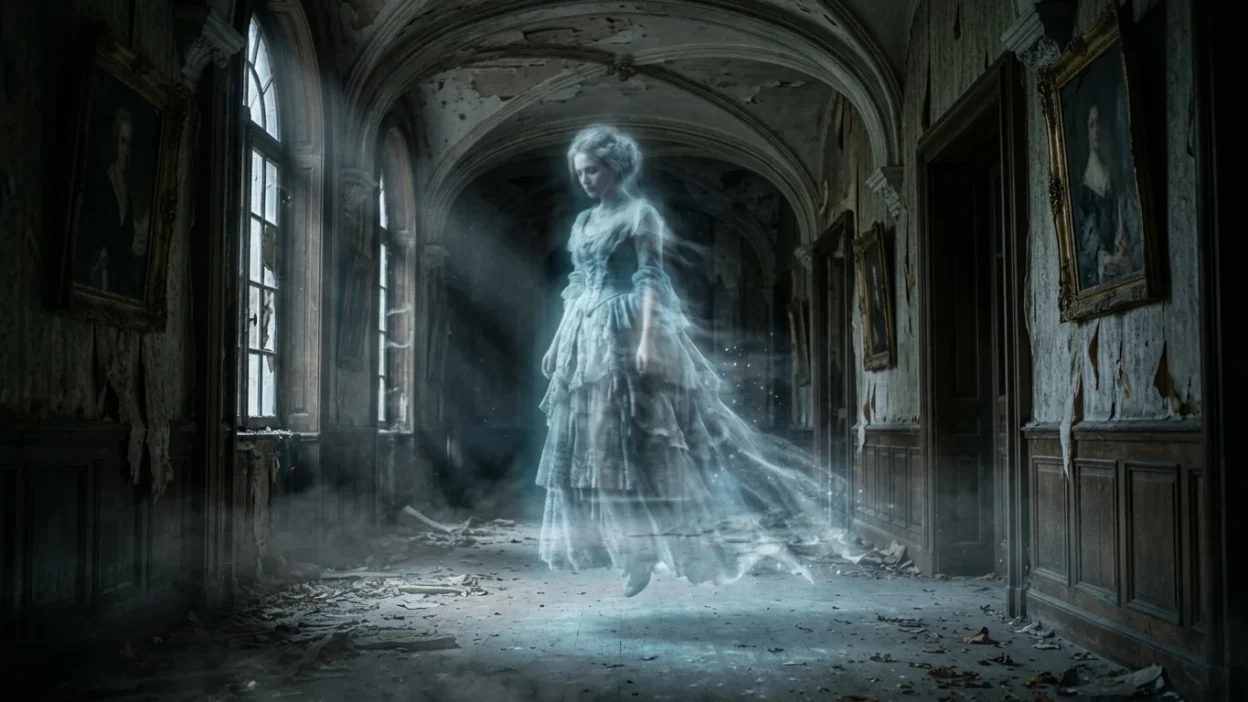
A ghoul and a ghost are both supernatural beings, but they are not the same.
A ghost is traditionally the spirit or apparition of a dead person, while a ghoul is a monstrous creature associated with graves, corpses, and the dead.
In simple terms, a ghost is usually a spirit; a ghoul is usually a corpse-eating monster or undead creature.
The two words are sometimes confused because both appear in horror stories, folklore, films, video games, and Halloween culture.
However, they come from different traditions and have developed distinct meanings.
Ghost has a broad history in English and is commonly associated with a person’s spirit after death.
Ghoul comes from Arabic folklore and originally described a supernatural creature that lurks around burial places and feeds on human bodies.
Modern fiction sometimes changes these definitions, so the exact appearance or behavior of a ghoul can vary by story.
Quick Answer
A ghost is generally the spirit or apparition of a dead person, often imagined as invisible, transparent, or human-like. A ghoul is traditionally a supernatural monster associated with graves, cemeteries, corpses, and sometimes cannibalism or corpse-eating. Ghosts are usually spirits; ghouls are usually physical or monstrous creatures.
Why Do People Confuse “Ghoul” and “Ghost”?
Both words are strongly connected with death and the supernatural.
A ghost is commonly imagined as the spirit of someone who has died. A ghoul, meanwhile, is connected with dead bodies and places where the dead are buried. Horror fiction often places both creatures in the same setting—a haunted house, cemetery, crypt, or abandoned building.
Modern entertainment can make the distinction even less clear. Movies, novels, games, and fantasy worlds sometimes use ghoul for any undead or frightening creature. However, the traditional meanings remain different.
The easiest distinction is:
Ghost = spirit of the dead.
Ghoul = monster associated with the dead.
The First Word: “Ghoul”
A ghoul is a supernatural creature from folklore traditionally associated with graves, cemeteries, deserts, and corpses.
The word comes into English through Arabic, from ghūl, a supernatural being in Arabic folklore.
What does a ghoul traditionally do?
Traditional descriptions vary, but ghouls are commonly associated with:
- Graveyards and burial places
- Dead bodies
- Eating or attacking corpses
- Luring or frightening travelers
- Desolate places
- Supernatural transformation or deception
In traditional Arabic folklore, the ghoul is not simply another word for a ghost. It is a distinct supernatural creature.
Ghouls in modern fiction
Modern fantasy and horror have expanded the meaning of ghoul.
Depending on the fictional universe, a ghoul might be:
- An undead creature
- A corpse-eating monster
- A decaying humanoid
- A supernatural predator
- A person transformed into a monstrous being
Therefore, the exact appearance of a ghoul depends heavily on the story.
The Second Word: “Ghost”
A ghost is traditionally understood as the spirit or apparition of a dead person.
Ghosts are common in folklore and supernatural traditions around the world.
A ghost may be imagined as:
- A transparent human figure
- A shadowy apparition
- A spirit that remains after death
- A presence associated with a particular location
- The spirit of someone who has died
Ghost stories often involve a deceased person returning because of unfinished business, a tragic death, a strong attachment to a place, or another supernatural reason.
Unlike a ghoul, a ghost is not traditionally defined by eating corpses.
Ghoul vs Ghost: Comparison Table
| Feature | Ghoul | Ghost |
|---|---|---|
| Basic meaning | Supernatural monster associated with the dead | Spirit or apparition of a dead person |
| Traditional origin | Arabic folklore | Found in many cultures; English word has Germanic roots |
| Physical body | Often imagined as physical or monstrous | Usually a spirit or apparition |
| Associated with | Graves, corpses, cemeteries | Death, spirits, haunted places |
| Eats corpses? | Traditionally associated with this | No |
| Human appearance | Often monstrous | Often resembles the deceased person |
| Common setting | Graveyards, crypts, burial places | Haunted houses, buildings, cemeteries |
| Common in horror fiction? | Yes | Yes |
| Meaning varies in fiction? | Very much | Yes, but basic meaning remains recognizable |
When Should You Use “Ghoul” and “Ghost”?
Use “ghost” for a dead person’s spirit
Use ghost when you mean a supernatural spirit or apparition believed to be connected with a dead person.
They say the old house is haunted by a ghost.
She saw the ghost of a young woman.
Use “ghoul” for a monstrous supernatural creature
Use ghoul when describing a creature associated with corpses, graves, or supernatural horror.
The hero encountered a ghoul in the cemetery.
The story describes ghouls feeding on the dead.
Use “ghost” for general supernatural spirits
Ghost is a much broader and more familiar word.
For example:
- ghost story
- ghost town
- ghost hunter
- ghostly figure
- haunted house
A ghoul is much more specific and usually creates a more monstrous image.
10+ Examples of Ghoul vs Ghost
1. A spirit in a house
People claim that a ghost lives in the old house.
The creature is understood as the spirit of a dead person.
2. A monster in a cemetery
The adventurer fought a ghoul in the cemetery.
The creature is a monster associated with the dead.
3. A ghost story
My grandmother told me a ghost story.
Ghost story is a common expression for a supernatural tale involving spirits.
4. A corpse-eating creature
The novel describes a ghoul that feeds on corpses.
This fits the traditional association of ghouls with dead bodies.
5. A transparent figure
A pale ghost appeared at the window.
A ghost is often imagined as an apparition rather than a physical monster.
6. A graveyard monster
The ghouls came out of their underground hiding place.
Here, ghouls refers to supernatural monsters.
7. A dead person’s spirit
He believed he had seen the ghost of his father.
The word refers to the father’s supposed spirit.
8. A horror game
The player must defeat several ghouls before reaching the castle.
The game uses ghouls as hostile supernatural creatures.
9. Haunted location
Visitors say they can hear a ghost walking through the hallway.
The supernatural presence is understood as a spirit.
10. A frightening monster
The ghoul had a frightening, decayed appearance.
The word emphasizes a monstrous creature.
11. General supernatural activity
The investigators were looking for evidence of a ghost.
Ghost works naturally when discussing alleged spirits.
12. Fantasy creature
The wizard summoned a ghoul to guard the tomb.
The creature is a supernatural monster associated with a tomb.
Common Mistakes
Mistake 1: Using “ghoul” as a direct synonym for “ghost”
A ghoul is not simply another word for a ghost.
❌ The ghoul of her dead grandmother appeared in the room.
If you mean her grandmother’s spirit, the natural word is:
✅ The ghost of her dead grandmother appeared in the room.
Mistake 2: Assuming every undead creature is a ghoul
Fantasy fiction uses many different types of undead creatures.
A zombie, vampire, ghost, skeleton, and ghoul can have different characteristics depending on the fictional world.
Mistake 3: Assuming every ghoul looks the same
There is no single universal appearance for a ghoul in modern fiction. One story might portray a ghoul as a decaying humanoid, while another may give it a completely different appearance.
Mistake 4: Thinking “ghost” always means an evil spirit
A ghost is not necessarily evil.
Some traditions and stories portray ghosts as frightening or dangerous, but others present them as harmless, sad, protective, or simply mysterious spirits.
Mistake 5: Using “ghoul” for an ordinary scary person
In informal English, ghoul can sometimes be used metaphorically for a person with a disturbing fascination with death or unpleasant things.
However, its supernatural meaning is much more common in horror and fantasy contexts.
Memory Trick
Use this simple association:
Ghost = spirit
Ghoul = monster
Think of a ghost as something that may haunt you.
Think of a ghoul as something that may hunt the dead.
Another useful memory trick:
Ghoul → Graveyard creature
This is not the historical origin of the word, but it is an easy way to remember its fictional association.
American vs British English
The basic meanings of ghoul and ghost are essentially the same in American and British English.
Both varieties use:
- ghost story
- ghost hunter
- haunted house
- ghoul
- ghoulish
- ghostly
There is no major American-British difference in the basic definitions.
The exact image of a ghoul, however, can vary between books, films, games, and other fictional traditions. Modern popular culture often gives the creature characteristics that differ from its older folklore descriptions.
Similar Words
Spirit
A spirit can refer to a non-physical supernatural being or, in some contexts, the soul of a person.
They believed the spirit of the dead man remained in the house.
Apparition
An apparition is a ghostly or supernatural figure that appears suddenly.
A strange apparition appeared in the hallway.
Phantom
A phantom can mean a ghost or something that appears ghostlike or mysterious.
A phantom appeared in the darkness.
Specter / Spectre
Specter is the American spelling, while spectre is the traditional British spelling. It can mean a ghost or frightening supernatural presence.
Spirit of the dead
This is a descriptive phrase for what a ghost traditionally represents.
Zombie
A zombie is generally an undead or reanimated corpse in modern horror and fantasy. It is not the same as a traditional ghost or ghoul.
Monster
Monster is a broad term for a frightening or unnatural creature. A ghoul can be a type of monster, but not every monster is a ghoul.
Final Verdict
The simplest distinction is:
A ghost is usually a spirit of the dead, while a ghoul is traditionally a supernatural creature associated with graves and corpses.
A ghost may haunt a house, appear as an apparition, or represent the spirit of a deceased person. A ghoul is generally more physical and monstrous, with traditional folklore connecting it to burial places and dead bodies.
Modern fiction can change these characteristics, so a particular book, movie, or video game may define its creatures differently. However, when you encounter the words in general English, ghost = supernatural spirit and ghoul = supernatural monster associated with the dead is the most useful distinction.
FAQs About Ghoul vs Ghost
Is a ghoul a type of ghost?
Traditionally, no. A ghoul is a distinct supernatural creature associated with graves and corpses, while a ghost is generally the spirit or apparition of a dead person. Some modern fictional worlds may combine or redefine these creatures.
What is the main difference between a ghoul and a ghost?
A ghost is usually a spirit or apparition of someone who has died. A ghoul is traditionally a monstrous supernatural being associated with graves, corpses, and corpse-eating.
Are ghouls dead humans?
Not necessarily. In traditional folklore, a ghoul is a supernatural creature rather than simply the ghost of a dead human. Modern fiction sometimes portrays ghouls as transformed or undead humans, but this is not a universal definition.
Can a ghost eat people?
In traditional ghost stories, ghosts are generally spirits and are not defined by eating human bodies. Some modern horror stories may give ghosts unusual powers, so fictional portrayals can vary.
Are ghouls real?
There is no reliable scientific evidence that ghouls or ghosts exist as supernatural beings. They belong to folklore, mythology, religious traditions, literature, and popular culture.
Where does the word “ghoul” come from?
Ghoul entered English from Arabic ghūl, a supernatural being in Arabic folklore associated with dangerous or desolate places and the dead.
Is a zombie the same as a ghoul?
No. A zombie is generally portrayed as an undead or reanimated corpse, while a ghoul is a distinct supernatural creature traditionally associated with graves and corpses. Modern fiction sometimes uses the terms differently.
Remember This
Ghost = spirit of the dead.
Ghoul = supernatural monster associated with the dead.
If you imagine a transparent figure haunting a house, think ghost.
If you imagine a monstrous creature lurking around graves or feeding on corpses, think ghoul.
Conclusion
Although ghoul and ghost are both supernatural terms connected with death, they have different traditional meanings. A ghost is generally understood as the spirit or apparition of a dead person, while a ghoul is a supernatural creature associated with graves, corpses, and, traditionally, eating the dead. Ghosts are therefore usually understood as spirits, whereas ghouls are more often portrayed as monsters.
Modern books, films, games, and fantasy settings can redefine these creatures, so their exact characteristics are not always identical. Still, the traditional distinction is useful and easy to remember: a ghost is a spirit, while a ghoul is a monster associated with the dead. That difference will help you understand both words when reading folklore, horror stories, and fantasy.