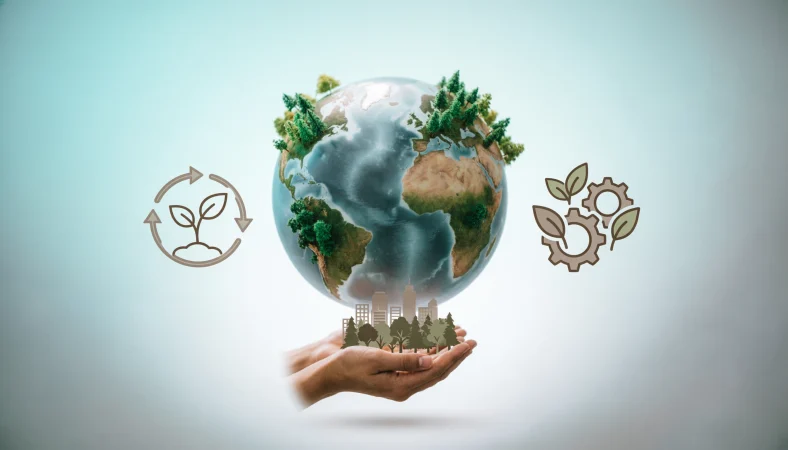
“Sustainable development” is a widely used term in environmental studies, economics, education, business, and social policy.
It describes development that meets present needs while protecting resources and opportunities for future generations.
For students, ESL learners, writers, and content creators, knowing sustainable development synonyms can make writing more natural and precise.
However, not every synonym has exactly the same meaning. Some focus on the environment, while others emphasize long-term growth, social responsibility, or responsible use of resources.
This guide explains 30 useful alternatives in simple English, with examples and practical notes on when each expression works best.
What Does Sustainable Development Mean?
Simple Meaning
Sustainable development means improving people’s lives and economies while protecting the environment and ensuring that resources remain available in the future.
In simple terms, it means developing in a way that can continue for a long time without causing serious harm to people, society, or nature.
Tone and Usage
“Sustainable development” is a formal and widely accepted term. It is common in academic writing, government policies, environmental discussions, business reports, and international development.
For example:
Sustainable development can help communities grow while protecting natural resources.
Depending on your meaning, you can replace it with terms such as responsible development, long-term development, or eco-friendly development. The best choice depends on the context.
30 Sustainable Development Synonyms
1. Responsible Development
Meaning: Development that considers its effects on people, society, and the environment.
Example:
The city is investing in responsible development to protect its natural areas.
Best usage context:
Good for general writing, policy discussions, and social topics.
2. Sustainable Growth
Meaning: Growth that can continue for a long time without exhausting resources or creating serious harm.
Example:
The company is looking for ways to achieve sustainable growth.
Best usage context:
Especially useful in business, economics, and environmental discussions.
3. Long-Term Development
Meaning: Development planned to provide benefits over many years.
Example:
The government created a plan for the country’s long-term development.
Best usage context:
Useful when emphasizing future benefits and planning.
4. Eco-Friendly Development
Meaning: Development designed to reduce damage to nature.
Example:
Eco-friendly development can reduce pollution in growing cities.
Best usage context:
Best for environmental, lifestyle, construction, and urban topics.
5. Environmentally Responsible Development
Meaning: Development that carefully protects the natural environment.
Example:
The region needs environmentally responsible development to protect its forests.
Best usage context:
Formal environmental writing and academic work.
6. Responsible Growth
Meaning: Growth that happens while considering its environmental and social effects.
Example:
Responsible growth can create jobs without putting too much pressure on natural resources.
Best usage context:
Business, economics, government, and community planning.
7. Green Development
Meaning: Development that aims to support economic progress while reducing environmental harm.
Example:
Green development is becoming an important part of urban planning.
Best usage context:
Environmental policy, cities, energy, and economics.
8. Green Growth
Meaning: Economic growth that tries to reduce environmental damage.
Example:
The country is promoting green growth through renewable energy projects.
Best usage context:
Economics, climate policy, energy, and government discussions.
9. Balanced Development
Meaning: Development that tries to balance economic, social, and environmental needs.
Example:
Balanced development can improve living standards without ignoring environmental protection.
Best usage context:
Useful when discussing several competing needs.
10. Equitable Development
Meaning: Development in which benefits and opportunities are shared fairly among people.
Example:
Equitable development should give rural communities access to education and healthcare.
Best usage context:
Social policy, poverty, education, and community development.
11. Inclusive Development
Meaning: Development that includes different groups of people and gives them opportunities to benefit.
Example:
Inclusive development can help disadvantaged communities participate in economic growth.
Best usage context:
Social justice, economics, education, and international development.
12. Socially Responsible Development
Meaning: Development that considers people’s rights, well-being, and social needs.
Example:
The project follows socially responsible development principles.
Best usage context:
Community projects, business, government, and social policy.
13. Environmentally Sustainable Development
Meaning: Development that protects natural systems and uses environmental resources carefully.
Example:
Environmentally sustainable development is essential in areas facing water shortages.
Best usage context:
Academic and environmental writing.
14. Resource-Efficient Development
Meaning: Development that uses energy, materials, water, and other resources efficiently.
Example:
Resource-efficient development can reduce waste and operating costs.
Best usage context:
Technology, manufacturing, construction, energy, and environmental policy.
15. Resilient Development
Meaning: Development designed to withstand challenges such as climate risks, disasters, or economic problems.
Example:
Resilient development can help coastal communities prepare for extreme weather.
Best usage context:
Climate change, disaster planning, infrastructure, and cities.
16. Future-Oriented Development
Meaning: Development that focuses on future needs and challenges.
Example:
The new education policy supports future-oriented development.
Best usage context:
Education, technology, planning, and policy writing.
17. Future-Proof Development
Meaning: Development planned to remain useful and effective despite future changes.
Example:
The city wants future-proof development that can respond to climate and population changes.
Best usage context:
Modern, accessible writing; infrastructure and technology.
18. Conservation-Based Development
Meaning: Development that places strong importance on conserving natural resources and ecosystems.
Example:
Conservation-based development can protect wildlife while supporting local communities.
Best usage context:
Forests, wildlife, tourism, and environmental planning.
19. Low-Impact Development
Meaning: Development designed to create as little environmental damage as possible.
Example:
The town adopted low-impact development methods for new construction.
Best usage context:
Construction, architecture, urban planning, and environmental design.
20. Green Development Planning
Meaning: Planning development around environmental protection and efficient resource use.
Example:
Green development planning can help cities reduce emissions.
Best usage context:
Urban planning, government policies, and environmental projects.
21. Sustainable Progress
Meaning: Progress that can continue without causing unacceptable environmental or social problems.
Example:
Education and innovation can contribute to sustainable progress.
Best usage context:
General essays, academic writing, and discussions of social improvement.
22. Responsible Progress
Meaning: Progress achieved while considering its effects on society and the environment.
Example:
Technological innovation should support responsible progress.
Best usage context:
Technology, ethics, business, and social discussions.
23. Long-Term Growth
Meaning: Growth intended to continue over an extended period.
Example:
Investment in education can support long-term growth.
Best usage context:
Business, economics, employment, and national development.
24. Sustainable Advancement
Meaning: Improvement or progress that can continue over time without creating major harm.
Example:
The program supports sustainable advancement in rural communities.
Best usage context:
Formal essays, reports, and academic writing.
25. Ecologically Responsible Development
Meaning: Development that respects ecosystems and minimizes ecological damage.
Example:
Ecologically responsible development is important in sensitive coastal regions.
Best usage context:
Scientific, environmental, and academic contexts.
26. Resource-Conscious Development
Meaning: Development that carefully considers how natural and human resources are used.
Example:
Resource-conscious development can reduce unnecessary consumption.
Best usage context:
Environmental education, sustainability articles, and policy writing.
27. Green Economic Development
Meaning: Economic development that aims to create prosperity while reducing environmental damage.
Example:
Green economic development can encourage investment in clean energy.
Best usage context:
Economics, climate policy, business, and government.
28. Sustainable Economic Development
Meaning: Economic development that can continue over time while considering environmental and social needs.
Example:
Sustainable economic development can create employment while protecting important resources.
Best usage context:
Economics, development studies, business, and academic writing.
29. Responsible Resource Use
Meaning: Using natural and other resources carefully so they are not wasted or unnecessarily depleted.
Example:
Responsible resource use is essential for communities facing water shortages.
Best usage context:
When the main focus is resource management rather than development itself.
30. Development for Future Generations
Meaning: Development that meets today’s needs while protecting opportunities for people in the future.
Example:
Development for future generations requires careful decisions about energy and natural resources.
Best usage context:
Essays, speeches, educational content, and explanations of sustainability.
Comparison Guide: Which Synonym Should You Use?
Not all sustainable development synonyms are interchangeable. Choose one based on the main idea you want to communicate.
| Synonym | Main Focus | Best Context |
|---|---|---|
| Responsible development | Careful decision-making | General writing |
| Sustainable growth | Continued growth | Business and economics |
| Long-term development | Future planning | Policy and planning |
| Eco-friendly development | Environmental protection | Environment |
| Green development | Environment + progress | Policy and cities |
| Green growth | Economic + environmental goals | Economics |
| Equitable development | Fairness | Social policy |
| Inclusive development | Participation and opportunity | Society and development |
| Resilient development | Ability to handle future risks | Climate and infrastructure |
| Low-impact development | Reduced environmental harm | Construction and planning |
| Resource-efficient development | Efficient resource use | Industry and technology |
| Sustainable economic development | Economy + sustainability | Economics and academia |
How to Choose the Right Synonym
For Environmental Topics
Use terms such as:
- Eco-friendly development
- Green development
- Environmentally responsible development
- Ecologically responsible development
- Low-impact development
- Conservation-based development
These expressions work well when your main concern is protecting nature and reducing environmental damage.
For Business and Economics
Consider:
- Sustainable growth
- Green growth
- Long-term growth
- Responsible growth
- Green economic development
- Sustainable economic development
These are useful when discussing profits, jobs, investment, productivity, or economic expansion.
For Social Issues
Choose:
- Inclusive development
- Equitable development
- Socially responsible development
- Balanced development
- Responsible development
These terms emphasize fairness, participation, equality, and quality of life.
For Future Planning
Use:
- Long-term development
- Future-oriented development
- Future-proof development
- Resilient development
- Development for future generations
These choices are especially useful when your writing focuses on future challenges, planning, or lasting benefits.
For Academic Writing
More formal choices include:
- Sustainable economic development
- Environmentally sustainable development
- Sustainable advancement
- Resource-efficient development
- Ecologically responsible development
- Equitable development
These expressions can make an academic paragraph more specific, provided they accurately match your intended meaning.
Sustainable Development Synonyms: Important Differences
“Sustainable Growth” vs. “Sustainable Development”
Sustainable growth usually focuses more strongly on continued economic or organizational growth.
Sustainable development is broader. It can include economic, social, and environmental progress.
For example:
- A company may aim for sustainable growth.
- A country may pursue sustainable development.
“Green Development” vs. “Eco-Friendly Development”
These terms are closely related, but green development often appears in policy, economics, and urban planning.
Eco-friendly development is more straightforward and often emphasizes reducing harm to nature.
“Inclusive Development” vs. “Equitable Development”
Inclusive development focuses on making sure different groups can participate and benefit.
Equitable development puts greater emphasis on fairness and the distribution of opportunities and benefits.
“Long-Term Development” vs. “Sustainable Development”
Long-term development simply emphasizes duration and future planning.
Sustainable development carries a stronger idea of balancing present needs with environmental, social, and economic considerations.
So, “long-term development” is not always a complete substitute for “sustainable development.”
Why Using the Right Synonym Matters
Using synonyms is not simply about avoiding repetition. The right word can make your writing more accurate.
For example, imagine writing:
The government supports sustainable development.
This is a broad statement.
If your focus is environmental protection, you might write:
The government supports environmentally responsible development.
If your focus is economic growth, you might write:
The government supports sustainable economic development.
If your focus is fairness, you might write:
The government supports equitable development.
The second versions tell readers what kind of sustainability or development you mean.
Tips for ESL Learners
Learn the Meaning, Not Just the Word
Do not memorize all 30 expressions as if they were identical. Learn the main idea behind each one.
For example:
- Green → environment
- Equitable → fairness
- Inclusive → participation
- Resilient → ability to handle challenges
- Long-term → future
- Resource-efficient → less waste
Check the Noun That Follows
Some words naturally work better with certain nouns.
For example:
- sustainable growth
- green development
- equitable development
- long-term growth
- responsible resource use
Natural word combinations, or collocations, make English writing sound more fluent.
Do Not Replace Words Automatically
A synonym may be similar without having exactly the same meaning.
For instance, replacing every use of “sustainable development” with “green growth” could change the meaning because green growth often emphasizes economic growth and environmental performance, whereas sustainable development has a broader scope.
Frequently Asked Questions
What is the best synonym for sustainable development?
There is no single perfect synonym. Responsible development, sustainable growth, green development, and long-term development can work depending on the context.
What is a simple word for sustainable development?
A simple explanation is development that can continue for a long time without seriously harming people or the environment.
Is “green development” the same as “sustainable development”?
They are closely related but not always identical. Green development usually gives greater attention to environmental protection, while sustainable development can include environmental, economic, and social goals.
What is another word for sustainable growth?
Useful alternatives include long-term growth, responsible growth, sustainable advancement, and, in environmental-economic contexts, green growth.
What is a synonym for sustainable in simple English?
Depending on the sentence, possible alternatives include long-lasting, responsible, environmentally friendly, maintainable, or able to continue. The best choice depends on the intended meaning.
Conclusion
Understanding sustainable development synonyms can help students, ESL learners, writers, and content creators communicate more clearly. However, the best synonym is not always the one that looks most similar.
Use green or eco-friendly when the focus is nature. Choose equitable or inclusive when discussing fairness and participation.
Use sustainable growth or green growth for economic topics, and choose long-term or future-oriented language when the emphasis is on the years ahead.
The key is to focus on meaning, tone, and context rather than simply replacing one phrase with another.
When you choose a synonym that matches your exact idea, your writing becomes clearer, more natural, and more professional.