Ware and wear sound the same, but they have completely different meanings and uses.
Wear is usually a verb meaning to have clothing, jewelry, or another item on your body, while ware is mainly a noun referring to a type or category of manufactured goods.
For example, “I wear glasses” is correct, while “glassware” means products made from glass.
These two words are easy to confuse because they are homophones—words that sound alike but have different spellings and meanings.
For students and English learners, the best way to remember the difference is to connect wear with clothing and things you put on your body.
Ware, on the other hand, is usually found in compound words such as software, hardware, cookware, tableware, and glassware.
Understanding their grammar and common combinations will help you choose the correct spelling every time.
Quick Answer
Wear is mainly a verb meaning to have clothing or an item on your body, and it can also mean to become damaged through use. Ware is a noun meaning goods or manufactured products, usually appearing in compound words such as glassware, cookware, hardware, and tableware. They sound alike but have different meanings and spellings.
Why Do People Confuse “Ware” and “Wear”?
The main reason is pronunciation.
In standard English, ware and wear are normally pronounced the same way. They are therefore homophones: words that sound alike but have different meanings and spellings.
For example:
- I wear a watch. → I have a watch on my wrist.
- This store sells kitchenware. → This store sells kitchen products.
The spelling cannot be determined from pronunciation alone, so you need to understand the meaning and grammatical role of the word.
A simple rule is:
Wear = put on or have something on your body.
Ware = goods or products.
The First Word: “Ware”
Ware is primarily a noun meaning goods, products, or manufactured articles, especially a particular type of product.
You will often see ware as part of a compound word.
Common words ending in “-ware”
- glassware — products made from glass
- tableware — plates, bowls, cups, and other items used at a table
- kitchenware — equipment and utensils used in a kitchen
- cookware — pots, pans, and other cooking equipment
- hardware — tools, equipment, or computer components, depending on context
- software — computer programs and applications
- silverware — eating utensils, especially knives, forks, and spoons
- houseware — household products
You may also see ware used by itself in less common or more specialized contexts:
The shop sells imported ware.
However, in modern everyday English, ware is much more common inside compound words.
“Ware” can also mean goods for sale
In some contexts, ware refers broadly to articles or merchandise.
For example:
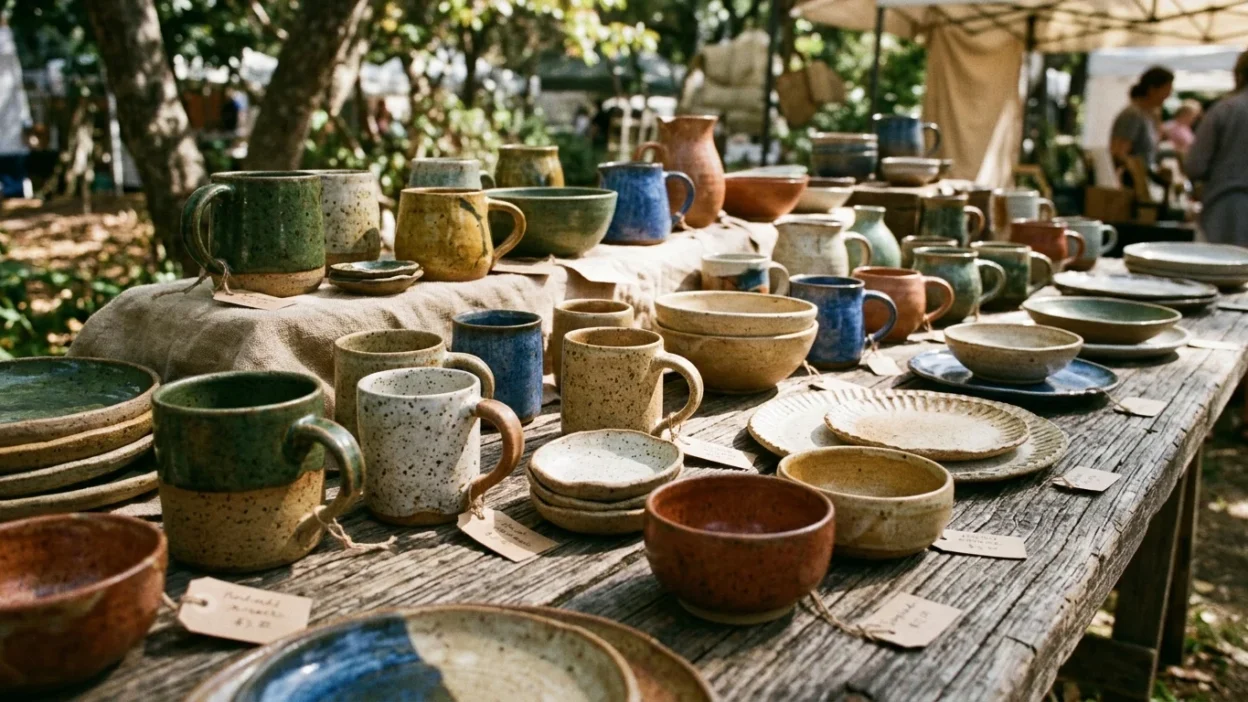
The market was filled with handmade wares.
Here, wares means products or goods.
The Second Word: “Wear”
Wear is most commonly a verb.
It means to have clothing, jewelry, glasses, shoes, or another item on your body.
Examples:
- I wear glasses.
- She wears a blue dress.
- He wore a jacket yesterday.
- They are wearing uniforms.
The verb has several forms:
| Form | Example |
|---|---|
| Base form | wear |
| Present, third person | wears |
| Past tense | wore |
| Past participle | worn |
| -ing form | wearing |
“Wear” can also mean become damaged
Wear can describe gradual damage caused by regular use.
These shoes are beginning to wear out.
The carpet shows signs of wear.
The noun wear can also refer to damage caused by continued use:
The machine has suffered normal wear and tear.
So wear is not limited to clothing.
Ware vs Wear: Comparison Table
| Feature | Ware | Wear |
|---|---|---|
| Main grammatical role | Noun | Usually a verb; sometimes a noun |
| Basic meaning | Goods or products | Have clothing/items on the body |
| Common use | Compound words | Clothing and personal items |
| Example | cookware | wear a jacket |
| Other meaning | Merchandise/products | Become damaged through use |
| Past tense | — | wore |
| Past participle | — | worn |
| Common phrase | tableware | wear out |
| Pronunciation | Same as “wear” | Same as “ware” |
When Should You Use “Ware” and “Wear”?
Use “wear” for clothing
Use wear when talking about clothes or something you have on your body.
I wear jeans to work.
She wears a beautiful necklace.
What are you wearing today?
Use “wear” for things you put on
It is not only clothing.
You can wear:
- glasses
- a watch
- jewelry
- shoes
- a hat
- perfume
- makeup
- a uniform
- a seat belt
For example:
He wears glasses.
She wears a gold bracelet.
Use “ware” for products or goods
Use ware when referring to a category of manufactured goods, especially in compound nouns.
The shop sells glassware.
We need new cookware.
The hotel has expensive tableware.
Look at the compound word
If you are describing a type of product, -ware is often the correct spelling.
- kitchen + ware = kitchenware
- glass + ware = glassware
- table + ware = tableware
- software = software
- hardware = hardware
10+ Examples of Ware vs Wear
1. Clothing
I wear a uniform to school.
Wear is correct because the uniform is clothing you have on your body.
2. Glass products
The restaurant bought new glassware.
Ware is correct because glassware means products made from glass.
3. Jewelry
She wears a silver necklace.
Wear is the verb describing what she has on her body.
4. Cooking equipment
We need better cookware.
Cookware means equipment used for cooking.
5. Glasses
My brother wears glasses.
Here, wears means he has glasses on his face.
6. Computer programs
The company develops software for schools.
Software is a type of computer product, so it uses -ware.
7. Computer equipment
The technician checked the computer hardware.
Hardware refers to physical computer equipment.
8. Plates and dishes
The hotel ordered new tableware.
Tableware includes items such as plates, cups, and utensils used for serving or eating food.
9. Old shoes
These shoes are starting to wear out.
Here, wear means becoming damaged through use.
10. Handmade products
Local artists displayed their handmade wares.
Wares means goods or products.
11. A watch
He always wears a watch.
Wears is the correct verb because the watch is on his body.
12. Household products
The store sells affordable houseware.
Houseware refers to products used in the home.
13. Eating utensils
The restaurant has stainless-steel silverware.
Silverware refers to eating utensils such as forks, knives, and spoons.
14. Clothing becoming damaged
The fabric began to wear after several washes.
Here, wear describes deterioration caused by use.
Common Mistakes
Mistake 1: “I ware a jacket.”
❌ I ware a jacket.
✅ I wear a jacket.
Use wear for clothing.
Mistake 2: “The shop sells kitchenwear.”
❌ The shop sells kitchenwear.
✅ The shop sells kitchenware.
Kitchenware means products and equipment used in a kitchen.
Mistake 3: “She wares glasses.”
❌ She wares glasses.
✅ She wears glasses.
The verb is wear.
Mistake 4: “I bought new glasswear.”
❌ I bought new glasswear.
✅ I bought new glassware.
Glassware means products made from glass.
Mistake 5: Confusing “wear” with “wore”
The past tense of wear is wore, not ware.
Today I wear a coat.
Yesterday I wore a coat.
I have worn this coat many times.
Remember:
wear → wore → worn
Memory Trick
Use this simple association:
Wear = What you put on.
Both wear and what begin with the w sound, which can help you remember that wear is connected with things you put on your body.
For ware, think:
Ware = merchandise or products.
And remember common compound words:
glassware, cookware, tableware, kitchenware, hardware, software.
A second useful trick is:
Wear clothes. Buy ware.
You wear a shirt, but you buy tableware.
American vs British English
The basic difference between ware and wear is the same in American and British English.
Both varieties use:
- wear a shirt
- wear glasses
- glassware
- kitchenware
- software
- hardware
There can be vocabulary differences in specific product categories. For example, silverware is particularly common in American English for eating utensils, while British English often uses cutlery. However, this does not change the spelling or meaning of wear and ware.
Similar Words
Clothes
Things you wear on your body.
I bought some new clothes.
Clothing
A general term for garments.
The store sells clothing for children.
Apparel
A more formal word for clothing, often used in business and retail contexts.
The company sells sports apparel.
Merchandise
Goods or products offered for sale.
The store sells a wide range of merchandise.
Goods
Products or items that are bought and sold.
The company imports electronic goods.
Equipment
Tools or items needed for a particular activity.
The kitchen needs new equipment.
These words are related to the meanings of wear and ware, but they are not interchangeable in every sentence.
Final Verdict
The difference between ware and wear is mainly about meaning and grammar.
Wear is generally a verb meaning to have clothing or another item on your body:
I wear a hat.
It can also mean to become damaged through use:
The carpet is beginning to wear.
Ware is mainly a noun meaning goods or products and is especially common in compound words:
glassware
cookware
tableware
hardware
software
The easiest rule to remember is:
Wear = put on. Ware = products.
FAQs About Ware vs Wear
Is it “wear” or “ware” for clothes?
Use wear for clothes.
She wears a red dress.
Ware is not used for the act of putting on clothes.
What is the difference between wear and ware?
Wear usually means to have clothing or an item on your body. Ware usually means goods or manufactured products and often appears in compound words such as glassware and cookware.
Is “hardware” related to “wear”?
No. Hardware contains -ware, meaning a category of goods or equipment. It is not related to the verb wear.
Is “software” spelled with ware or wear?
It is spelled software, with ware.
The company develops computer software.
Is it “glassware” or “glasswear”?
The correct word is glassware when referring to products made from glass, such as glasses, cups, and dishes.
Glasswear would suggest something that is worn and is not the standard word for glass products.
What is the past tense of “wear”?
The past tense of wear is wore.
I wear glasses now.
I wore glasses yesterday.
The past participle is worn:
I have worn these shoes many times.
What does “wear and tear” mean?
Wear and tear means the normal damage or deterioration that happens when something is used regularly over time.
The car has some normal wear and tear.
Remember This
WEAR = something you put on or have on your body.
WARE = goods, products, or merchandise.
- Wear a shirt.
- Wear glasses.
- Wear shoes.
- Buy cookware.
- Use tableware.
- Sell glassware.
- Install software.
If you mean clothing or something on your body, choose wear. If you mean a category of goods or products, choose ware.
Conclusion
Although ware and wear sound the same, their meanings are completely different. Wear is primarily a verb connected with clothing, accessories, and other things placed on the body. It can also describe damage caused by repeated use. Ware is mainly a noun referring to goods or products and is especially common in compound words such as software, hardware, cookware, glassware, and tableware.
For an easy way to remember the distinction, think “wear clothes” and “ware products.” Whenever you are talking about putting something on your body, use wear. When you are talking about a category of goods or merchandise, use ware. This simple connection will help you avoid one of the most common homophone spelling mistakes in English.