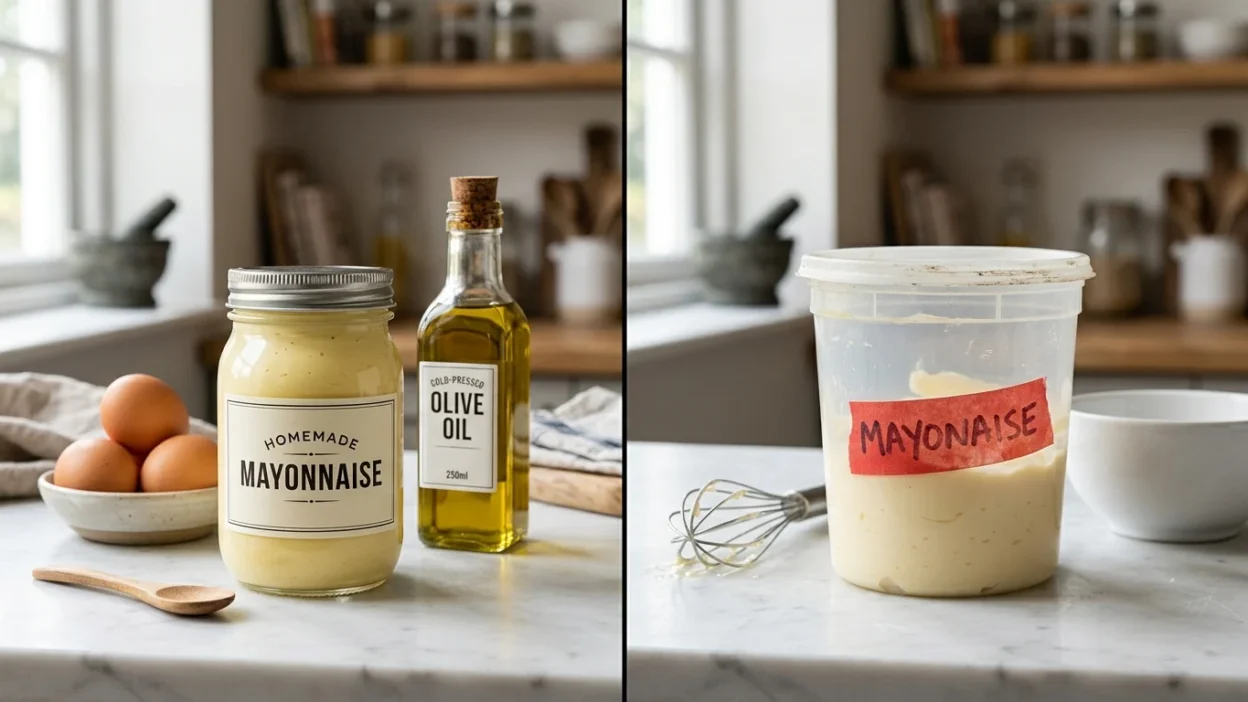
The correct English spelling is “mayonnaise,” not “mayonaise.” Mayonnaise is the standard spelling for the thick, creamy sauce made primarily from oil, egg, and an acidic ingredient such as vinegar or lemon juice.
For example, you would write, “I added mayonnaise to my sandwich.”
Mayonaise is a common spelling mistake, especially because the word can be difficult to spell and pronounce.
The confusion is understandable because mayonnaise contains several vowels and its pronunciation does not clearly reveal every letter.
However, in standard English writing, mayonnaise is the form you should use.
Whether you are writing a recipe, restaurant menu, school assignment, food article, shopping list, or everyday message, choose mayonnaise.
Quick Answer
Mayonnaise is the correct English spelling. Mayonaise is a misspelling. Mayonnaise is a creamy sauce commonly made with oil, egg, and an acidic ingredient such as vinegar or lemon juice. Remember the spelling as M-A-Y-O-N-N-A-I-S-E: mayonnaise.
Why Do People Confuse “Mayonnaise” and “Mayonaise”?
People often confuse these spellings because mayonnaise is not pronounced exactly as it looks.
The word contains several letters that can be easy to overlook:
mayonnaise
A common mistake is dropping one of the n’s and writing:
mayonaise
The correct spelling contains two n’s:
mayonnaise
It also ends in -aise, not simply -aise after removing the extra n.
Another reason for the confusion is that the word has been borrowed into English from French. Its French spelling is also mayonnaise, so the standard English spelling retains this form.
What Does “Mayonnaise” Mean?
Mayonnaise is a thick, creamy sauce or condiment commonly made by combining oil with egg yolk and an acidic ingredient such as vinegar or lemon juice.
It is widely used with:
- Sandwiches
- Salads
- Burgers
- Fries
- Wraps
- Seafood
- Vegetables
- Dips
- Dressings
For example:
I put mayonnaise on my sandwich.
This salad contains mayonnaise.
The word is normally treated as a mass noun, so we generally do not say “a mayonnaise” when talking about the food itself.
What Does “Mayonaise” Mean?
“Mayonaise” is not the standard English spelling of the condiment.
If you are writing in English, use:
mayonnaise
rather than:
mayonaise
You may encounter mayonaise as a spelling mistake or in contexts influenced by other languages, but it is not the standard spelling to use in English.
Mayonnaise vs Mayonaise: Comparison Table
| Spelling | Standard English? | Meaning | Example |
|---|---|---|---|
| Mayonnaise | Yes | A creamy sauce or condiment | I added mayonnaise to my sandwich. |
| Mayonaise | No | Common misspelling of mayonnaise | ❌ I bought mayonaise. |
| Mayo | Yes | Informal shortened form of mayonnaise | I like mayo on burgers. |
When Should You Use “Mayonnaise”?
Use mayonnaise whenever you are writing the full name of the condiment in standard English.
It is appropriate in:
- Recipes
- Restaurant menus
- Food labels
- School assignments
- Articles
- Emails
- Shopping lists
- Formal writing
- Everyday writing
Examples:
Add two tablespoons of mayonnaise.
The sandwich comes with mayonnaise and lettuce.
Store the mayonnaise in the refrigerator after opening.
When Should You Use “Mayonaise”?
In standard English, you generally should not use “mayonaise.”
If you mean the condiment, write:
Mayonnaise
not:
Mayonaise
If you see “mayonaise” in an English text, it is most likely a spelling error unless it is being used deliberately as a name, quotation, or term from another language.
12 Examples of “Mayonnaise”
1. Sandwich
I added mayonnaise to my chicken sandwich.
2. Burger
Would you like mayonnaise on your burger?
3. Salad
This potato salad contains mayonnaise.
4. Recipe
Mix the vegetables with two tablespoons of mayonnaise.
5. Restaurant
The restaurant serves fries with garlic mayonnaise.
6. Shopping
We need to buy some mayonnaise.
7. Food preference
She does not like mayonnaise.
8. Sauce
This sauce is made with mayonnaise, lemon juice, and herbs.
9. Wrap
Spread mayonnaise over the tortilla before adding the filling.
10. Tuna salad
Add mayonnaise to the tuna and mix well.
11. Cooking instruction
Combine the mayonnaise with the mustard.
12. Everyday question
Is there any mayonnaise in the refrigerator?
Common Mistakes
Mistake 1: Writing “mayonaise”
Incorrect:
I need some mayonaise.
Correct:
I need some mayonnaise.
The standard spelling contains two n’s.
Mistake 2: Leaving out the second “n”
A useful way to check the spelling is:
mayo + nn + aise
This gives:
mayonnaise
Mistake 3: Assuming spelling follows pronunciation
English spelling does not always match pronunciation perfectly. With mayonnaise, relying only on the sound can make the spelling difficult to remember.
Mistake 4: Using “mayonaise” in formal writing
If you are writing a recipe, assignment, menu, article, or other formal text, use the standard spelling:
mayonnaise
Mistake 5: Thinking “mayo” is incorrect
Mayo is a common informal shortening of mayonnaise.
For example:
I like mayo on my sandwich.
This is perfectly natural in informal English.
Memory Trick
A simple way to remember the spelling is:
MAYO + NNAISE = MAYONNAISE
Focus on the double N:
mayonnaise
You can also remember:
Mayo has two N’s in mayonnaise.
When you are unsure, break the word into parts:
may-o-nnaise
Then write:
mayonnaise
American vs British English
The spelling mayonnaise is standard in both American English and British English.
There is no major spelling difference between the two varieties for this word.
The informal form mayo is also widely used in both American and British English, particularly in everyday conversation and food-related contexts.
For example:
American English: I want mayo on my burger.
British English: I want mayo on my burger.
The full form remains:
mayonnaise
Similar Words
Mayo
Mayo is the common informal abbreviation of mayonnaise.
I bought some mayo.
Aioli
Aioli is a Mediterranean-style sauce traditionally associated with garlic and oil. Modern versions can resemble mayonnaise, but the two are not necessarily identical.
The restaurant served garlic aioli with the fries.
Sauce
A sauce is a broad term for a liquid or semi-liquid food accompaniment.
The chef prepared a spicy sauce.
Dressing
A dressing is commonly used to add flavor to salads and other foods.
She made a creamy salad dressing.
Condiment
A condiment is a food added to another food to enhance its flavor, such as mayonnaise, mustard, or ketchup.
Mustard is a popular condiment.
Final Verdict
The correct English spelling is “mayonnaise.”
“Mayonaise” is a misspelling when you mean the creamy condiment.
Remember:
✅ mayonnaise
❌ mayonaise
If you want a shorter, informal version, “mayo” is also correct.
The easiest spelling trick is to remember the double N:
mayoNNaise
Frequently Asked Questions
Is it “mayonnaise” or “mayonaise”?
The correct standard English spelling is mayonnaise. Mayonaise is a common misspelling.
How do you spell mayonnaise correctly?
The standard spelling is:
M-A-Y-O-N-N-A-I-S-E
The word contains two n’s.
Is “mayonaise” a word?
“Mayonaise” may appear in other linguistic contexts or as a misspelling, but it is not the standard English spelling of the condiment. In English, write mayonnaise.
Is “mayo” short for mayonnaise?
Yes. Mayo is a common informal shortened form of mayonnaise.
Is mayonnaise spelled differently in American and British English?
No. Mayonnaise is the standard spelling in both American and British English.
Why is mayonnaise so difficult to spell?
The spelling can be difficult because the word comes from French and its pronunciation does not make every letter obvious. The double n is especially easy to forget.
Does mayonnaise contain eggs?
Traditional mayonnaise is generally made with egg yolk, oil, and an acidic ingredient such as vinegar or lemon juice. However, commercial products can vary, and egg-free versions are also available.
Remember This
Mayonnaise = correct spelling.
Mayonaise = misspelling.
The easiest trick is:
Mayo + NN + aise = mayonnaise
And remember that mayo is the common informal short form.
Conclusion
When deciding between “mayonnaise” and “mayonaise,” always choose “mayonnaise” in standard English. The word refers to a creamy condiment commonly made with oil, egg, and an acidic ingredient, and it is widely used in sandwiches, salads, burgers, sauces, and many other foods.
The spelling can be tricky because its pronunciation does not make every letter obvious. However, remembering the double N makes it much easier: mayoNNaise. Whether you use American or British English, the standard spelling remains mayonnaise, while mayo is a perfectly acceptable informal abbreviation.