The word sad is one of the most common words in English.
People use it to describe feelings of unhappiness, disappointment, grief, or emotional pain.
While “sad” is simple and easy to understand, using different synonyms can make your writing and speaking more expressive and precise.
Learning synonyms for sad is especially useful for students, ESL learners, writers, bloggers, and content creators.
Different situations require different emotional tones, and choosing the right word can help you communicate your feelings more accurately.
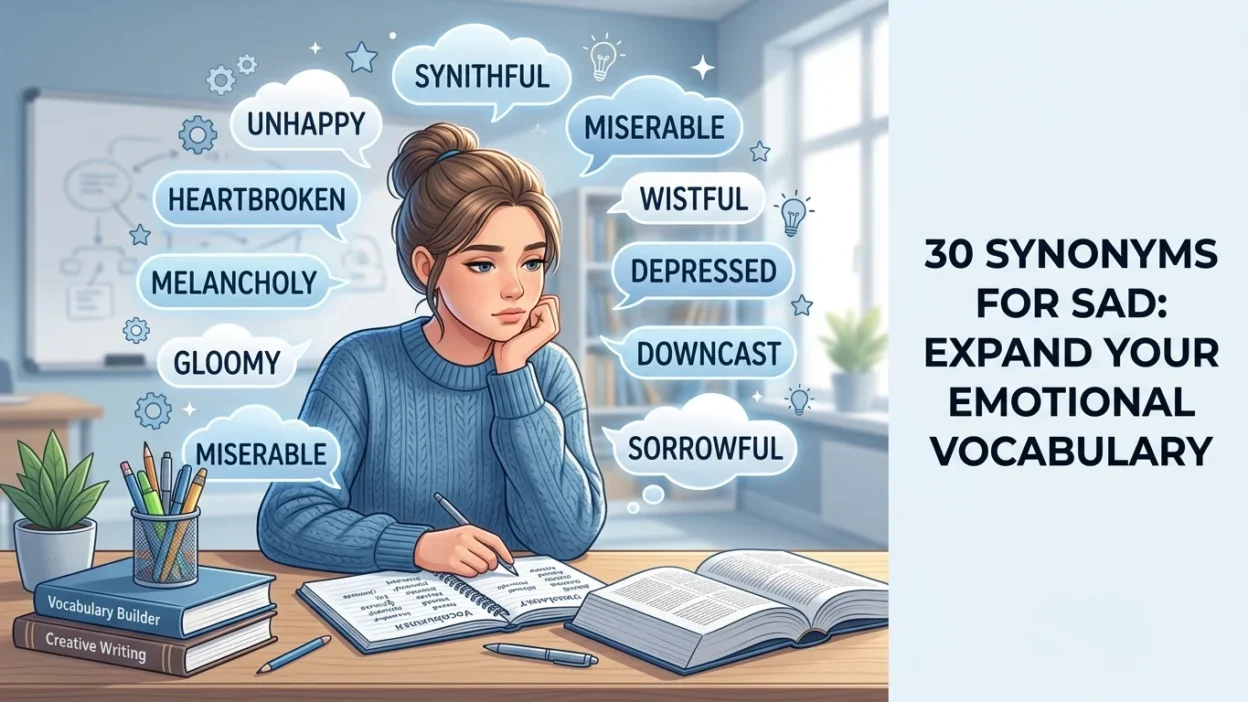
In this guide, you will learn the meaning of sad, explore 30 useful synonyms, see example sentences, and discover when each word works best.
Meaning of “Sad”
What Does Sad Mean?
The word sad describes a feeling of unhappiness, sorrow, disappointment, or emotional pain.
A person may feel sad because of a loss, failure, bad news, loneliness, or difficult life situations.
Tone and Usage Context
“Sad” is a general and neutral word.
It can describe mild disappointment or deep emotional suffering depending on the context.
Example:
- I felt sad when my friend moved away.
30 Synonyms for Sad
1. Unhappy
Meaning: Feeling not happy or dissatisfied.
Example Sentence: She felt unhappy after hearing the disappointing news.
Best Usage Context: Everyday conversations.
2. Sorrowful
Meaning: Feeling deep sadness.
Example Sentence: The family looked sorrowful during the ceremony.
Best Usage Context: Formal and emotional situations.
3. Gloomy
Meaning: Feeling depressed or lacking hope.
Example Sentence: He seemed gloomy after losing the match.
Best Usage Context: Describing mood or atmosphere.
4. Miserable
Meaning: Extremely unhappy.
Example Sentence: She felt miserable during her illness.
Best Usage Context: Strong emotional discomfort.
5. Heartbroken
Meaning: Deeply hurt emotionally.
Example Sentence: He was heartbroken after the breakup.
Best Usage Context: Love and personal loss.
6. Depressed
Meaning: Feeling very low emotionally.
Example Sentence: She felt depressed after months of stress.
Best Usage Context: Serious emotional situations.
7. Downcast
Meaning: Feeling discouraged or disappointed.
Example Sentence: The student looked downcast after failing the exam.
Best Usage Context: Temporary disappointment.
8. Dejected
Meaning: Feeling low in spirit.
Example Sentence: He became dejected after receiving criticism.
Best Usage Context: Personal setbacks.
9. Melancholy
Meaning: A thoughtful and gentle sadness.
Example Sentence: The old photograph filled her with melancholy.
Best Usage Context: Literary writing.
10. Mournful
Meaning: Expressing grief or sadness.
Example Sentence: The violin produced a mournful sound.
Best Usage Context: Art, music, and loss.
11. Blue
Meaning: Feeling slightly sad.
Example Sentence: I’ve been feeling a little blue lately.
Best Usage Context: Informal conversations.
12. Glum
Meaning: Quietly sad or disappointed.
Example Sentence: He sat in a glum silence.
Best Usage Context: Casual descriptions.
13. Crestfallen
Meaning: Feeling disappointed and embarrassed.
Example Sentence: She looked crestfallen after the rejection.
Best Usage Context: Failure or disappointment.
14. Dismal
Meaning: Very gloomy and depressing.
Example Sentence: The weather made everyone feel dismal.
Best Usage Context: Mood and environment.
15. Despondent
Meaning: Feeling hopeless.
Example Sentence: He became despondent after losing his job.
Best Usage Context: Serious setbacks.
16. Woeful
Meaning: Full of sorrow.
Example Sentence: She gave a woeful expression.
Best Usage Context: Emotional storytelling.
17. Grief-Stricken
Meaning: Overwhelmed by grief.
Example Sentence: The grief-stricken family gathered together.
Best Usage Context: Death or major loss.
18. Brokenhearted
Meaning: Emotionally devastated.
Example Sentence: She was brokenhearted after the separation.
Best Usage Context: Relationships.
19. Distressed
Meaning: Very worried or upset.
Example Sentence: He looked distressed by the situation.
Best Usage Context: Emotional stress.
20. Troubled
Meaning: Emotionally worried or disturbed.
Example Sentence: She seemed troubled by recent events.
Best Usage Context: Personal concerns.
21. Hurt
Meaning: Emotionally wounded.
Example Sentence: I felt hurt by his comments.
Best Usage Context: Personal relationships.
22. Regretful
Meaning: Feeling sadness about past actions.
Example Sentence: He felt regretful about his decision.
Best Usage Context: Mistakes and regrets.
23. Lonely
Meaning: Feeling isolated or alone.
Example Sentence: She felt lonely in a new city.
Best Usage Context: Social situations.
24. Somber
Meaning: Serious and sad.
Example Sentence: The meeting had a somber atmosphere.
Best Usage Context: Formal events.
25. Forlorn
Meaning: Feeling abandoned and lonely.
Example Sentence: The abandoned dog looked forlorn.
Best Usage Context: Literary descriptions.
26. Pensive
Meaning: Deeply thoughtful, often with sadness.
Example Sentence: He sat quietly with a pensive expression.
Best Usage Context: Reflective moments.
27. Wistful
Meaning: Sad while remembering something pleasant.
Example Sentence: She gave a wistful smile.
Best Usage Context: Nostalgic feelings.
28. Anguished
Meaning: Experiencing severe emotional pain.
Example Sentence: His anguished cry shocked everyone.
Best Usage Context: Intense emotions.
29. Bereaved
Meaning: Sad because someone has died.
Example Sentence: The bereaved family appreciated the support.
Best Usage Context: Loss of loved ones.
30. Morose
Meaning: Gloomy and withdrawn.
Example Sentence: He remained morose throughout the day.
Best Usage Context: Long-lasting sadness.
Comparison Guide for Synonyms of Sad
When to Use Different Synonyms
| Synonym | Strength of Emotion | Best Situation |
|---|---|---|
| Unhappy | Mild | Everyday use |
| Blue | Mild | Informal conversations |
| Gloomy | Medium | Mood descriptions |
| Melancholy | Medium | Literary writing |
| Dejected | Medium | Disappointment |
| Heartbroken | Strong | Relationships |
| Miserable | Strong | Severe unhappiness |
| Despondent | Strong | Hopeless situations |
| Grief-Stricken | Very Strong | Loss and mourning |
| Bereaved | Very Strong | Death of a loved one |
How to Choose the Right Synonym
For Everyday Conversations
Use:
- Unhappy
- Blue
- Glum
- Downcast
These words sound natural in daily speech.
For Writing and Storytelling
Use:
- Melancholy
- Wistful
- Forlorn
- Pensive
These words create emotional depth and vivid imagery.
For Strong Emotional Pain
Use:
- Heartbroken
- Miserable
- Anguished
- Brokenhearted
These express intense sadness.
For Loss and Grief
Use:
- Sorrowful
- Mournful
- Bereaved
- Grief-Stricken
These are appropriate for serious situations involving loss.
For Formal Communication
Use:
- Somber
- Despondent
- Distressed
- Regretful
These words work well in professional or academic writing.
Conclusion
Understanding synonyms for sad can greatly improve your vocabulary and communication skills.
While “sad” is a useful general term, different synonyms help express specific emotions such as disappointment, grief, loneliness, regret, or heartbreak.
Whether you are a student, ESL learner, writer, or content creator, learning these 30 synonyms will help you write more naturally and speak with greater confidence.
The key is choosing the word that best matches the emotion and situation you want to describe.

Liam Henry is a content author at Synonymed, specializing in vocabulary enrichment and synonym guides. He creates clear, engaging resources that help learners improve English word knowledge and language fluency.