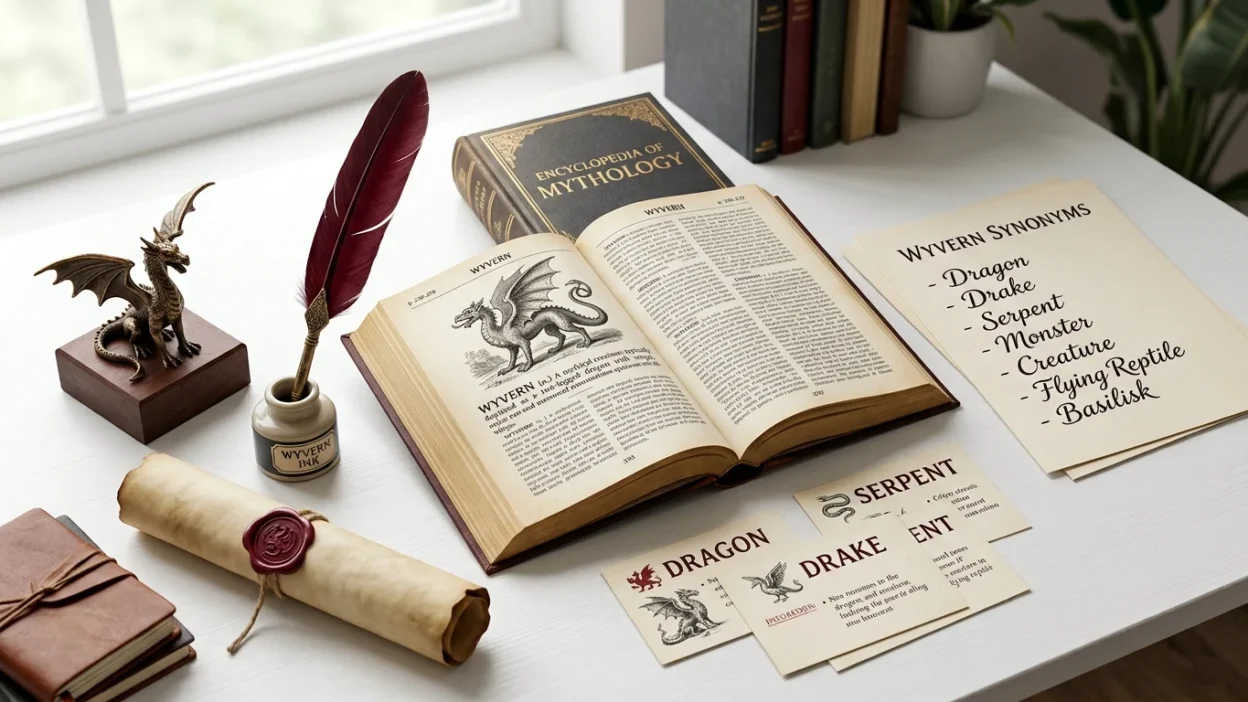
Fantasy creatures have fascinated people for centuries, and one of the most recognizable among them is the wyvern. if you are reading fantasy novels, writing stories, playing role-playing games, or expanding your English vocabulary, understanding wyvern synonyms can help you choose the perfect word for different situations.
This guide explains the meaning of wyvern, explores its closest synonyms and related words, and shows when each one works best. The explanations are written in simple English, making this article useful for students, ESL learners, writers, and content creators alike.
What Is a Wyvern?
Meaning of Wyvern
A wyvern is a mythical dragon-like creature that usually has two legs, two wings, a long tail, and often a poisonous stinger. Unlike the traditional four-legged dragon, a wyvern has only one pair of legs.
Wyverns commonly appear in:
- Fantasy books
- Video games
- Tabletop RPGs
- Medieval legends
- Movies and TV series
They are often portrayed as fierce, flying monsters that guard treasures or attack travelers.
30 Wyvern Synonyms with Meanings, Examples, and Usage
1. Dragon
Meaning: A large mythical reptile that often breathes fire.
Example: The dragon guarded an ancient treasure.
Best Usage Context: General fantasy writing.
2. Drake
Meaning: A dragon, usually smaller or wingless in some fantasy settings.
Example: The drake lived in the mountain cave.
Best Usage Context: Fantasy novels and RPGs.
3. Wyrm
Meaning: A legendary serpent-like dragon.
Example: The ancient wyrm slept beneath the castle.
Best Usage Context: Old English or epic fantasy.
4. Serpent
Meaning: A large mythical snake.
Example: The sea serpent frightened sailors.
Best Usage Context: Mythology and legends.
5. Lindworm
Meaning: A wingless dragon from European folklore.
Example: The knight defeated the lindworm.
Best Usage Context: Norse and Germanic mythology.
6. Basilisk
Meaning: A legendary reptile with deadly powers.
Example: The basilisk turned its enemies to stone.
Best Usage Context: Magical fantasy.
7. Cockatrice
Meaning: A mythical creature with rooster and dragon features.
Example: The cockatrice nested in abandoned ruins.
Best Usage Context: Medieval fantasy.
8. Hydra
Meaning: A many-headed mythical monster.
Example: The hero battled the hydra.
Best Usage Context: Greek mythology.
9. Amphithere
Meaning: A winged serpent without legs.
Example: The amphithere circled above the jungle.
Best Usage Context: Mythical creature descriptions.
10. Sea Dragon
Meaning: A dragon associated with oceans.
Example: Sailors feared the sea dragon.
Best Usage Context: Marine fantasy.
11. Sky Dragon
Meaning: A dragon connected with the sky.
Example: The sky dragon soared above the clouds.
Best Usage Context: High fantasy.
12. Fire Drake
Meaning: A dragon linked to fire.
Example: The fire drake burned the village.
Best Usage Context: Action fantasy.
13. Ice Dragon
Meaning: A dragon with frost powers.
Example: The ice dragon froze the river.
Best Usage Context: Winter fantasy.
14. Storm Dragon
Meaning: A dragon controlling storms.
Example: The storm dragon summoned lightning.
Best Usage Context: Magical adventures.
15. Winged Serpent
Meaning: A flying snake-like creature.
Example: The winged serpent glided silently.
Best Usage Context: Mythological descriptions.
16. Beast
Meaning: A large and dangerous creature.
Example: The beast attacked without warning.
Best Usage Context: General storytelling.
17. Monster
Meaning: A frightening imaginary creature.
Example: Villagers feared the monster.
Best Usage Context: Horror and fantasy.
18. Chimera
Meaning: A mythical creature made from different animals.
Example: The chimera guarded the temple.
Best Usage Context: Greek mythology.
19. Griffin
Meaning: A creature with the body of a lion and head of an eagle.
Example: The griffin protected the kingdom.
Best Usage Context: Fantasy worlds.
20. Roc
Meaning: A gigantic mythical bird.
Example: The roc lifted an elephant into the air.
Best Usage Context: Arabian legends.
21. Phoenix
Meaning: A magical bird reborn from ashes.
Example: The phoenix rose again.
Best Usage Context: Symbolic fantasy.
22. Gargoyle
Meaning: A stone creature that comes alive.
Example: The gargoyle watched from the tower.
Best Usage Context: Gothic fantasy.
23. Demon Beast
Meaning: An evil supernatural monster.
Example: The demon beast haunted the forest.
Best Usage Context: Dark fantasy.
24. Flying Reptile
Meaning: A reptilian creature capable of flight.
Example: The flying reptile crossed the valley.
Best Usage Context: General descriptions.
25. Mythical Creature
Meaning: Any legendary imaginary animal.
Example: Every mythical creature had a unique story.
Best Usage Context: Educational writing.
26. Legendary Beast
Meaning: A famous creature from myths.
Example: The legendary beast appeared once every century.
Best Usage Context: Storytelling.
27. Guardian Beast
Meaning: A creature protecting something valuable.
Example: The guardian beast defended the treasure.
Best Usage Context: Adventure fiction.
28. Winged Beast
Meaning: Any beast with wings.
Example: The winged beast landed on the cliff.
Best Usage Context: General fantasy.
29. Venomous Dragon
Meaning: A dragon that attacks with poison.
Example: The venomous dragon struck quickly.
Best Usage Context: Describing wyvern-like creatures.
30. Mythic Dragon
Meaning: A legendary dragon from folklore.
Example: The mythic dragon inspired countless tales.
Best Usage Context: Broad fantasy writing.
Comparison Guide: When to Use Different Wyvern Synonyms
| Synonym | Best For | Tone |
|---|---|---|
| Dragon | General fantasy | Neutral |
| Drake | RPGs and games | Fantasy |
| Wyrm | Ancient legends | Epic |
| Lindworm | European folklore | Historical |
| Basilisk | Magical creatures | Dark |
| Hydra | Greek mythology | Mythological |
| Griffin | Noble fantasy | Heroic |
| Phoenix | Rebirth symbolism | Inspirational |
| Beast | Generic creature | Neutral |
| Monster | Scary stories | Horror |
How to Choose the Right Synonym
For Classic Fantasy
Choose words like:
- Dragon
- Drake
- Wyrm
- Fire Drake
- Ice Dragon
These work well in fantasy novels and games.
For Mythology
Use:
- Hydra
- Basilisk
- Cockatrice
- Lindworm
- Griffin
These come from traditional legends and myths.
For General Writing
Choose:
- Beast
- Monster
- Mythical Creature
- Winged Beast
- Flying Reptile
These are easy for most readers to understand.
For Dark Fantasy
Use:
- Venomous Dragon
- Demon Beast
- Basilisk
- Cockatrice
These create a mysterious or dangerous atmosphere.
For Educational Content
Use:
- Mythical Creature
- Dragon
- Winged Serpent
- Legendary Beast
These are clear and beginner-friendly.
Are All Wyvern Synonyms Exactly the Same?
No. Most of these words are related terms rather than perfect synonyms.
A wyvern specifically refers to a two-legged winged dragon, while many other creatures have different appearances or mythological origins. Choosing the correct word depends on your audience, setting, and writing style.
Common Mistakes to Avoid
Calling Every Dragon a Wyvern
Not every dragon is a wyvern. Traditional dragons usually have four legs, while wyverns have only two.
Ignoring Mythological Differences
Creatures like the hydra, basilisk, and griffin belong to different mythologies and should not always replace the word “wyvern.”
Choosing Style Over Accuracy
Select the synonym that best matches your story, game, or educational content rather than simply using a more unusual word.
Conclusion
Learning wyvern synonyms helps you build a richer vocabulary and write more vivid fantasy descriptions. While dragon remains the closest general alternative, words like drake, wyrm, lindworm, basilisk, and winged serpent each bring their own meaning and atmosphere.
By understanding the differences between these related mythical creatures, you can choose the most accurate and engaging word for your writing. if you are a student, an ESL learner, a fantasy writer, or a content creator, using the right synonym will make your language more precise, creative, and memorable.

Liam Henry is a content author at Synonymed, specializing in vocabulary enrichment and synonym guides. He creates clear, engaging resources that help learners improve English word knowledge and language fluency.