
The word risqué describes something that is slightly shocking, daring, or suggestive because it approaches what people may consider socially inappropriate.
It is often used for humor, clothing, stories, comments, performances, or images that contain a mild sexual or provocative element.
Understanding risqué synonyms is useful because not every alternative has exactly the same tone.
Some words sound playful and harmless, while others suggest something much more explicit, offensive, or inappropriate.
Choosing the right word helps you communicate your intended meaning clearly.
For students, ESL learners, writers, and content creators, learning these differences can make descriptions more precise and natural.
This guide explains 30 useful alternatives, with simple meanings, examples, and advice on when each word works best.
What Does “Risqué” Mean?
Simple meaning of risqué
Risqué means slightly indecent, suggestive, daring, or likely to make some people feel uncomfortable or embarrassed.
It often describes something that is bold without being completely explicit.
Example:
The comedian made a risqué joke during the show.
This means the joke had a suggestive or slightly inappropriate quality.
Tone and usage context
Risqué is usually an adjective and has a somewhat sophisticated or playful tone.
It can describe:
- Jokes
- Comments
- Clothing
- Humor
- Films
- Performances
- Advertisements
- Stories
- Art
- Social situations
The word does not necessarily mean something is highly explicit. Often, it suggests that something pushes the boundaries of what is considered acceptable.
30 Risqué Synonyms and Related Words
1. Suggestive
Meaning: Giving an indirect hint about something, especially something sexual.
Example sentence:
The advertisement used a suggestive image to attract attention.
Best usage context: General writing, advertising, media, and descriptions.
2. Provocative
Meaning: Designed to cause a strong reaction, interest, or thought.
Example sentence:
The artist created a provocative piece that challenged traditional ideas.
Best usage context: Art, journalism, culture, and intellectual discussions.
3. Daring
Meaning: Willing to take risks or do something bold.
Example sentence:
She wore a daring outfit to the fashion event.
Best usage context: Fashion, personality, creative writing, and positive descriptions.
4. Bold
Meaning: Confident, noticeable, or willing to go beyond ordinary limits.
Example sentence:
The magazine featured a bold and unconventional design.
Best usage context: General writing, fashion, design, and creative work.
5. Edgy
Meaning: Unconventional, provocative, or close to accepted social boundaries.
Example sentence:
The show is known for its edgy humor.
Best usage context: Entertainment, fashion, music, and informal writing.
6. Suggestive
Meaning: Indirectly hinting at a sexual or otherwise sensitive idea.
Example sentence:
His suggestive comment made the audience laugh awkwardly.
Best usage context: Humor, dialogue, advertising, and media descriptions.
7. Indecent
Meaning: Considered inappropriate or offensive according to accepted standards of behavior.
Example sentence:
The website removed the indecent image.
Best usage context: Formal, legal, or serious discussions.
8. Improper
Meaning: Not considered suitable, correct, or socially acceptable.
Example sentence:
The manager apologized for the employee’s improper comment.
Best usage context: Professional and formal writing.
9. Inappropriate
Meaning: Not suitable for a particular situation, audience, or setting.
Example sentence:
The teacher explained why the joke was inappropriate for the classroom.
Best usage context: Everyday, educational, and professional contexts.
10. Naughty
Meaning: Slightly improper or mischievous, often in a playful way.
Example sentence:
The comedian is known for his naughty sense of humor.
Best usage context: Casual, humorous, and playful writing.
11. Saucy
Meaning: Bold, lively, or slightly suggestive in an amusing way.
Example sentence:
The character has a saucy sense of humor.
Best usage context: Informal and playful descriptions.
12. Cheeky
Meaning: Slightly rude or bold in a playful and often charming way.
Example sentence:
He made a cheeky comment that made everyone smile.
Best usage context: British English, casual conversations, and friendly humor.
13. Spicy
Meaning: Informally, exciting, provocative, or slightly suggestive.
Example sentence:
The novel contains some spicy dialogue.
Best usage context: Informal internet language, entertainment, and casual reviews.
14. Salacious
Meaning: Showing or encouraging strong interest in sexual subjects, often in a sensational way.
Example sentence:
The newspaper was criticized for its salacious coverage.
Best usage context: Journalism, criticism, and formal descriptions.
15. Lewd
Meaning: Sexually inappropriate or offensive.
Example sentence:
The actor was criticized for making a lewd gesture.
Best usage context: Serious, legal, or strongly negative contexts.
16. Vulgar
Meaning: Crude, offensive, or lacking good taste.
Example sentence:
The comedian avoided vulgar language during the family event.
Best usage context: Discussions of language, behavior, entertainment, and social standards.
17. Racy
Meaning: Exciting, bold, or slightly shocking because of sexual or provocative content.
Example sentence:
The magazine became popular for its racy stories.
Best usage context: Entertainment, journalism, magazines, and informal writing.
18. Risqué
Meaning: Slightly indecent or daring, especially in a playful or stylish way.
Example sentence:
The performer told a risqué joke during the late-night show.
Best usage context: Humor, entertainment, fashion, and cultural commentary.
19. Erotic
Meaning: Related to or intended to create sexual attraction or desire.
Example sentence:
The exhibition explored the erotic themes found in classical art.
Best usage context: Art, literature, film criticism, and academic discussion.
20. Sensual
Meaning: Connected with physical pleasure, attraction, or the senses.
Example sentence:
The photographer used soft lighting to create a sensual atmosphere.
Best usage context: Art, fashion, literature, and aesthetic descriptions.
21. Titillating
Meaning: Slightly exciting or stimulating, especially because something is unusual or suggestive.
Example sentence:
The article promised readers a titillating glimpse into celebrity life.
Best usage context: Journalism, entertainment, and playful writing.
22. Provocative
Meaning: Intended to stimulate a strong reaction or challenge accepted ideas.
Example sentence:
Her provocative performance started a lively discussion.
Best usage context: Art, politics, culture, and intellectual writing.
23. Controversial
Meaning: Likely to cause disagreement or strong public reactions.
Example sentence:
The film became controversial because of its unusual subject matter.
Best usage context: News, academic writing, reviews, and public discussions.
24. Shocking
Meaning: Very surprising or upsetting because it goes against expectations.
Example sentence:
The documentary revealed some shocking information.
Best usage context: General writing and news-style descriptions.
25. Scandalous
Meaning: Considered shocking or unacceptable by society.
Example sentence:
The celebrity’s scandalous behavior dominated the headlines.
Best usage context: Journalism, entertainment, and strong descriptions.
26. Adventurous
Meaning: Willing to try unusual, exciting, or unfamiliar things.
Example sentence:
The restaurant offers an adventurous menu for curious customers.
Best usage context: Positive descriptions of experiences, personalities, and choices.
27. Unconventional
Meaning: Different from traditional or commonly accepted ways.
Example sentence:
The director used an unconventional approach to storytelling.
Best usage context: Academic, professional, artistic, and formal writing.
28. Forward
Meaning: Confidently bold in speech or behavior, sometimes in a socially inappropriate way.
Example sentence:
Her forward comment surprised the usually quiet audience.
Best usage context: Describing bold social behavior, especially in literary writing.
29. Immodest
Meaning: Not showing the level of modesty expected by a particular culture or situation.
Example sentence:
Some viewers considered the costume immodest.
Best usage context: Formal, cultural, and descriptive writing.
30. Boundary-pushing
Meaning: Going beyond what people normally consider acceptable or conventional.
Example sentence:
The filmmaker is known for creating boundary-pushing stories.
Best usage context: Modern journalism, entertainment, art, and cultural commentary.
Risqué Synonyms: Quick Comparison Guide
Different alternatives carry different levels of intensity and formality.
| Word | Main meaning | Tone | Best use |
|---|---|---|---|
| Suggestive | Gives an indirect hint | Neutral | General descriptions |
| Provocative | Causes a strong reaction | Neutral/Formal | Art and culture |
| Daring | Bold and adventurous | Positive | Fashion and creativity |
| Edgy | Pushes social boundaries | Informal | Entertainment |
| Naughty | Playfully improper | Playful | Humor |
| Cheeky | Bold but charming | Informal | Casual conversation |
| Racy | Sexually exciting or bold | Informal | Media and entertainment |
| Salacious | Sensationally sexual | Negative | Journalism/criticism |
| Lewd | Sexually offensive | Strongly negative | Serious contexts |
| Vulgar | Crude or tasteless | Negative | Language and behavior |
| Sensual | Related to physical attraction | Neutral | Art and literature |
| Erotic | Explicitly connected with sexuality | Formal | Art and criticism |
| Controversial | Causes disagreement | Neutral | News and academic writing |
| Unconventional | Outside normal traditions | Neutral/Positive | Professional and creative writing |
| Boundary-pushing | Challenges accepted limits | Modern/Neutral | Culture and entertainment |
How to Choose the Right Synonym
For a mild and playful tone
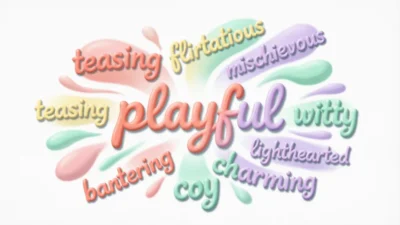
Choose naughty, cheeky, saucy, or playful when the subject is slightly inappropriate but the tone is light.
Example:
The comedian made a cheeky remark.
These choices work well when you do not want the description to sound harsh.
For a bold or confident tone
Choose daring, bold, adventurous, or forward when the main idea is confidence rather than offensiveness.
Example:
The designer introduced a daring new collection.
These words can have a positive meaning.
For a modern and unconventional tone
Choose edgy, offbeat, unconventional, or boundary-pushing when something challenges traditional expectations.
Example:
The director is famous for his boundary-pushing films.
These words are especially useful in entertainment and cultural writing.
For sexual or suggestive content
Choose suggestive, racy, sensual, erotic, or salacious according to the level and nature of the meaning.
These words are not interchangeable.
- Suggestive = indirect hints
- Racy = exciting and somewhat provocative
- Sensual = focused on physical pleasure or attraction
- Erotic = directly related to sexual desire
- Salacious = strongly sexual in a sensational or often negative way
For a negative or serious tone
Choose indecent, lewd, vulgar, improper, or inappropriate when you want to communicate disapproval.
Example:
The company received complaints about inappropriate advertising.
These words are much more serious than risqué.
Risqué vs. Suggestive
What is the difference?
Risqué describes something that is slightly daring or indecent.
Suggestive focuses more specifically on something that indirectly hints at another meaning, often a sexual one.
For example:
The comedian told a risqué joke.
The joke is slightly daring or inappropriate.
The comedian made a suggestive comment.
The comment indirectly hints at something.
Risqué vs. Provocative
Which word should you use?
Risqué usually suggests mild impropriety.
Provocative is broader. It can describe something sexual, but it can also mean something designed to challenge ideas or create a strong reaction.
For example:
She wore a risqué costume.
She created a provocative work of art.
The second sentence does not necessarily involve sexuality.
Risqué vs. Racy
Are they interchangeable?
They can overlap, especially when describing entertainment or media.
However, racy often suggests more obvious sexual excitement, while risqué can describe something that is merely daring or slightly improper.
If you want a softer expression, risqué is often more appropriate.
Risqué vs. Indecent
What is the difference?
Risqué is often mild and can even sound playful.
Indecent is much stronger and usually expresses that something violates accepted standards of behavior or decency.
Compare:
The comedian made a risqué joke.
The performer was accused of indecent behavior.
The second sentence has a much more serious tone.
Common Mistakes When Using Risqué Synonyms
Treating all synonyms as equally strong
Words such as cheeky, suggestive, and lewd have very different levels of intensity.
Always consider the emotional effect of the word before using it.
Using “erotic” when you only mean “daring”
Erotic has a direct connection with sexual desire. If you simply mean unusual or bold, daring, edgy, or provocative may be more accurate.
Using “inappropriate” as a direct replacement
Inappropriate means unsuitable for a particular situation. It does not necessarily mean suggestive or sexual.
For example, a joke can be inappropriate because it is offensive, even if it is not risqué.
Confusing provocative with sexual
Something can be provocative without having anything to do with sexuality.
A political speech, painting, or article can be provocative because it challenges people’s beliefs.
Why Understanding Risqué Synonyms Matters
Learning nuanced vocabulary helps you express ideas more accurately.
For ESL learners, these distinctions make it easier to understand movies, books, advertisements, social media, and everyday conversations.
For students, precise word choice can improve essays and descriptive writing.
For writers and content creators, the right synonym helps establish the exact mood. A character can be cheeky, daring, edgy, sensual, or provocative, and each choice creates a different impression.
Frequently Asked Questions About Risqué Synonyms
What is the closest synonym for risqué?
Depending on the context, suggestive, racy, provocative, daring, and edgy can be close alternatives.
Is risqué a positive or negative word?
It can be either. It often has a playful or mildly daring tone, but the context determines whether the speaker views the subject positively or negatively.
Is risqué a formal word?
Risqué is more polished than many slang alternatives, but it is not usually considered a highly formal word. It is common in descriptions of entertainment, fashion, humor, and culture.
What is a polite synonym for risqué?
Suggestive, daring, bold, or cheeky can be suitable when you want a softer expression.
What is a stronger synonym for risqué?
Depending on the intended meaning, lewd, salacious, indecent, or scandalous can be stronger. These words often carry a more negative tone.
Can risqué describe a joke?
Yes. Risqué joke commonly refers to humor containing slightly sexual, suggestive, or socially daring material.
Final Takeaways
The word risqué describes something that is slightly daring, suggestive, or socially bold without necessarily being completely explicit. It is especially useful when you want to communicate a sense of mild boundary-pushing.
The best synonym depends on your intended meaning. Choose suggestive for indirect hints, daring for positive boldness, edgy for unconventional entertainment, cheeky for playful behavior, and racy for more noticeably provocative content.https://en.wikipedia.org/w/index.php?search=content.&title=Special:Search&ns0=1
For stronger negative meanings, words such as lewd, vulgar, indecent, and salacious may be appropriate. In formal or academic writing, unconventional, provocative, or controversial may communicate the idea more precisely.
Good vocabulary is not about replacing a word with the longest or most impressive alternative. It is about selecting the word that matches your meaning, audience, and tone.

Liam Henry is a content author at Synonymed, specializing in vocabulary enrichment and synonym guides. He creates clear, engaging resources that help learners improve English word knowledge and language fluency.