The terms sociopath and psychopath are often used to describe people who seem to lack empathy, ignore social rules, manipulate others, or show little remorse.
However, the two words are not official psychiatric diagnoses. In modern clinical practice, professionals use antisocial personality disorder (ASPD) for a recognized mental health diagnosis, while “psychopathy” and “sociopathy” are commonly used to describe particular patterns of traits and behavior.
The distinction can still be useful when reading psychology articles, watching films, or discussing personality and behavior.
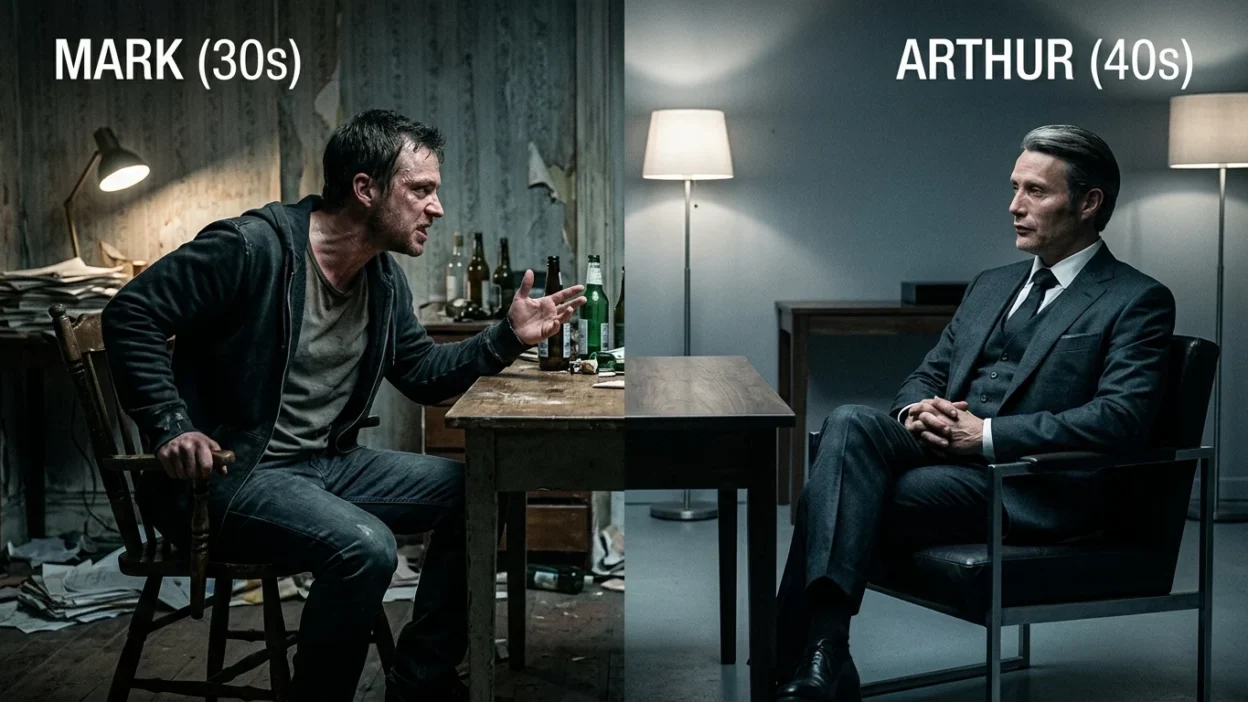
Traditionally, psychopathy has been associated more with emotional detachment, shallow emotions, and calculated behavior,
while sociopathy has often been associated with impulsivity, rule breaking, and difficulty controlling behavior.
These are general descriptions, not reliable ways to diagnose a person.
Quick Answer
Psychopathy and sociopathy are not separate official mental health diagnoses. Both terms are commonly associated with antisocial personality traits and behaviors. Psychopathy is often described as involving greater emotional detachment and calculated behavior, while sociopathy is more often linked with impulsivity, poor emotional control, and disregard for social rules. Individual experiences vary considerably.
Why People Confuse It
People confuse sociopath vs psychopath because the terms overlap heavily.
Both words are commonly associated with behaviors such as:
- Disregarding other people’s rights
- Lying or deceiving others
- Manipulating people
- Showing limited empathy
- Ignoring social rules
- Acting without considering consequences
- Having difficulty maintaining healthy relationships
There is also a major terminology issue: neither “sociopath” nor “psychopath” is the formal DSM-5-TR diagnosis. The American Psychiatric Association recognizes antisocial personality disorder as a personality disorder.
So, when someone asks, “Is a psychopath worse than a sociopath?” there is no simple clinical answer. These labels describe different concepts rather than two official diagnostic categories.
First Word: Sociopath
A sociopath is a person described using the informal term sociopath, usually in connection with persistent antisocial behavior.
The word is often associated with:
- Impulsive decisions
- Frequent rule-breaking
- Poor emotional control
- Aggressive reactions
- Difficulty maintaining responsibilities
- Disregard for social norms
- Limited empathy or remorse
For example, someone might repeatedly break rules, lose their temper quickly, damage relationships, and make risky decisions without considering the consequences.
However, sociopathy itself is not a formal diagnosis. Modern clinical language generally focuses on antisocial personality disorder and the specific symptoms and behaviors involved.
Simple example
“He often acts without thinking and repeatedly ignores important rules.”
This describes behavior sometimes associated with the traditional idea of sociopathy, but it is not enough to diagnose someone.
Second Word: Psychopath
A psychopath is a person described using the term psychopath, which is generally associated with a particular pattern of personality traits and antisocial behavior.
Psychopathy is often described in terms of:
- Emotional detachment
- Reduced empathy
- Limited remorse
- Superficial or insincere charm
- Manipulative behavior
- A sense of superiority
- Calculated or controlled behavior
Psychopathy is also not a formal DSM-5-TR diagnosis. Researchers and clinicians may use the concept of psychopathic traits in psychological assessment and research, but a person is not officially diagnosed simply as “a psychopath.”
Simple example
“She appears emotionally detached and carefully manipulates situations to achieve her goals.”
That description may resemble traditional descriptions of psychopathic traits, but it does not establish a diagnosis.
Sociopath vs Psychopath: Comparison Table
| Feature | Sociopath | Psychopath |
|---|---|---|
| Official diagnosis? | No | No |
| Common clinical connection | Antisocial personality disorder | Antisocial personality traits/psychopathy |
| Emotional control | Often described as poorer | Often described as more controlled |
| Impulsivity | Often emphasized | May be less prominent in traditional descriptions |
| Empathy | Often limited | Often markedly limited |
| Remorse | Often limited or inconsistent | Often described as very limited |
| Rule-breaking | Commonly emphasized | Commonly associated |
| Behavior | Often portrayed as reactive | Often portrayed as calculated |
| Relationships | May be unstable | May involve manipulation or superficial charm |
| Diagnosis from these traits alone | No | No |
These distinctions are broad descriptions rather than diagnostic rules. People do not necessarily fit neatly into one category.
When to Use Each
Use sociopath when:
- You are discussing the traditional or popular meaning of the word.
- You are explaining how the term is used in everyday language.
- You are comparing common descriptions of antisocial behavior.
Use psychopath when:
- You are discussing psychopathy as a psychological concept.
- You are talking about psychopathic traits in psychology or criminology.
- You are explaining the traditional distinction between psychopathy and sociopathy.
Use antisocial personality disorder when:
- You are discussing an actual psychiatric diagnosis.
- You are writing about clinical assessment.
- You want medically precise terminology.
One important point: antisocial personality disorder does not mean simply being shy, unfriendly, or antisocial in everyday language. In psychiatry, it refers to a persistent pattern involving disregard for and violation of other people’s rights and social norms.
10+ Examples of Sociopath vs Psychopath
1. Breaking rules
Sociopath: “He repeatedly breaks rules without thinking about the consequences.”
Psychopath: “She deliberately breaks a rule after calculating how to avoid getting caught.”
2. Anger
Sociopath: “He quickly loses his temper when someone disagrees with him.”
Psychopath: “She remains unusually calm while deliberately provoking another person.”
3. Manipulation
Sociopath: “He lies impulsively to escape responsibility.”
Psychopath: “She carefully creates a false story to influence someone’s decision.”
4. Relationships
Sociopath: “His relationships frequently become unstable because of impulsive behavior.”
Psychopath: “She may appear charming while using relationships primarily for personal gain.”
5. Risk-taking
Sociopath: “He takes unnecessary risks without considering what might happen.”
Psychopath: “She may take a calculated risk after considering the possible rewards.”
6. Remorse
Sociopath: “He may feel regret after hurting someone but still repeat the behavior.”
Psychopath: “He may show little genuine remorse for the harm caused.”
7. Emotional reactions
Sociopath: “His behavior changes quickly when he becomes angry or frustrated.”
Psychopath: “Her outward emotional reactions may appear controlled or shallow.”
8. Lying
Sociopath: “He lies when he is under pressure.”
Psychopath: “She may use deliberate deception as part of a larger plan.”
9. Social rules
Sociopath: “He repeatedly ignores workplace rules.”
Psychopath: “She understands the rules but deliberately ignores them when doing so benefits her.”
10. Planning
Sociopath: “He acts first and thinks about the consequences later.”
Psychopath: “He may plan his actions carefully before acting.”
11. Empathy
Sociopath: “He has difficulty understanding how his actions affect other people.”
Psychopath: “She may understand another person’s emotions without experiencing much emotional concern for them.”
These examples illustrate common descriptions, not diagnostic tests.
Common Mistakes
Mistake 1: Treating the terms as official diagnoses
Neither “sociopath” nor “psychopath” is the formal DSM-5-TR diagnosis. Antisocial personality disorder is the recognized diagnosis.
Mistake 2: Assuming every manipulative person is a psychopath
Manipulation can occur for many different reasons. One behavior cannot establish psychopathy or ASPD.
Mistake 3: Assuming all people with ASPD are violent
Aggression and disregard for safety can occur in ASPD, but a diagnosis does not mean that every individual will behave violently. The APA describes ASPD more broadly in terms of persistent disregard for the rights of others and social rules.
Mistake 4: Using “antisocial” to mean shy
In everyday English, antisocial can mean avoiding social interaction. In psychiatry, antisocial personality disorder has a very different meaning.
Mistake 5: Diagnosing someone from a few behaviors
Only a qualified professional can properly evaluate a mental health condition. The DSM is intended to support assessment by trained professionals.
Memory Trick
Remember:
Sociopath → Social rules
Psychopath → Psychological and emotional detachment
This is only a memory aid, not a clinical definition.
Another easy way to remember the traditional distinction is:
Sociopathy = more reactive and impulsive
Psychopathy = more detached and calculated
Again, real people and clinical presentations are more complicated than this shortcut.
American vs British English
The spelling is the same in both American and British English:
- American English: sociopath, psychopath
- British English: sociopath, psychopath
The pronunciation and basic meaning are also essentially the same.
The bigger difference is not between American and British English but between everyday language and clinical language. In both varieties of English, sociopath and psychopath are widely understood informal terms, while antisocial personality disorder is the formal psychiatric term used in the DSM-5-TR.
Similar Words
Here are several related terms that are easy to confuse:
- Antisocial personality disorder (ASPD): A recognized personality disorder involving a persistent pattern of disregard for the rights of others and social rules.
- Psychopathy: A psychological concept involving a cluster of traits such as limited empathy, remorse, and emotional responsiveness.
- Sociopathy: An informal term historically used to describe patterns of antisocial behavior.
- Narcissism: A term related to excessive self-focus, entitlement, or a strong need for admiration; it is not the same as psychopathy.
- Machiavellianism: A personality trait associated with strategic manipulation and a focus on gaining influence or advantage.
- Empathy: The ability to understand or share another person’s emotional experience.
- Remorse: A feeling of regret or guilt about having caused harm.
- Manipulation: Attempting to influence another person’s thoughts, feelings, or behavior, often unfairly or deceptively.
Psychopathy, narcissism, and Machiavellianism are also discussed together in the psychological concept known as the Dark Triad, although these traits are not automatically equivalent to a mental disorder.
Final Verdict
The clearest answer to “sociopath vs psychopath” is that they are overlapping, informal psychological terms rather than two separate official psychiatric diagnoses.
Traditionally, sociopath is more strongly associated with impulsive, reactive rule-breaking, while psychopath is more strongly associated with emotional detachment, manipulation, and calculated behavior. Modern clinical discussion should distinguish these concepts from antisocial personality disorder, which is the formal diagnosis recognized by the DSM-5-TR.
FAQs
1. What is the main difference between a sociopath and a psychopath?
The traditional distinction is that sociopathy is associated more with impulsive and reactive antisocial behavior, while psychopathy is associated more with emotional detachment and calculated behavior. Neither term is an official DSM-5-TR diagnosis.
2. Is a psychopath worse than a sociopath?
There is no simple clinical ranking between the two terms. They are informal concepts with overlapping characteristics, and individual behavior varies significantly.
3. Can someone be both a sociopath and a psychopath?
The terms overlap, so someone may show traits commonly described by both labels. However, these are not two separate official diagnoses that clinicians simply assign together.
4. Are sociopaths and psychopaths born that way?
There is no single cause. Personality and antisocial behavior can involve multiple biological, psychological, developmental, and environmental influences. Simplifying either condition to “born this way” or “made this way” is inaccurate.
5. Can a psychopath feel emotions?
Psychopathy is generally associated with differences in emotional processing and limited empathy or remorse, but that does not mean a person has no emotions whatsoever. Individual experiences vary.
6. Is sociopathy a mental illness?
“Sociopathy” itself is not a formal DSM-5-TR diagnosis. The term is commonly used informally for patterns of behavior associated with antisocial personality disorder.
7. Can a person with antisocial personality disorder change?
Behavioral patterns can be addressed through professional treatment and support. A person should be evaluated individually rather than assumed to fit a stereotype based on a label.
8. How can you tell if someone is a psychopath?
You cannot reliably diagnose psychopathy by looking for a few behaviors such as lying, being charming, or lacking empathy. Professional assessment requires a broader evaluation of persistent patterns and functioning.
Remember This
Sociopath vs psychopath: both are informal terms connected with antisocial traits.
Sociopath: traditionally linked more with impulsivity, poor emotional control, and rule-breaking.
Psychopath: traditionally linked more with emotional detachment, limited remorse, and calculated behavior.
ASPD: the formal psychiatric diagnosis that is most closely related to these concepts.
Most importantly, a few troubling behaviors do not make someone a psychopath or sociopath.
Conclusion
Understanding the difference between a sociopath and a psychopath starts with recognizing that these words are not interchangeable with a formal psychiatric diagnosis. Both are commonly used to describe patterns involving antisocial behavior, limited empathy, manipulation, or disregard for social rules, but the traditional descriptions emphasize different characteristics.
For accurate mental health communication, antisocial personality disorder is the more precise clinical term, while psychopathy and sociopathy are useful mainly when discussing psychological concepts, research, or everyday language. If you are concerned about a person’s behavior or your own experiences, specific behaviors and their effects are more useful to discuss with a qualified professional than applying a label.