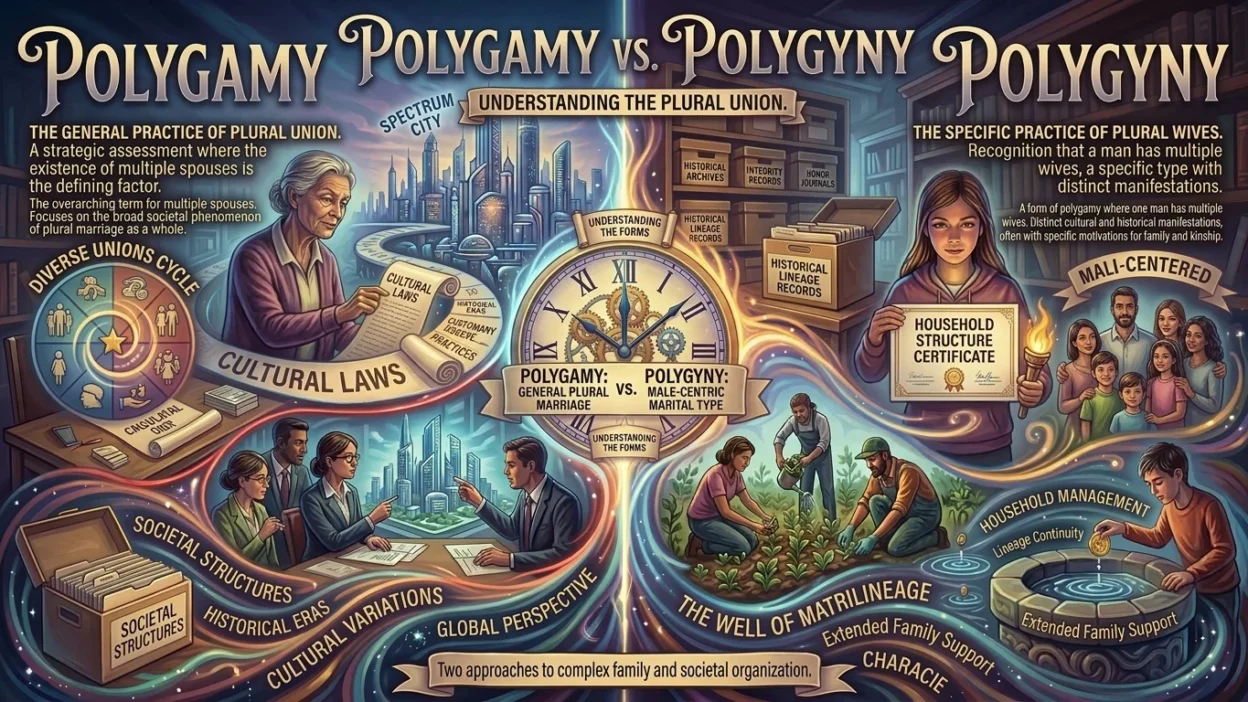
Polygamy and polygyny are related terms, but they do not mean exactly the same thing.
Polygamy is the general term for a marriage system in which a person has more than one spouse at the same time.
Polygyny is a specific form of polygamy in which one man has multiple wives.
For example, a marriage involving one husband and three wives is polygynous and therefore also polygamous.
The distinction matters because polygamy is the broader category, while polygyny describes one particular arrangement within that category.
Another form is polyandry, in which one woman has multiple husbands.
These terms are used in anthropology, sociology, history, religion, and discussions of marriage systems.
Understanding the difference helps avoid using “polygamy” when a more specific term such as “polygyny” or “polyandry” is intended.
Quick Answer
Polygamy is a broad term for having more than one spouse at the same time. Polygyny is a specific type of polygamy in which one man has multiple wives. Therefore, every polygynous marriage is polygamous, but not every polygamous marriage is polygynous. Polyandry, involving one woman and multiple husbands, is another form.
Why Do People Confuse It?
People often confuse polygamy and polygyny because both words describe marriage involving multiple spouses.
In everyday conversation, polygamy is often used as a general word for plural marriage. However, academic and social-science writing may use more specific terminology to distinguish different forms.
The key relationship is:
Polygamy = broad category
Polygyny = one type of polygamy
Polyandry = another type of polygamy
For example:
One man + three wives = polygyny and polygamy
But:
One woman + three husbands = polyandry and polygamy
The broader term tells you that there is more than one spouse, while the more specific term tells you the gender arrangement.
First Word: “Polygamy”
Polygamy refers broadly to a marriage system in which a person has more than one spouse at the same time.
The word comes from Greek roots associated with many and marriage.
Polygamy is a general category that can include different arrangements.
Main forms of polygamy
The two commonly discussed forms are:
- Polygyny — one man has multiple wives.
- Polyandry — one woman has multiple husbands.
In some academic discussions, other arrangements may also be described under broader concepts of plural or multiple-partner marriage, but polygyny and polyandry are the principal traditional categories used in comparative discussions of marriage systems.
Example
Suppose a man is married to three women at the same time.
That arrangement can be described as:
- Polygamy, because there is more than one spouse.
- Polygyny, because one man has multiple wives.
Second Word: “Polygyny”
Polygyny is a specific form of polygamy in which one man is married to multiple women at the same time.
The word is often used in anthropology and sociology when researchers want to distinguish this arrangement from other forms of plural marriage.
Example
Imagine that one man has three wives, and all three marriages exist simultaneously.
That is:
Polygyny
It is also:
Polygamy
However, simply saying polygamy gives less specific information about the arrangement.
Polygyny vs. polygamy in one sentence
Polygyny is a type of polygamy.
That is the simplest way to remember the relationship.
Polygamy vs Polygyny: Comparison Table
| Term | Meaning | Specific or broad? | Example |
|---|---|---|---|
| Polygamy | Marriage involving more than one spouse at the same time | Broad | A person has multiple spouses |
| Polygyny | One man has multiple wives | Specific | One husband has three wives |
| Polyandry | One woman has multiple husbands | Specific | One wife has three husbands |
| Monogamy | Marriage involving two spouses, typically one spouse at a time | Different system | One husband and one wife |
When Should You Use “Polygamy” or “Polygyny”?
Use “polygamy” when discussing the broad concept
Use polygamy when you are talking generally about marriage involving multiple spouses and the specific arrangement is not important.
For example:
The article discusses the history of polygamy.
This does not necessarily tell the reader whether the marriages involve one man with multiple wives, one woman with multiple husbands, or another arrangement.
Use “polygyny” when one man has multiple wives
If the specific arrangement is important, polygyny is more precise.
The study examines polygyny in several societies.
This tells the reader that the discussion specifically concerns marriage involving one man and multiple wives.
Use “polyandry” when one woman has multiple husbands
The researchers studied polyandry in the region.
This identifies the arrangement more precisely than the broad term “polygamy.”
10+ Examples of Polygamy and Polygyny
- Polygamy is a broad term for marriage involving multiple spouses.
- Polygyny is one form of polygamy.
- A man with two wives is practicing polygyny.
- A man with four wives is in a polygynous marriage arrangement.
- A woman with two husbands is practicing polyandry.
- Both polygyny and polyandry can be discussed under the broader category of polygamy.
- The researcher compared polygamous marriage systems across societies.
- The historian specifically examined polygyny rather than all forms of polygamy.
- A discussion of polygamy may include both polygyny and polyandry.
- A discussion of polygyny focuses specifically on multiple-wife marriage.
- Monogamy differs from polygamy because it involves two spouses rather than multiple spouses at the same time.
- The term polygynous describes a marriage involving one man and multiple wives.
Example in context
Some discussions use polygamy as a general term, while anthropologists may use polygyny when they specifically mean a marriage system involving one man and multiple wives.
Common Mistakes
1. Treating polygamy and polygyny as exact synonyms
They are related but not identical.
Polygamy is broader.
Polygyny is more specific.
2. Calling every plural marriage polygyny
This is inaccurate.
If one woman has multiple husbands, the specific term is polyandry, not polygyny.
3. Assuming polygamy always means one man with multiple wives
This is a common everyday use of the word, but technically polygamy is the broader category.
If the gender arrangement matters, use the more precise term.
4. Confusing polygyny with polyandry
Remember:
- Polygyny → one man, multiple wives
- Polyandry → one woman, multiple husbands
The words look similar, so they are easy to mix up.
5. Confusing polygamy with an open relationship
These concepts are not automatically the same.
Polygamy specifically refers to a marriage system involving multiple spouses. An open relationship may involve consensual relationships outside a primary partnership without those additional relationships being marriages.
Memory Trick
Use the first part of each word:
Poly = many
Then remember:
Polygyny → many women with one man
Polyandry → many men with one woman
And:
Polygamy → many spouses, generally
A simple memory formula is:
Polygamy = umbrella term
Polygyny = one man + multiple wives
Polyandry = one woman + multiple husbands
American vs British English
There is no major difference between American and British English in the basic meanings of polygamy and polygyny.
Both varieties use polygamy as the general term and polygyny as the more specific term for one man having multiple wives.
The pronunciation may vary slightly between individual speakers and accents, but the definitions remain essentially the same.
These terms are also used internationally in academic fields such as anthropology, sociology, history, and religious studies.
Similar Words and Expressions
Polyandry
Polyandry is a form of plural marriage in which one woman has multiple husbands.
Polyandry is less commonly discussed in many societies than polygyny, but it is an established anthropological term.
Monogamy
Monogamy generally refers to marriage involving two spouses, rather than multiple spouses at the same time.
Monogamy and polygamy describe different marriage systems.
Polygynous
Polygynous is the adjective related to polygyny.
The community has a history of polygynous marriage.
Polygamous
Polygamous is the adjective related to polygamy.
The study examines polygamous marriage systems.
Plural marriage
Plural marriage is another expression used to describe marriage involving multiple spouses.
It is especially useful when discussing the concept without immediately specifying the gender arrangement.
Final Verdict
Polygamy and polygyny are not exact synonyms. Polygamy is the broader term for marriage involving more than one spouse at the same time. Polygyny is a specific form of polygamy in which one man has multiple wives.
The simplest way to remember the difference is:
Polygamy = multiple spouses
Polygyny = one man, multiple wives
If you are discussing marriage systems generally, polygamy may be appropriate. If you specifically mean a marriage involving one man and multiple wives, polygyny is the more precise term.
FAQs
What is the difference between polygamy and polygyny?
Polygamy is the broad term for marriage involving more than one spouse at the same time. Polygyny is a specific form of polygamy in which one man has multiple wives.
Is polygyny a type of polygamy?
Yes. Polygyny is a type of polygamy. Every polygynous marriage is polygamous, but polygamy can also include other forms, such as polyandry.
What is the difference between polygyny and polyandry?
Polygyny means one man has multiple wives. Polyandry means one woman has multiple husbands. Both are forms of polygamy.
Does polygamy always mean one man with several wives?
No. Technically, polygamy is the broader category of marriage involving multiple spouses. One man with multiple wives is specifically called polygyny.
What is a polygynous marriage?
A polygynous marriage is a marriage arrangement in which one man has multiple wives at the same time. It is a specific form of polygamy.
Is polygamy the same as an open relationship?
No. Polygamy refers specifically to a marriage system involving multiple spouses. An open relationship may involve consensual relationships outside a primary partnership without those additional relationships being marriages.
What does “polygamous” mean?
Polygamous is an adjective describing a person, marriage, or social system involving polygamy.
For example:
The society historically practiced polygamous marriage.
What does “polygynous” mean?
Polygynous describes a marriage or social system in which one man has multiple wives.
For example:
The study examined polygynous households.
Remember This
Polygamy = the broad category of marriage involving multiple spouses.
Polygyny = one man with multiple wives.
Polyandry = one woman with multiple husbands.
Monogamy = marriage involving two spouses rather than multiple spouses at the same time.
The key word to remember is “gyny,” which relates to women. In polygyny, the multiple spouses are wives.
Conclusion
The difference between polygamy and polygyny is mainly one of scope. Polygamy is the general term for marriage involving more than one spouse at the same time, while polygyny specifically describes one man having multiple wives. Using the more precise term can make discussions of marriage systems clearer.
If you only need the broad concept, polygamy is appropriate. If you are specifically describing one man married to multiple women, polygyny is the accurate term. Remembering the related term polyandry also helps: polygyny involves multiple wives, while polyandry involves multiple husbands.