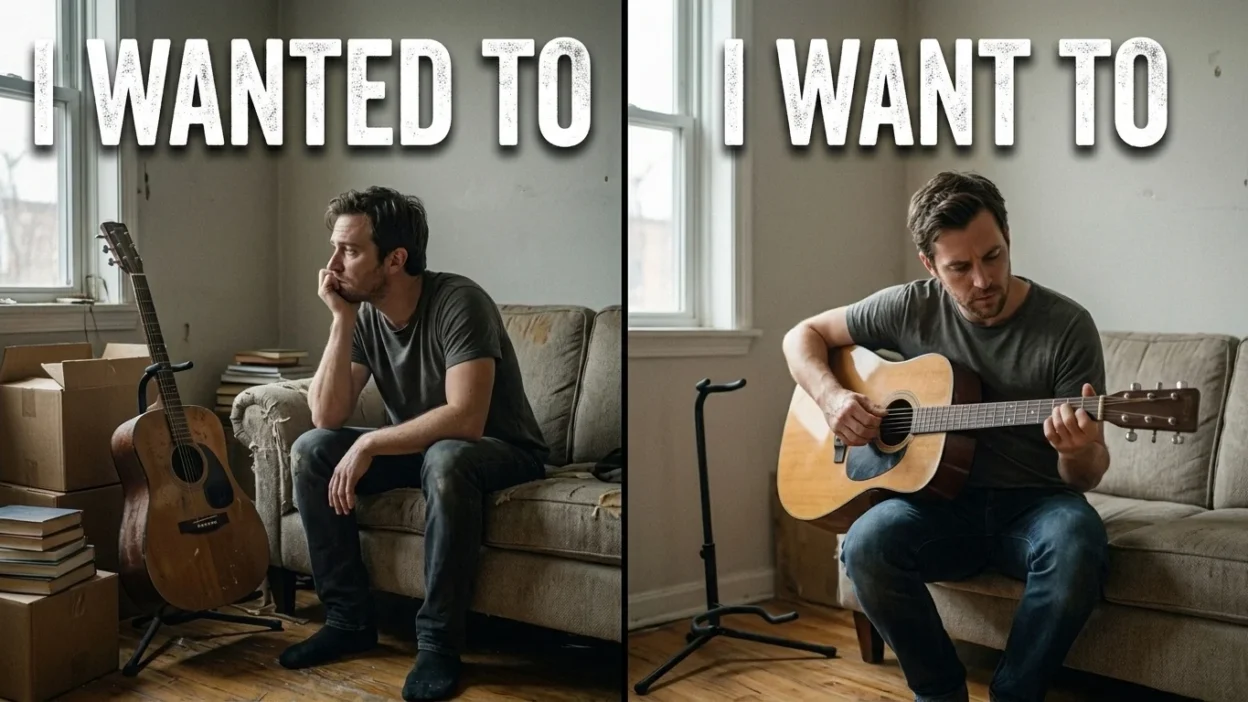
Have you ever wondered whether to say “I wanted to” or “I want to”?
Both expressions are correct in English, but they communicate different meanings depending on the time, situation, and speaker’s intention.
Understanding the difference will help you speak more naturally, write clearly, and avoid common tense mistakes.
“I want to” expresses a present desire or intention, while “I wanted to” usually describes a desire or intention in the past.
For example, “I want to learn English” means you have that desire now.
“I wanted to learn English” describes a desire you had earlier, although you may or may not still have it.
However, “I wanted to ask you something” can also be a polite way to introduce a request in a present conversation.
The correct expression depends on what you mean and how you want to sound.
Quick Answer: I Wanted To vs I Want To
“I want to” refers to a desire or intention you have now. “I wanted to” usually refers to a desire or intention you had in the past. For example, “I want to call you” expresses a current intention, while “I wanted to call you yesterday” refers to the past. “I wanted to ask you something” can also sound polite and indirect.
Why Do People Confuse “I Wanted To” and “I Want To”?
People confuse these expressions because both describe a person’s wishes, plans, or intentions. The main difference is the verb tense.
- Want is the present tense.
- Wanted is the past tense.
However, English speakers sometimes use the past tense to sound less direct or more polite. This means I wanted to does not always describe a desire that has completely ended.
Compare these sentences:
- I want to speak with you. — A direct statement of a current desire.
- I wanted to speak with you yesterday. — A desire or intention in the past.
- I wanted to ask you a question. — Often a polite introduction to a question in the present.
The surrounding words and situation help determine the intended meaning.
What Does “I Want To” Mean?
“I want to” expresses a present desire, wish, plan, or intention to do something. It is commonly used in everyday conversations, messages, professional communication, and informal writing.
The basic structure is:
Subject + want to + base form of the verb
Examples:
- I want to learn English.
- I want to visit London.
- I want to improve my writing.
- I want to talk to you.
- I want to buy a new laptop.
In each sentence, the speaker expresses something they currently want to do.
When Should You Use “I Want To”?
Use I want to when you are expressing a current desire or making your intention clear.
1. Expressing a desire
“I want to eat something.”
You feel like eating now.
2. Expressing a plan
“I want to start my own business.”
You currently have this goal, although it may not be a fixed plan.
3. Making a direct request or expressing an intention
“I want to discuss the report.”
This communicates your intention clearly, though it may sound direct in some professional situations.
4. Sharing a personal goal
“I want to become a better writer.”
The sentence expresses a goal you currently have.
What Does “I Wanted To” Mean?
“I wanted to” usually describes a desire, wish, or intention that existed in the past. It can refer to something you planned to do, hoped to do, or felt like doing at an earlier time.
The basic structure is:
Subject + wanted to + base form of the verb
Examples:
- I wanted to call you yesterday.
- I wanted to visit that museum last year.
- I wanted to ask you a question.
- I wanted to learn how to swim.
- I wanted to help, but I arrived too late.
In the first two examples, the past-time references make the meaning clear. In the last example, the speaker explains a past intention that was not fulfilled.
When Should You Use “I Wanted To”?
Use I wanted to when describing a past desire, an earlier plan, or a missed opportunity.
1. Describing a past desire
“I wanted to become a doctor when I was young.”
This describes a childhood ambition.
2. Explaining an unfulfilled intention
“I wanted to call you, but I lost your number.”
The speaker intended to call but did not do so.
3. Referring to a past plan
“I wanted to travel last summer.”
The sentence describes a desire or plan that existed last summer. It does not necessarily tell us whether the trip happened.
4. Introducing a polite request
“I wanted to ask if you could help me.”
Although wanted is in the past tense, the speaker may be asking for help now. The past form softens the approach and can sound less direct.
I Wanted To vs I Want To: Comparison Table
| Feature | I want to | I wanted to |
|---|---|---|
| Verb tense | Present | Past |
| Main meaning | Current desire or intention | Past desire or intention |
| Time reference | Usually now or the future | Usually an earlier time |
| Common use | Direct statements and plans | Past experiences and polite openings |
| Example | I want to speak to you. | I wanted to speak to you yesterday. |
| Politeness | Clear and direct | Can sound softer or more indirect |
| Does it mean the desire has ended? | No | Not necessarily |
Key takeaway: Use I want to for a current desire and I wanted to for a past desire. Remember that I wanted to can also be a polite way to introduce a present request.
When Should You Use Each Expression?
When to Use “I Want To”
Use I want to when you want to communicate a present wish or intention directly.
Examples:
- I want to learn a new language.
- I want to speak with the manager.
- I want to explain my point.
- I want to apply for this position.
- I want to spend more time with my family.
This expression is appropriate in everyday conversation and many professional situations. However, when making a request, you may choose a softer phrase such as “I would like to” if you want to sound more courteous.
When to Use “I Wanted To”
Use I wanted to when the desire existed in the past or when you want to introduce a request indirectly.
Examples:
- I wanted to visit you last weekend.
- I wanted to tell you the truth.
- I wanted to apply for that job last year.
- I wanted to ask you something.
- I wanted to check whether the meeting was still scheduled.
The last two examples can be used in a conversation happening right now. They do not necessarily mean that the speaker no longer wants to ask or check something.
12 Examples of “I Wanted To” vs “I Want To”
| I want to | I wanted to |
|---|---|
| I want to talk to you now. | I wanted to talk to you yesterday. |
| I want to learn Spanish. | I wanted to learn Spanish when I was younger. |
| I want to buy a new phone. | I wanted to buy a new phone last month. |
| I want to help you. | I wanted to help you, but I was busy. |
| I want to ask a question. | I wanted to ask you a question. |
| I want to join the team. | I wanted to join the team last year. |
| I want to explain the problem. | I wanted to explain the problem earlier. |
| I want to visit my grandparents. | I wanted to visit my grandparents last weekend. |
Here are four additional examples:
- Present desire: I want to improve my English pronunciation.
- Past desire: I wanted to improve my English pronunciation before my interview.
- Polite opening: I wanted to see if you were available for a quick meeting.
- Earlier intention: I wanted to send you the document, but I forgot.
These examples show that time expressions such as now, yesterday, and last weekend can clarify the difference. In polite openings, context matters more than the literal past-tense form alone.
Common Mistakes to Avoid
1. Using “I Wanted To” for Every Present Desire
If you want something now, I want to is usually the clearest option.
Less direct: I wanted to learn more about this topic.
Clear present meaning: I want to learn more about this topic.
The first sentence can still be appropriate if you are introducing a question politely or referring to an earlier desire.
2. Assuming “I Wanted To” Always Means You No Longer Want Something
This is incorrect. A past-tense verb does not automatically mean the desire has disappeared.
For example:
“I wanted to ask you a question.”
You may still want to ask it. The sentence can simply introduce your question in a polite way.
3. Forgetting to Use the Base Verb After “Want To”
After want to or wanted to, use the base form of the next verb.
Correct:
- I want to go.
- I wanted to speak.
Incorrect:
- I want to went.
- I wanted to spoke.
The verb after to remains in its base form.
4. Confusing “I Wanted To” With “I Would Like To”
These expressions are not always interchangeable.
- I want to speak to you. A direct statement of desire.
- I wanted to speak to you. A past intention or a potentially polite opening.
- I would like to speak to you. A courteous expression of a present desire.
For formal requests, I would like to is often a particularly useful choice.
5. Thinking “I Wanted To” Is Always More Polite
It can sound less direct, but politeness also depends on tone, context, and the request itself. “I wanted to ask you a question” may sound polite, while “I want you to do this immediately” can sound forceful.
What Is an Easy Memory Trick?
Remember this simple rule:
Want = now. Wanted = usually then.
Examples:
- I want to eat. — I feel like eating now.
- I wanted to eat earlier. — I felt like eating at an earlier time.
For polite requests, remember a second rule:
Wanted can soften a present request.
For example:
“I wanted to ask if you could help me.”
Even though wanted is past tense, the speaker may be asking for help in the present.
American vs British English: Is There a Difference?
There is no significant difference between American and British English in the basic meaning of these expressions. Both varieties use I want to for present desires and I wanted to for past desires or indirect requests.
American English examples:
- I want to talk to you.
- I wanted to ask you something.
- I want to talk to you.
- I wanted to ask you something.
Both forms are natural in both varieties. The choice depends on the intended meaning and level of directness rather than regional spelling or grammar.
Similar Expressions You Should Know
I Want To vs I Would Like To
I want to expresses a desire directly, while I would like to often sounds more polite or formal.
- I want to speak to the manager.
- I would like to speak to the manager.
Both are correct, but the second is often better for a courteous request.
I Wanted To vs I Had Wanted To
I wanted to describes a past desire. I had wanted to places that desire before another past event.
- I wanted to call her yesterday.
- I had wanted to call her before I heard the news.
The past perfect form emphasizes the earlier timing of the desire.
I Want To vs I Need To
Want expresses desire, while need expresses necessity.
- I want to rest.
- I need to rest.
The first expresses a preference; the second suggests that rest is necessary.
I Wanted To vs I Was Going To
I wanted to describes a desire or intention. I was going to more specifically describes a planned or expected action, often one that did not happen.
- I wanted to call you.
- I was going to call you, but my phone died.
The second sentence makes an interrupted plan especially clear.
Final Verdict: Which Expression Should You Choose?
Use “I want to” when expressing a current desire or intention. Use “I wanted to” when referring to a past desire or introducing a request in a softer, less direct way.
For example, “I want to talk to you” communicates a present intention directly. “I wanted to talk to you yesterday” describes an earlier intention. Meanwhile, “I wanted to ask you something” can be a polite opening in a conversation happening now.
Neither expression is inherently more correct than the other. The best choice depends on when the desire existed and how directly you want to communicate it.
Frequently Asked Questions
1. What is the difference between “I wanted to” and “I want to”?
“I want to” usually expresses a current desire or intention, while “I wanted to” usually refers to a desire or intention in the past. The past-tense form can also introduce a present request politely.
2. Is “I wanted to ask you something” correct?
Yes. It is a natural and common way to introduce a question politely. It does not necessarily mean that you no longer want to ask the question.
3. Is “I wanted to” past tense?
Yes. Wanted is the simple past tense of want. However, speakers sometimes use it as a polite or indirect expression in present conversations.
4. Can I use “I wanted to” for something I still want?
Yes. For example, “I wanted to ask you if you could help me” can express a current request. Context determines the intended meaning.
5. Which is more polite: “I want to” or “I wanted to”?
“I wanted to” can sound softer or less direct. “I would like to” is another useful option when making a polite request, especially in professional situations.
6. Is “I want to talk to you” grammatically correct?
Yes. It is correct and expresses a current desire or intention to talk. Depending on the context, it can sound direct but is not inherently rude.
7. Should I say “I wanted to go” or “I want to go”?
Say “I want to go” if you are expressing a current desire. Say “I wanted to go” if you are describing an earlier desire or using the past form for a particular conversational purpose.
Remember This
- I want to: A present desire or intention.
- I wanted to: Usually a past desire or intention.
- I wanted to ask: Often a polite introduction to a present question.
- I would like to: A courteous way to express a current desire.
- I was going to: A plan or expected action, often one that did not happen.
Conclusion
The difference between “I wanted to” and “I want to” depends mainly on tense, meaning, and context. I want to is the natural choice when you are expressing something you currently wish or intend to do. I wanted to generally describes a desire you had in the past, but it can also make a present request sound less direct. Understanding this distinction will help you choose the right expression in conversations, messages, and professional writing.
When deciding which phrase to use, ask yourself whether you are describing a current desire, an earlier intention, or a polite way to begin a request. If you mean something you want now, choose I want to. If you are talking about an earlier desire or introducing a request indirectly, I wanted to may be more suitable. Both expressions are correct when used in the right context.