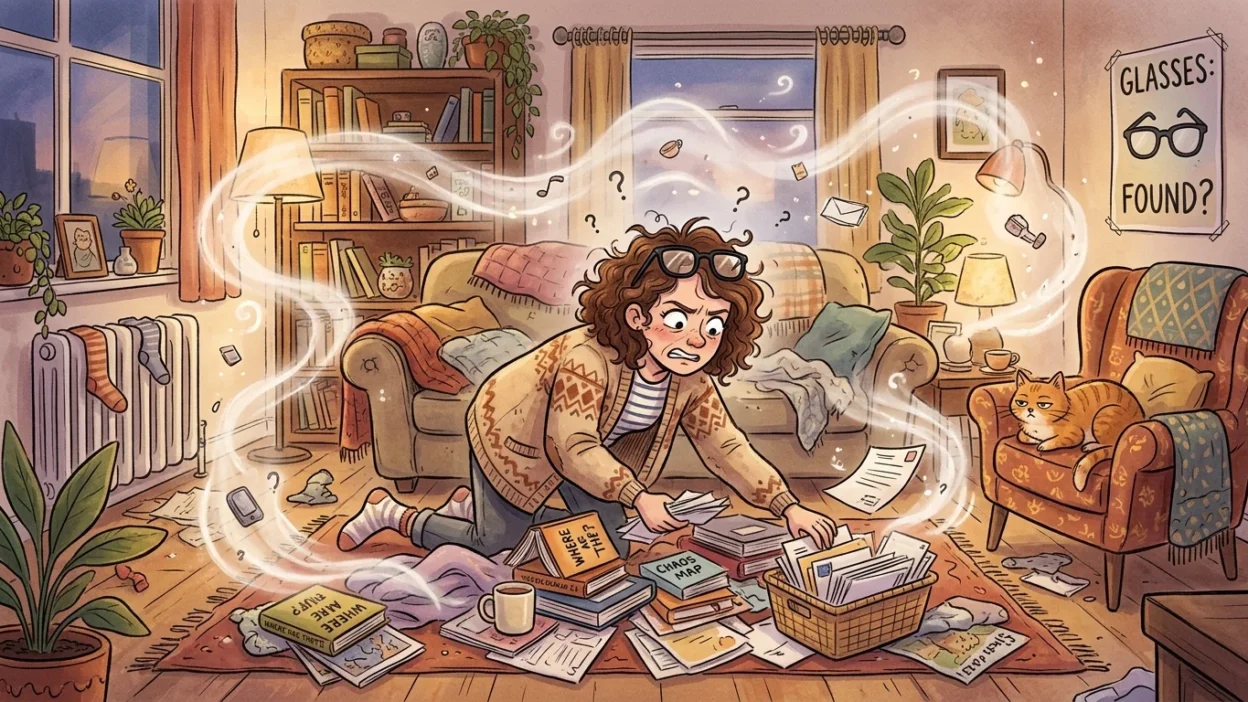
Have you ever known exactly what you wanted to say, but suddenly the word disappeared from your mind?
You may describe that moment as a brain fart. This informal phrase is common in everyday English, especially in casual conversations, social media, and humorous writing.
However, “brain fart” is not always the best choice. It is informal and can sound funny, self-deprecating, or slightly childish.
Students, ESL learners, writers, and content creators may need other words that express the same basic idea with a different level of formality or meaning.
Learning brain fart synonyms can help you choose the right expression for the situation.
Some alternatives describe a temporary memory problem, while others focus on confusion, distraction, forgetfulness, or making a small mental mistake.
What Does “Brain Fart” Mean?
A brain fart is an informal expression for a short moment when your mind seems to stop working normally. You might forget an obvious word, lose your train of thought, make a silly mistake, or temporarily forget something you already know.
For example:
“I had a total brain fart and forgot my own password.”
The expression is usually humorous and casual. It is suitable for conversations with friends, informal messages, blogs, social media, and other relaxed settings.
For academic writing, professional communication, or formal situations, a more precise synonym is usually better.
30 Brain Fart Synonyms and Their Meanings
1. Brain Freeze
Meaning: A temporary moment when you cannot think clearly or remember something.
Example sentence: “I had a brain freeze during the presentation and forgot the next point.”
Best usage context: Casual conversation; often used humorously.
2. Mental Block
Meaning: A situation where you cannot remember, understand, or think of something you normally know.
Example sentence: “I experienced a mental block when I tried to remember her name.”
Best usage context: General, academic, and professional situations.
3. Memory Lapse
Meaning: A short period when you forget something.
Example sentence: “I had a memory lapse and left my keys at the office.”
Best usage context: Neutral and slightly formal writing.
4. Slip of the Mind
Meaning: A temporary failure to remember something.
Example sentence: “It was just a slip of the mind; I knew the answer yesterday.”
Best usage context: Neutral and conversational English.
5. Momentary Forgetfulness
Meaning: Forgetting something for a short time.
Example sentence: “My momentary forgetfulness made me miss one step in the instructions.”
Best usage context: Formal or explanatory writing.
6. Forgetfulness
Meaning: The tendency or act of forgetting things.
Example sentence: “My forgetfulness sometimes causes me to misplace my phone.”
Best usage context: General English; useful when talking about forgetting as a habit.
7. Lapse
Meaning: A temporary failure to do, remember, or notice something correctly.
Example sentence: “It was a brief lapse in concentration.”
Best usage context: Formal, professional, and academic contexts.
8. Mental Lapse
Meaning: A brief failure to remember or think clearly.
Example sentence: “I made a mental lapse and wrote the wrong number.”
Best usage context: Neutral to formal situations.
9. Slip-Up
Meaning: A small mistake caused by carelessness or inattention.
Example sentence: “That spelling error was just a little slip-up.”
Best usage context: Casual and everyday English.
10. Mistake
Meaning: Something done incorrectly because of an error in thinking, judgment, or action.
Example sentence: “I made a mistake and entered the wrong answer.”
Best usage context: Almost any situation; very broad and beginner-friendly.
11. Blunder
Meaning: A careless or obvious mistake.
Example sentence: “Forgetting the meeting time was a serious blunder.”
Best usage context: Situations involving a noticeable or embarrassing mistake.
12. Error
Meaning: Something incorrect, especially in work, calculations, or information.
Example sentence: “I found an error in my calculation.”
Best usage context: Academic, technical, professional, and formal writing.
13. Oversight
Meaning: A mistake caused by failing to notice or remember something.
Example sentence: “Leaving his name off the list was an unfortunate oversight.”
Best usage context: Professional and formal situations.
14. Inattention
Meaning: A lack of attention that causes you to miss or forget something.
Example sentence: “The error happened because of a moment of inattention.”
Best usage context: Formal, academic, and professional writing.
15. Distraction
Meaning: Something that takes your attention away from what you are doing.
Example sentence: “A sudden distraction made me forget what I was saying.”
Best usage context: Everyday and formal contexts.
16. Confusion
Meaning: A state in which you are unsure about something or cannot think clearly.
Example sentence: “The confusing instructions caused a moment of confusion.”
Best usage context: General English, especially when the problem involves uncertainty.
17. Bewilderment
Meaning: A strong feeling of confusion or uncertainty.
Example sentence: “He stared at the question in bewilderment.”
Best usage context: More descriptive or literary writing.
18. Befuddlement
Meaning: A state of being confused and unable to think clearly.
Example sentence: “After studying for hours, she answered the question in complete befuddlement.”
Best usage context: Informal, humorous, or descriptive writing.
19. Absentmindedness
Meaning: A tendency to forget things because your attention is somewhere else.
Example sentence: “His absentmindedness caused him to leave his notebook at home.”
Best usage context: Everyday descriptions of forgetful behavior.
20. Inattention Slip
Meaning: A small mistake caused by not paying enough attention.
Example sentence: “The incorrect answer was an inattention slip rather than a lack of knowledge.”
Best usage context: Explanatory and professional contexts.
21. Losing Your Train of Thought
Meaning: Forgetting what you were thinking or saying.
Example sentence: “I was explaining the idea when I suddenly lost my train of thought.”
Best usage context: Conversations, presentations, speeches, and informal writing.
22. Drawing a Blank
Meaning: Being unable to remember or think of an answer.
Example sentence: “When the teacher asked me the question, I drew a complete blank.”
Best usage context: Casual and conversational English.
23. Going Blank
Meaning: Suddenly being unable to remember what you wanted to say or do.
Example sentence: “My mind went blank when I stood in front of the audience.”
Best usage context: Speaking, presentations, tests, and everyday conversation.
24. Mind Going Blank
Meaning: A temporary inability to think of anything.
Example sentence: “My mind went blank when I tried to explain the answer.”
Best usage context: Casual and neutral situations.
25. Forgetting Moment
Meaning: A short period in which you forget something.
Example sentence: “I had a forgetting moment and put the milk in the cupboard.”
Best usage context: Very casual and humorous English.
26. Mental Slip
Meaning: A small, temporary error in thinking or remembering.
Example sentence: “It was only a mental slip, so I corrected the answer immediately.”
Best usage context: Neutral and professional contexts.
27. Cognitive Slip
Meaning: A small error in memory, attention, or thinking.
Example sentence: “Entering the wrong date was a minor cognitive slip.”
Best usage context: Academic, technical, or analytical writing.
28. Moment of Confusion
Meaning: A brief period when you are unsure or unable to think clearly.
Example sentence: “I had a moment of confusion and took the wrong turn.”
Best usage context: Neutral everyday English.
29. Temporary Memory Failure
Meaning: A short-term inability to remember something.
Example sentence: “It was a temporary memory failure, and I remembered the answer a few minutes later.”
Best usage context: Clear explanatory writing; more formal than “brain fart.”
30. Senior Moment
Meaning: A humorous expression for briefly forgetting something or making a small mental mistake.
Example sentence: “I had a senior moment and forgot where I put my glasses.”
Best usage context: Humorous and informal English; use carefully because it can refer to age-related stereotypes.
Brain Fart Synonyms: Quick Comparison Guide
Not every synonym means exactly the same thing. The best choice depends on whether you are talking about memory, concentration, confusion, or a mistake.
| Synonym | Main Idea | Tone | Best Situation |
|---|---|---|---|
| Brain freeze | Temporary inability to think | Casual | Conversation |
| Mental block | Cannot access an idea or answer | Neutral | Study or work |
| Memory lapse | Temporary forgetting | Neutral/formal | Writing |
| Slip-up | Small mistake | Casual | Everyday mistakes |
| Oversight | Something was accidentally missed | Formal | Work |
| Drawing a blank | Cannot remember an answer | Casual | Conversation/tests |
| Going blank | Mind suddenly stops producing thoughts | Neutral | Speaking/presentations |
| Mental slip | Small thinking or memory error | Neutral | General writing |
| Cognitive slip | Minor mental error | Formal | Academic/technical |
| Absentmindedness | Forgetting because attention wanders | Neutral | Describing behavior |
| Losing your train of thought | Forgetting what you were saying | Neutral | Conversation/speeches |
| Blunder | Noticeable mistake | Neutral/formal | Serious errors |
How to Choose the Right Synonym
For Casual Conversation
Use brain freeze, brain fart, drawing a blank, going blank, or slip-up when talking casually.
These expressions sound natural among friends and in informal online content.
Example:
“Sorry, I drew a blank for a second.”
This sounds much more conversational than:
“I experienced a temporary cognitive failure.”
For Academic Writing
Choose memory lapse, mental block, cognitive slip, error, or lapse.
These words sound more precise and appropriate for essays, assignments, reports, and educational content.
Example:
“A brief memory lapse caused the student to forget the formula.”
For Professional Communication
Words such as oversight, error, lapse, and inattention are usually stronger choices.
For example:
“The incorrect figure was an oversight in the original report.”
This sounds professional without being unnecessarily complicated.
When Someone Cannot Remember an Answer
Use drawing a blank, mental block, memory lapse, or going blank.
For example:
“I knew the answer, but I drew a blank during the exam.”
When Someone Makes a Small Mistake
Use slip-up, mental slip, oversight, or mistake.
These terms are better when the issue is an incorrect action rather than simply forgetting a word.
When Someone Is Distracted
Use distraction, inattention, or absentmindedness.
These words explain why someone may have forgotten something.
For example:
“My absentmindedness caused me to leave my wallet at home.”
Brain Fart vs. Memory Lapse
Although these expressions can overlap, their tone is different.
Brain fart is humorous, informal, and sometimes self-deprecating. It can describe forgetting a word, making a silly mistake, or temporarily thinking poorly.
Memory lapse is more neutral. It specifically emphasizes forgetting something for a short period.
Compare:
“I had a brain fart and forgot his name.”
“I had a memory lapse and forgot his name.”
The first sounds funny and casual. The second sounds neutral and more appropriate for formal writing.
Brain Fart vs. Mental Block
A mental block usually suggests that something is preventing you from producing an answer or idea.
For example:
“I have a mental block when I try to solve this type of equation.”
A brain fart is usually shorter and less serious:
“I had a brain fart and forgot how to calculate the percentage.”
Therefore, use mental block when the difficulty feels like an obstacle and brain fart when describing a brief, often humorous mistake.
Brain Fart vs. Drawing a Blank
Drawing a blank is one of the closest natural alternatives when you temporarily cannot remember an answer.
For example:
“The interviewer asked me an easy question, but I drew a blank.”
It is especially useful when you know the information but cannot retrieve it at that moment.
Brain Fart vs. Slip-Up
A slip-up is a mistake, not necessarily a memory problem.
For example:
“I had a brain fart and forgot the appointment.”
But:
“I made a slip-up and sent the email to the wrong person.”
The first focuses on a temporary mental failure. The second focuses on the resulting mistake.
Why Use Synonyms Instead of “Brain Fart”?
Using different words makes your English more flexible and precise.
For ESL learners, synonyms also help you understand how native speakers adjust language according to context. A casual conversation allows informal expressions, while an academic essay usually requires more neutral vocabulary.
For writers and content creators, using alternatives can also prevent repetitive language. Instead of repeatedly writing “brain fart,” you can choose words that communicate the exact type of mental mistake involved.
Common Questions About Brain Fart Synonyms
What is the best synonym for “brain fart”?
Memory lapse, mental slip, and mental block are useful alternatives, depending on the situation. For casual conversation, drawing a blank and going blank are also natural choices.
Is “brain fart” formal English?
No. “Brain fart” is an informal expression. It is best suited to casual conversations, humorous writing, social media, and relaxed communication.
What is a professional way to say “brain fart”?
Depending on the meaning, try memory lapse, mental slip, oversight, error, lapse in concentration, or momentary forgetfulness.
What is a synonym for forgetting a word?
Good choices include drawing a blank, going blank, memory lapse, mental block, and losing your train of thought.
Is “mental lapse” the same as “brain fart”?
They can describe similar situations, but their tone is different. “Brain fart” is informal and humorous, while “mental lapse” is neutral and more suitable for professional or academic contexts.
Final Takeaways
A brain fart is a casual way to describe a brief moment of forgetting, confusion, or mental error. It is useful in informal English, but it is not appropriate for every situation.
The best synonym depends on what actually happened. Use memory lapse when you temporarily forget something, mental block when you cannot access an idea, drawing a blank when you cannot remember an answer, and slip-up when you make a small mistake.
For formal writing, choose precise words such as lapse, oversight, error, cognitive slip, or momentary forgetfulness. For casual conversations, expressions such as going blank, brain freeze, and drawing a blank sound more natural.
Understanding these differences will help students, ESL learners, writers, and content creators communicate more clearly and choose vocabulary that matches the right tone.

Liam Henry is a content author at Synonymed, specializing in vocabulary enrichment and synonym guides. He creates clear, engaging resources that help learners improve English word knowledge and language fluency.