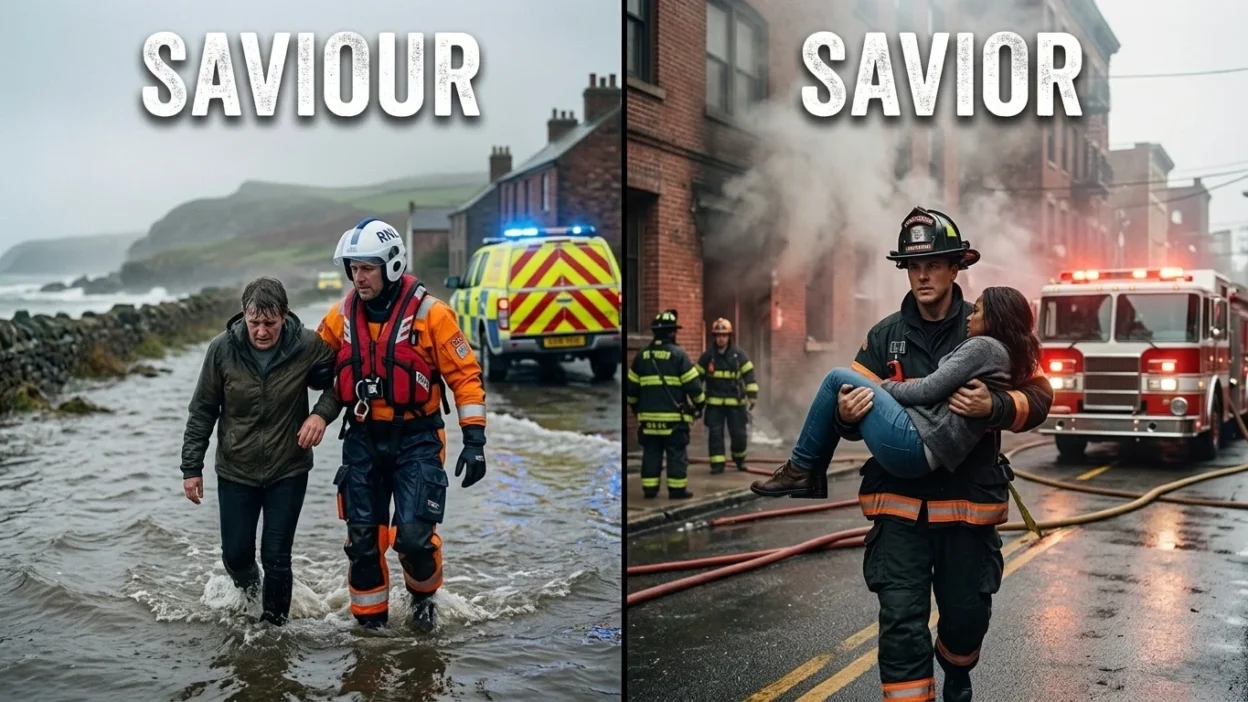
Have you ever wondered whether to write saviour or savior?
Both spellings are correct, and both refer to someone who saves another person from danger, harm, or difficulty.
The main difference is regional spelling: saviour is standard in British English, while savior is standard in American English.
Choosing the right spelling depends on your audience, location, and writing style.
If you are writing for a British, Australian, or other Commonwealth audience, saviour is generally the preferred form.
If you are writing for an American audience, savior is usually the better choice. Neither spelling is inherently more correct than the other.
In this guide, you will learn the meaning of both words, how to use them in sentences, why their spellings differ, and which version to choose in academic, professional, and everyday writing.
Quick Answer: Saviour or Savior?
Saviour and savior have the same meaning: a person who saves someone from danger, suffering, or difficulty. Saviour is the standard spelling in British English, while savior is the standard spelling in American English. Choose the spelling that matches your audience, and use it consistently throughout your writing.
Why Do People Confuse Saviour and Savior?
People often confuse these words because they look almost identical and have the same pronunciation and meaning. Only one letter separates them: the British spelling contains a u, while the American spelling does not.
This difference follows a familiar pattern in English spelling. British English often retains the letter u in certain words, whereas American English commonly omits it.
For example:
- Colour (British English) and color (American English)
- Favour (British English) and favor (American English)
- Neighbour (British English) and neighbor (American English)
- Saviour (British English) and savior (American English)
The confusion is understandable because both versions are accepted English spellings. The important point is not to memorize one as correct and the other as incorrect, but to understand which regional convention you are following.
What Does Saviour Mean?
Saviour is a noun that describes a person who saves, rescues, protects, or helps someone escape danger or difficulty. It can refer to someone who performs a literal rescue or someone whose actions provide important relief during a challenging situation.
The word can be used in several contexts:
- Everyday situations: A person who rescues someone from an accident.
- Personal difficulties: Someone who provides support during a difficult period.
- Work and business: A person or solution that prevents a project or company from failing.
- Religion: A person believed to deliver people from sin or spiritual danger.
Examples of Saviour in Sentences
- The firefighter was hailed as a saviour after rescuing the family.
- Her friend became her saviour during a difficult time.
- The new financial plan proved to be a saviour for the struggling business.
- In Christianity, Jesus is known as the Saviour.
The spelling saviour is especially common in British English and many other English-speaking regions that follow British spelling conventions.
What Does Savior Mean?
Savior is the American English spelling of the same noun. It describes someone who rescues, protects, or helps another person overcome a dangerous or difficult situation.
The meaning does not change when the letter u is removed. Only the regional spelling convention differs.
The word can describe a real-life rescuer, a helpful person, a solution to a serious problem, or a religious figure.
Examples of Savior in Sentences
- The lifeguard became a hero and savior to the struggling swimmer.
- Her teacher was a savior when she needed guidance.
- The emergency funding was a savior for the small company.
- Christians refer to Jesus as their Savior.
The spelling savior is standard in the United States and is the usual choice for American publications, school assignments, and business documents.
Saviour vs Savior: Comparison Table
| Feature | Saviour | Savior |
|---|---|---|
| Meaning | A person who saves or rescues | A person who saves or rescues |
| Spelling | Includes u | Omits u |
| Main usage | British English | American English |
| Pronunciation | Same | Same |
| Part of speech | Noun | Noun |
| Religious usage | Common, especially in British-style texts | Common in American-style texts |
| Correctness | Correct | Correct |
The key difference is spelling preference, not meaning, pronunciation, or grammatical function.
When Should You Use Saviour or Savior?
The best choice depends on the variety of English you are using and the people who will read your work.
When to Use Saviour
Use saviour when writing in British English or following a style guide that uses British spelling.
It is generally appropriate for:
- British school assignments and essays
- UK newspapers and magazines
- Publications following British spelling conventions
- Writing for audiences in countries that commonly follow British English
- Religious texts or discussions using British spelling
Example: The villagers considered the doctor their saviour after he treated the injured residents.
When to Use Savior
Use savior when writing in American English or following an American publication’s style guide.
It is generally appropriate for:
- American school assignments
- US newspapers and magazines
- American business communications
- Websites aimed primarily at US readers
- Religious writing following American spelling conventions
Example: The community considered the doctor their savior after he treated the injured residents.
What If You Are Writing for an International Audience?
Either spelling is understandable to most English readers. However, consistency is important.
If your article uses American spellings such as color, favor, and neighbor, use savior. If it uses British spellings such as colour, favour, and neighbour, use saviour.
If you are following a university, employer, publisher, or examination board’s style guide, follow its requirements.
Saviour or Savior: 12 Example Sentences
These examples show how both spellings work in everyday, professional, and religious contexts.
- The lifeguard became the saviour of the drowning swimmer.
- The lifeguard became the savior of the drowning swimmer.
- Her best friend was a saviour during her most difficult days.
- Her best friend was a savior during her most difficult days.
- The rescue team acted as the villagers’ saviour after the flood.
- The rescue team acted as the villagers’ savior after the flood.
- The new technology proved to be a saviour for the failing project.
- The new technology proved to be a savior for the failing project.
- Many Christians believe Jesus is the Saviour of humanity.
- Many Christians believe Jesus is the Savior of humanity.
- The volunteers became the saviours of the abandoned animals.
- The volunteers became the saviors of the abandoned animals.
Notice that the meaning stays the same in every pair. The difference is the spelling convention being followed.
Common Mistakes to Avoid
Although both spellings are correct, writers sometimes use them incorrectly in context.
1. Thinking One Spelling Is Always Wrong
A common mistake is assuming that saviour is incorrect because American English uses savior, or that savior is incorrect because British English uses saviour.
Both forms are accepted. Their appropriateness depends on the regional convention.
2. Mixing British and American Spellings
Using saviour in one paragraph and savior in another can make an article look inconsistent.
Better approach: Choose one variety of English and apply it throughout your document, except when quoting a source or reproducing an official title.
3. Changing the Spelling Without Considering the Audience
If you are writing for a US newspaper, savior is generally the appropriate choice. For a UK publication, saviour is generally preferred.
Always consider the publication’s audience and style guide.
4. Assuming the Words Have Different Meanings
There is no difference in their basic definitions. Both words describe someone who saves or rescues another person.
5. Confusing Saviour With Savior as a Proper Title
In religious writing, the word may be capitalized when it is used as a title or name for a divine figure, as in Jesus Christ, the Saviour or Jesus Christ, the Savior. Capitalization in general descriptive use depends on context and style.
What Is an Easy Memory Trick for Saviour vs Savior?
Use this simple trick:
- Saviour = British spelling: Remember the u in saviour and associate it with British spellings such as colour and favour.
- Savior = American spelling: Remember that American English often removes the u, as in color and favor.
You can also remember the rule this way: British English often keeps the “u”; American English often drops it.
This pattern applies to several words, although not every British and American spelling difference follows the same rule.
American vs British English: Which Spelling Is Preferred?
The main regional difference is straightforward.
In American English, savior is the standard spelling. American dictionaries, educational materials, and publications generally use this form.
In British English, saviour is the standard spelling. It is also widely used in other English-speaking regions that follow British spelling conventions.
Australian, Canadian, and other Commonwealth usage may vary according to local conventions and individual style guides, so it is best not to assume that every country follows exactly the same rule.
For example:
- American English: The paramedic was a savior to the injured driver.
- British English: The paramedic was a saviour to the injured driver.
Both sentences are grammatically correct. The difference is regional spelling preference.
What Are Some Similar Words to Saviour and Savior?
Several words have meanings related to saviour and savior, but they are not always interchangeable.
| Word | Meaning | Example |
|---|---|---|
| Rescuer | Someone who saves a person from danger | The rescuer pulled him from the water. |
| Hero | Someone admired for courage or achievements | The firefighter was celebrated as a hero. |
| Protector | Someone who keeps another person safe | She acted as a protector for the children. |
| Deliverer | Someone who frees another from danger or hardship | The leader was seen as a deliverer. |
| Guardian | Someone responsible for protecting another | The guardian kept the child safe. |
| Redeemer | Someone who brings redemption or release from wrongdoing or suffering | The story presents him as a redeemer. |
A rescuer usually refers to someone who performs a practical rescue. A hero is admired for courage or outstanding actions. A protector focuses on keeping someone safe, while redeemer often carries moral or religious meaning.
In Christianity, Saviour and Savior are both used as titles for Jesus Christ, depending on the spelling convention of the text.
Final Verdict: Saviour or Savior?
Both spellings are correct. The choice depends mainly on whether you are writing in British or American English.
Choose saviour for British English and publications that follow British spelling. Choose savior for American English and publications that follow American spelling.
Neither word has a different meaning, and neither is grammatically superior. The most important thing is to understand your audience and remain consistent throughout your writing.
If you are unsure which form to use, check the style guide of your school, workplace, publisher, or website. When no specific rule applies, choose one spelling convention and use it consistently.
Frequently Asked Questions
1. Is saviour or savior correct?
Both are correct. Saviour is the standard British English spelling, while savior is the standard American English spelling.
2. Is saviour British or American?
Saviour is primarily the British English spelling. It is also used in many other countries and publications that follow British spelling conventions.
3. Is savior American or British?
Savior is the standard American English spelling. It is commonly used in US books, articles, educational materials, and religious writing.
4. Do saviour and savior mean the same thing?
Yes. Both words mean a person who saves, rescues, or delivers someone from danger, suffering, or difficulty. Their pronunciation and basic meaning are the same.
5. How do you spell savior in the UK?
In the UK, the usual spelling is saviour, with a u before the final r.
6. How do you spell saviour in the United States?
In the United States, the usual spelling is savior, without the u.
7. Should Saviour or Savior be capitalized?
Capitalize the word when it is used as a title or name, particularly in religious contexts, such as Jesus the Savior. Lowercase it when it is used as an ordinary noun, such as the firefighter was a savior. Follow the relevant style guide when in doubt.
Remember This
- Saviour: British English spelling.
- Savior: American English spelling.
- Meaning: Identical in both forms.
- Pronunciation: The same.
- Best practice: Match your audience and stay consistent.
Conclusion
The difference between saviour and savior is simple: one spelling includes the letter u, while the other does not. Both describe someone who saves, rescues, or helps another person overcome danger or hardship. Neither spelling is wrong when used according to the appropriate regional convention.
Remember to use saviour in British English and savior in American English. If you are writing for an international audience, either form is generally understandable, but consistent spelling makes your writing clearer and more professional. Once you know your audience, choosing the correct version becomes easy.