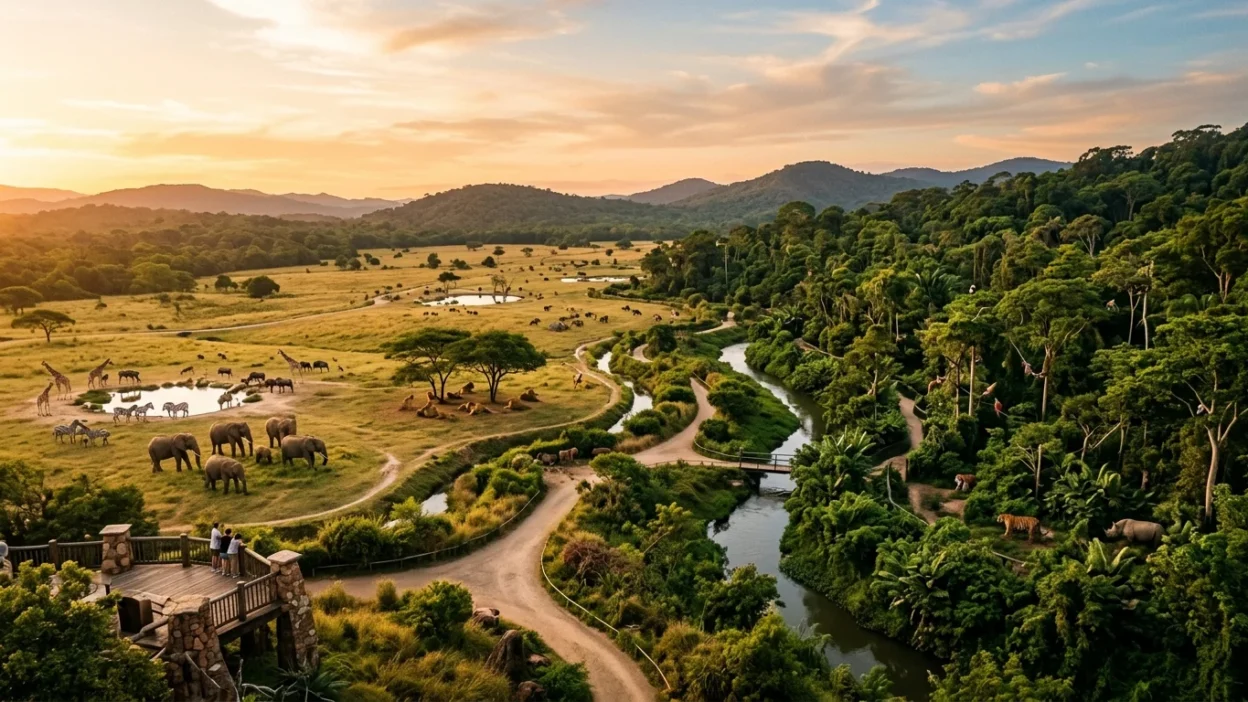
A zoo is a place where people can see, learn about, and sometimes interact with animals.
Zoos usually keep a variety of animals in carefully designed habitats and often have educational or conservation programs.
The word is common in everyday English, but writers may want different words to avoid repetition or describe a specific type of animal facility.
Learning synonyms for zoo can help students, ESL learners, writers, and content creators build stronger vocabulary.
However, not every alternative has exactly the same meaning.
Some words describe a traditional zoo, while others refer to wildlife parks, animal sanctuaries, safari parks, or historical collections of animals.
This guide explains 30 useful alternatives in simple English. Each word includes its meaning, an example sentence, and the situation where it works best.
What Does “Zoo” Mean?
Simple Meaning of Zoo
A zoo is a place where wild and sometimes domestic animals are kept for people to observe. Modern zoos may also focus on animal care, education, research, breeding programs, and wildlife conservation.
For example:
We visited the zoo to see the elephants, giraffes, and lions.
The word zoo is short, familiar, and widely used in everyday conversation.
Tone and Usage
“Zoo” is a neutral and common word. It works well in casual conversation, school assignments, travel writing, and general informational content.
The word can also be used informally to describe a place that is extremely busy or chaotic:
The shopping mall was a zoo during the holiday sale.
In this figurative use, “zoo” does not mean a place containing animals. It means a noisy, crowded, or disorderly situation.
30 Synonyms for Zoo
Some of the following terms are close synonyms, while others are related expressions used for particular types of animal facilities. Choosing the right word depends on the place you are describing.
1. Zoological Garden
Meaning: A formal term for a place where animals are kept and displayed for education, research, or public viewing.
Example: The city opened a new zoological garden with large habitats for endangered species.
Best usage: Formal writing, academic contexts, and official descriptions.
2. Zoological Park
Meaning: A park designed to house and display animals, usually in larger or more natural-looking spaces.
Example: The zoological park is home to hundreds of animals from different continents.
Best usage: Formal descriptions and names of large animal parks.
3. Animal Park
Meaning: A park where visitors can see different kinds of animals.
Example: The children enjoyed watching the deer at the animal park.
Best usage: Simple, general English and family-oriented content.
4. Wildlife Park
Meaning: A large area where wild animals are kept, often with more natural surroundings than traditional zoo enclosures.
Example: We spent the afternoon exploring the wildlife park and watching the giraffes.
Best usage: Nature, travel, tourism, and conservation writing.
5. Safari Park
Meaning: A large animal park where visitors may see animals in open or semi-open habitats, sometimes from a vehicle.
Example: The safari park allows visitors to drive through areas where zebras and antelopes roam.
Best usage: Describing large, open animal attractions.
6. Animal Sanctuary
Meaning: A place that provides protection and care for animals, especially rescued, neglected, or endangered animals.
Example: The animal sanctuary gave the rescued bears a safe place to live.
Best usage: Animal welfare and rescue contexts.
Note: An animal sanctuary is not always a true synonym for a zoo because its main purpose is usually protection rather than public display.
7. Wildlife Sanctuary
Meaning: A protected area where wild animals can live safely in a natural or semi-natural environment.
Example: The wildlife sanctuary protects several rare species from hunting and habitat loss.
Best usage: Conservation, environmental, and nature-related writing.
8. Menagerie
Meaning: A collection of wild or unusual animals, historically often kept for public viewing.
Example: The king’s menagerie included exotic animals brought from distant lands.
Best usage: Historical, literary, and descriptive writing.
Note: “Menagerie” often sounds old-fashioned or literary.
9. Animal Collection
Meaning: A group of animals kept together for study, education, exhibition, or conservation.
Example: The museum’s animal collection contains several rare species.
Best usage: Academic, museum, research, and educational contexts.
10. Wildlife Center
Meaning: A facility that cares for, studies, rehabilitates, or educates people about wildlife.
Example: The wildlife center treats injured birds before releasing them into the wild.
Best usage: Wildlife rehabilitation, education, and conservation.
11. Animal Center
Meaning: A general facility that provides care, education, rehabilitation, or services related to animals.
Example: The local animal center cares for rescued animals until they find suitable homes.
Best usage: General animal-care contexts.
12. Conservation Center
Meaning: A place focused on protecting animals, plants, habitats, or endangered species.
Example: The conservation center has a breeding program for endangered turtles.
Best usage: Environmental, scientific, and conservation writing.
13. Conservation Park
Meaning: A protected park that combines wildlife conservation with opportunities for people to observe animals.
Example: The conservation park provides a safe habitat for several threatened species.
Best usage: Formal conservation and tourism writing.
14. Animal Exhibit
Meaning: A specific display or area where animals are presented for public viewing.
Example: The new penguin animal exhibit attracted hundreds of visitors.
Best usage: Referring to one section or display rather than an entire zoo.
15. Wildlife Exhibit
Meaning: A display featuring wild animals, often designed for education and public observation.
Example: The wildlife exhibit teaches visitors about animals native to the region.
Best usage: Museums, educational centers, zoos, and exhibitions.
16. Animal Exhibition
Meaning: A public presentation or display of animals.
Example: The animal exhibition introduced visitors to rare species from around the world.
Best usage: Formal, educational, or event-related writing.
17. Zoological Collection
Meaning: A collection of animals maintained for scientific, educational, conservation, or display purposes.
Example: The institution has an important zoological collection used for research.
Best usage: Academic and scientific writing.
18. Wildlife Facility
Meaning: A general term for a place designed to house, protect, study, or care for wild animals.
Example: The wildlife facility specializes in caring for injured birds of prey.
Best usage: Formal or professional writing.
19. Animal Facility
Meaning: A general place where animals are housed, cared for, studied, or managed.
Example: The new animal facility has modern spaces for veterinary care.
Best usage: Professional, scientific, and institutional contexts.
20. Zoological Facility
Meaning: A formal term for an institution or place that keeps and manages animals.
Example: The zoological facility follows strict standards for animal welfare.
Best usage: Professional, academic, legal, or technical writing.
21. Wildlife Refuge
Meaning: A protected area created to provide a safe habitat for wild animals.
Example: The wildlife refuge protects thousands of migratory birds each year.
Best usage: Conservation and environmental writing.
Note: A wildlife refuge is usually a natural protected area rather than a traditional zoo.
22. Animal Refuge
Meaning: A protected place where animals can receive safety and care.
Example: The animal refuge provides shelter for animals rescued from dangerous conditions.
Best usage: Rescue, welfare, and protection contexts.
23. Nature Park
Meaning: A protected or recreational area where visitors can experience nature and sometimes observe wildlife.
Example: Families visit the nature park to see native birds and small mammals.
Best usage: Travel, outdoor recreation, and nature writing.
24. Wildlife Reserve
Meaning: A protected area where wildlife is preserved and allowed to live with limited human disturbance.
Example: The wildlife reserve is home to elephants, buffalo, and several rare birds.
Best usage: Conservation, geography, tourism, and environmental writing.
25. Animal Reserve
Meaning: A protected area established to preserve and care for animals.
Example: The animal reserve gives endangered animals a protected environment.
Best usage: General conservation writing.
26. Fauna Park
Meaning: A park devoted to displaying or protecting animal life.
Example: The fauna park attracts visitors interested in the region’s diverse animal species.
Best usage: Formal, specialized, or international contexts.
Note: “Fauna” means the animals of a particular region or environment.
27. Zoological Center
Meaning: A center concerned with animals, often combining education, research, conservation, and public activities.
Example: The zoological center offers educational programs about endangered species.
Best usage: Formal and educational contexts.
28. Animal Attraction
Meaning: A tourist or recreational attraction where visitors can see animals.
Example: The city’s popular animal attraction welcomes thousands of families every summer.
Best usage: Tourism and travel content.
29. Wildlife Attraction
Meaning: A place or experience that allows visitors to see or learn about wildlife.
Example: The wildlife attraction is famous for its large collection of native birds.
Best usage: Travel guides, tourism websites, and promotional writing.
30. Zoological Parkland
Meaning: A park-like area designed around the keeping, protection, or display of animals.
Example: The new zoological parkland provides spacious habitats for large mammals.
Best usage: Descriptive or formal writing, especially when emphasizing a large outdoor setting.
Comparison Guide: Which Synonym for Zoo Should You Use?
Not all alternatives are interchangeable. The best word depends on the purpose, size, environment, and role of the facility.
| Word or Phrase | Main Meaning | Tone | Best Used For |
|---|---|---|---|
| Zoo | Place where animals are kept for viewing | Neutral | Everyday English |
| Zoological garden | Formal animal garden | Formal | Academic and official writing |
| Zoological park | Large animal park | Formal | Large zoos and institutions |
| Animal park | Park containing animals | Simple | General and family content |
| Wildlife park | Animals in natural-style surroundings | Neutral | Travel and nature writing |
| Safari park | Open animal park | Neutral | Vehicle-based wildlife experiences |
| Animal sanctuary | Safe place for rescued animals | Caring | Animal welfare |
| Wildlife sanctuary | Protected wildlife area | Formal | Conservation |
| Menagerie | Collection of unusual animals | Literary/historical | History and literature |
| Wildlife center | Facility focused on wildlife | Neutral | Rehabilitation and education |
| Conservation center | Place focused on protecting species | Formal | Environmental writing |
| Animal exhibit | One animal display | Neutral | A section of a zoo |
| Wildlife refuge | Protected wildlife habitat | Formal | Environmental topics |
| Nature park | Natural recreational area | Neutral | Travel and outdoor activities |
| Wildlife reserve | Protected area for wildlife | Formal | Conservation and geography |
Zoo vs. Zoological Garden
Zoo is the everyday word.
Zoological garden is more formal and often appears in official names or institutional writing.
For example:
- We went to the zoo on Saturday.
- The city’s zoological garden has an extensive conservation program.
Use “zoo” when you want simple, natural English. Use “zoological garden” when the context is more formal.
Zoo vs. Wildlife Park
A zoo generally keeps animals in purpose-built enclosures. A wildlife park often gives animals more space and may recreate natural environments.
However, the difference is not absolute. Some modern zoos have very large naturalistic habitats, while some wildlife parks operate much like traditional zoos.
For travel writing, “wildlife park” can be useful when the setting emphasizes open spaces and natural surroundings.
Zoo vs. Safari Park
A safari park is usually designed around the experience of seeing animals in larger, open areas. Visitors may travel through the park by car, bus, or another vehicle.
A traditional zoo generally involves walking between separate animal habitats.
Therefore, “safari park” is a better choice when the attraction specifically offers a safari-style experience.
Zoo vs. Animal Sanctuary
These terms have different purposes.
A zoo generally keeps animals for public education, conservation, research, and viewing.
An animal sanctuary primarily provides protection and long-term care for animals that need a safe environment.
For example, a rescued tiger living permanently in a sanctuary is not necessarily part of a zoo collection.
Zoo vs. Wildlife Sanctuary
A wildlife sanctuary is usually a protected area where animals can live with fewer human disturbances. It may cover a large natural habitat.
A zoo is normally a managed facility designed for animal care, education, research, conservation, and public viewing.
If you are talking about a large protected forest, wetland, or grassland, “wildlife sanctuary” is usually more accurate than “zoo.”
How to Choose the Right Synonym
Choosing the right synonym is easier when you first identify what you want to emphasize.
For Everyday English
Use:
- Zoo
- Animal park
- Wildlife park
- Animal attraction
These words are easy to understand and sound natural in conversation.
Example:
We took the children to the animal park during their school holiday.
For Formal or Academic Writing
Use:
- Zoological garden
- Zoological park
- Zoological facility
- Zoological center
- Zoological collection
These expressions sound more professional and work well in essays, reports, and educational material.
Example:
The zoological facility participates in international wildlife conservation programs.
For Conservation Topics
Use:
- Wildlife sanctuary
- Wildlife reserve
- Wildlife refuge
- Conservation center
- Conservation park
These terms are appropriate when the focus is protecting animals or habitats.
Example:
The wildlife reserve provides a protected habitat for endangered species.
For Animal Rescue and Welfare
Use:
- Animal sanctuary
- Animal refuge
- Wildlife center
- Animal facility
These words work best when animals are being rescued, rehabilitated, treated, or protected.
Example:
The wildlife center rehabilitates injured animals before returning them to nature.
For Tourism Writing
Use:
- Wildlife park
- Safari park
- Nature park
- Wildlife attraction
- Animal attraction
These terms can make travel articles more descriptive and specific.
Example:
The safari park is one of the region’s most popular family attractions.
For Historical or Literary Writing
Use:
- Menagerie
- Animal collection
- Zoological collection
“Menagerie” is especially useful when discussing historical collections of exotic animals.
Example:
The royal menagerie contained animals brought from several distant countries.
Common Phrases with “Zoo”
Understanding common phrases can help ESL learners use the word naturally.
Zoo Animals
This refers to animals kept in a zoo.
Children can learn about many zoo animals during the educational tour.
Zoo Visitor
A person who visits a zoo.
Every zoo visitor must follow the animal-safety rules.
Zoo Keeper
A person who cares for animals in a zoo.
The zookeeper prepared food for the elephants.
Zoo Exhibit
A specific area where animals are displayed.
The new zoo exhibit focuses on rainforest species.
Zoo Habitat
An enclosure or environment designed for animals.
The zoo created a larger habitat for its gorillas.
Zoo Conservation Program
A program designed to help protect endangered species.
The zoo’s conservation program supports breeding efforts for rare animals.
Why Using Different Words Matters
Using synonyms can make your writing clearer and more interesting, but replacing a word simply for the sake of variety is not always a good idea.
For example, imagine writing:
We visited a zoo. The zoological garden was crowded. The animal facility had many visitors. The wildlife attraction was exciting.
This may sound unnatural because all four expressions are being used for the same place without a clear reason.
A better approach is to choose the word that matches the exact meaning.
For example:
We visited a large zoo on Saturday. The wildlife park had spacious habitats for several species, while a nearby conservation center explained how endangered animals are protected.
Here, each term adds a slightly different meaning.
Tips for ESL Learners
Start with “Zoo”
If you are learning English, zoo should be your first choice. It is simple, common, and understood almost everywhere.
Once you are comfortable with it, learn more specific terms such as “wildlife park,” “safari park,” and “animal sanctuary.”
Do Not Treat Every Related Word as an Exact Synonym
Words such as “wildlife reserve” and “animal sanctuary” are related to zoos, but they do not always mean the same thing.
A synonym should fit the context.
Learn Words in Phrases
Instead of memorizing isolated words, learn useful combinations:
- visit a zoo
- go to the zoo
- zoo animals
- zoo keeper
- wildlife park
- safari park
- animal sanctuary
- wildlife reserve
- conservation center
This makes it easier to use new vocabulary naturally.
Think About the Purpose
Ask yourself what the place actually does.
Does it display animals to visitors? Zoo may be best.
Does it protect rescued animals? Animal sanctuary may be better.
Does it protect a large natural habitat? Wildlife reserve or wildlife sanctuary may be more accurate.
Does it offer a vehicle-based wildlife experience? Safari park could be the right choice.
Frequently Asked Questions About Synonyms for Zoo
What is the best synonym for zoo?
The best general alternative is zoological garden or zoological park. However, “wildlife park” may be better when the animals live in larger, natural-style habitats.
What is another word for zoo in simple English?
Animal park is a simple alternative. “Wildlife park” is also easy to understand and commonly used.
Is zoological garden the same as zoo?
Yes, in many contexts, “zoological garden” means a zoo. It is a more formal expression and is sometimes used in official names.
Is wildlife sanctuary a synonym for zoo?
Not exactly. A wildlife sanctuary is primarily a protected place for wild animals. It may not be designed for public animal displays in the way a zoo is.
What is a synonym for zoo in formal writing?
Good formal choices include zoological garden, zoological park, zoological facility, and zoological center, depending on the context.
What is a historical synonym for zoo?
Menagerie is a useful historical or literary term for a collection of wild or exotic animals.
What is a synonym for zoo for travel writing?
“Wildlife park,” “safari park,” “nature park,” and “wildlife attraction” can work well, depending on the type of destination.
Can I use animal sanctuary instead of zoo?
Only when the place is actually focused on rescuing and protecting animals. A sanctuary and a zoo can have different purposes.
Final Takeaways
There are many useful synonyms for zoo, but they are not all exact replacements. The simplest and most natural word remains zoo, while terms such as zoological garden and zoological park provide more formal alternatives.
For nature and tourism writing, wildlife park, safari park, and nature park can provide more specific descriptions. For conservation, terms such as wildlife sanctuary, wildlife refuge, wildlife reserve, and conservation center are often more appropriate.
The key is to choose vocabulary based on meaning, purpose, and tone. Instead of changing “zoo” every time it appears, use a different term only when it adds a useful distinction. This approach makes your writing more accurate, natural, and engaging.

Liam Henry is a content author at Synonymed, specializing in vocabulary enrichment and synonym guides. He creates clear, engaging resources that help learners improve English word knowledge and language fluency.