The word ugly is commonly used in English to describe something that is unpleasant to look at or lacking beauty.
However, it can also describe situations, behavior, emotions, or events that are unpleasant, harmful, or difficult.
Because the word has several meanings, using more specific alternatives can make your writing clearer and more expressive.
Learning different synonyms for ugly helps students, ESL learners, writers, and content creators build a stronger vocabulary.
Each synonym has its own tone and level of intensity. Some words are suitable for describing appearance, while others are better for discussing personality, situations, or objects.
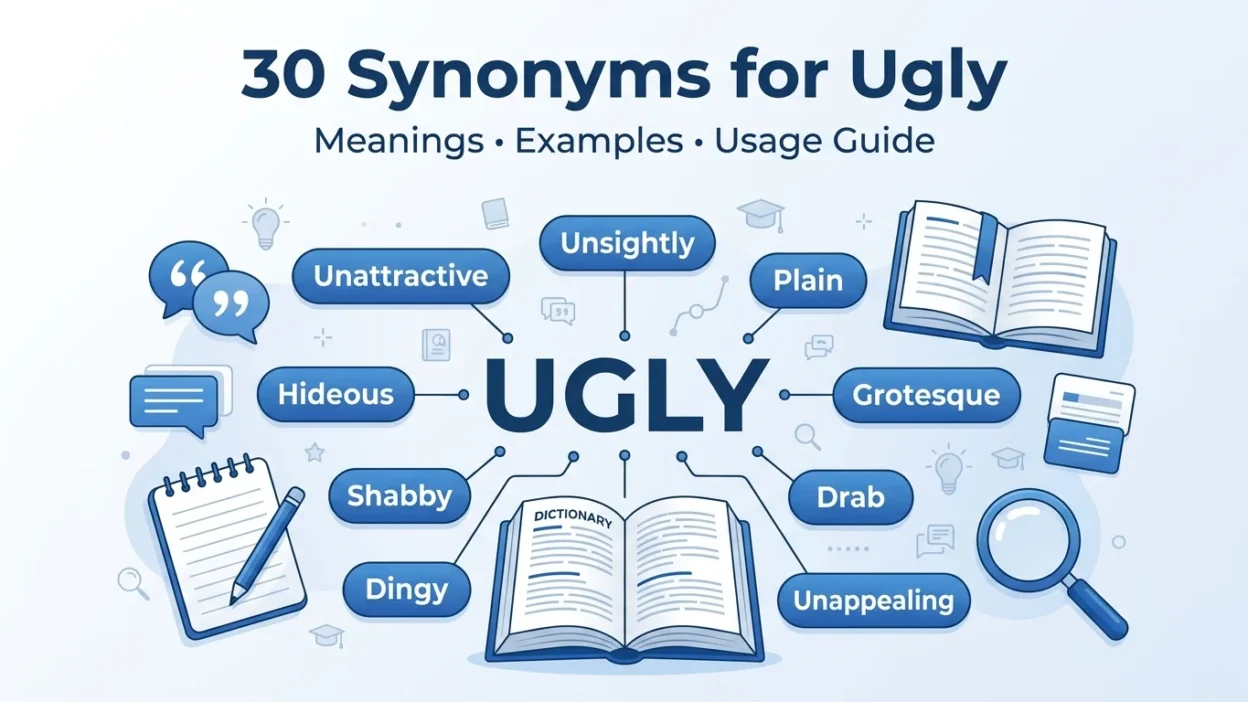
In this guide, you’ll discover 30 useful synonyms for ugly, along with their meanings, example sentences, and the best situations for using them.
What Does “Ugly” Mean?
The word ugly means unpleasant, unattractive, offensive, or not pleasing to look at or experience.
It can describe a person’s appearance, an object, a place, behavior, or even a difficult situation.
Common Examples
- An ugly building
- An ugly argument
- Ugly weather
- An ugly stain
- Ugly behavior
Since “ugly” has several meanings, choosing the right synonym helps make your message more accurate and natural.
30 Synonyms for Ugly
1. Unattractive
Meaning: Not pleasing to look at.
Example Sentence: The old building looked unattractive after years of neglect.
Best Usage Context: General appearance.
2. Unsightly
Meaning: Ugly in appearance.
Example Sentence: The construction site created an unsightly view.
Best Usage Context: Places and objects.
3. Plain
Meaning: Simple and not especially attractive.
Example Sentence: She wore a plain dress.
Best Usage Context: Neutral descriptions.
4. Homely
Meaning: Not physically attractive (mainly British English).
Example Sentence: The cottage looked homely but comfortable.
Best Usage Context: Mild descriptions.
5. Hideous
Meaning: Extremely ugly.
Example Sentence: The abandoned house looked hideous.
Best Usage Context: Strong negative descriptions.
6. Horrid
Meaning: Very unpleasant or ugly.
Example Sentence: The room had horrid wallpaper.
Best Usage Context: Informal speech.
7. Ghastly
Meaning: Shockingly unattractive.
Example Sentence: They painted the walls a ghastly color.
Best Usage Context: Strong criticism.
8. Grotesque
Meaning: Very strange and ugly.
Example Sentence: The sculpture had a grotesque appearance.
Best Usage Context: Art and creative writing.
9. Repulsive
Meaning: Causing strong dislike.
Example Sentence: The smell was repulsive.
Best Usage Context: Appearance, smell, or behavior.
10. Revolting
Meaning: Extremely unpleasant.
Example Sentence: The kitchen was revolting after the flood.
Best Usage Context: Strong negative reactions.
11. Disgusting
Meaning: Causing disgust.
Example Sentence: The garbage created a disgusting smell.
Best Usage Context: Hygiene and conditions.
12. Offensive
Meaning: Unpleasant or insulting.
Example Sentence: His offensive behavior upset everyone.
Best Usage Context: Actions and language.
13. Nasty
Meaning: Very unpleasant.
Example Sentence: They experienced nasty weather during the trip.
Best Usage Context: Everyday conversation.
14. Awful
Meaning: Very bad or unpleasant.
Example Sentence: The abandoned factory looked awful.
Best Usage Context: General descriptions.
15. Dreadful
Meaning: Extremely bad.
Example Sentence: They had dreadful luck that day.
Best Usage Context: Situations and events.
16. Foul
Meaning: Extremely unpleasant.
Example Sentence: A foul odor filled the room.
Best Usage Context: Smells and language.
17. Deformed
Meaning: Misshapen or irregular in form.
Example Sentence: The tree grew in a deformed shape.
Best Usage Context: Shapes and objects.
18. Misshapen
Meaning: Having an unusual or uneven shape.
Example Sentence: The vase became misshapen in the heat.
Best Usage Context: Objects and physical forms.
19. Scruffy
Meaning: Untidy and unattractive.
Example Sentence: He wore scruffy clothes.
Best Usage Context: Clothing and appearance.
20. Shabby
Meaning: Old, worn, and unattractive.
Example Sentence: They lived in a shabby apartment.
Best Usage Context: Buildings and clothing.
21. Worn-Out
Meaning: Damaged from heavy use.
Example Sentence: The worn-out furniture looked unattractive.
Best UsageContext: Furniture and belongings.
22. Ragged
Meaning: Torn and untidy.
Example Sentence: The old flag looked ragged.
Best Usage Context: Clothing and fabric.
23. Dingy
Meaning: Dark, dirty, and unattractive.
Example Sentence: They stayed in a dingy hotel room.
Best Usage Context: Rooms and buildings.
24. Dreary
Meaning: Dull and depressing.
Example Sentence: It was a dreary winter afternoon.
Best Usage Context: Weather and places.
25. Bleak
Meaning: Cold, empty, or unattractive.
Example Sentence: The landscape looked bleak after the storm.
Best Usage Context: Nature and emotions.
26. Drab
Meaning: Lacking color or excitement.
Example Sentence: The office had a drab interior.
Best Usage Context: Decoration and clothing.
27. Gloomy
Meaning: Dark and depressing.
Example Sentence: The gloomy street looked deserted.
Best Usage Context: Places and mood.
28. Unpleasant
Meaning: Not enjoyable or appealing.
Example Sentence: They had an unpleasant experience.
Best Usage Context: General situations.
29. Distasteful
Meaning: Offensive or unpleasant.
Example Sentence: His comments were distasteful.
Best Usage Context: Behavior and opinions.
30. Unappealing
Meaning: Not attractive or interesting.
Example Sentence: The meal looked unappealing.
Best Usage Context: Food, appearance, and design.
Comparison Guide: When to Use Different Synonyms
| Synonym | Best For | Tone |
|---|---|---|
| Unattractive | General appearance | Neutral |
| Unsightly | Buildings and places | Formal |
| Plain | Simple appearance | Neutral |
| Hideous | Extremely ugly | Strong |
| Grotesque | Strange appearance | Descriptive |
| Shabby | Old objects and buildings | Neutral |
| Drab | Lack of color | Mild |
| Dingy | Dirty places | Descriptive |
| Repulsive | Strong dislike | Intense |
| Unappealing | Mild criticism | Polite |
How to Choose the Right Synonym
For Physical Appearance
Use:
- Unattractive
- Plain
- Unsightly
- Hideous
- Homely
These words describe how a person, object, or place looks.
For Buildings and Places
Use:
- Shabby
- Dingy
- Dreary
- Drab
- Bleak
These words describe environments that lack beauty or comfort.
For Strong Negative Opinions
Use:
- Repulsive
- Revolting
- Disgusting
- Ghastly
- Horrid
These words express intense dislike.
For Behavior or Situations
Use:
- Offensive
- Distasteful
- Nasty
- Awful
- Dreadful
These synonyms describe unpleasant actions, events, or experiences.
For Mild Descriptions
Use:
- Plain
- Unappealing
- Unpleasant
- Scruffy
These words sound softer and more polite.
Common Mistakes When Using Synonyms for Ugly
Using Harsh Words for Minor Problems
Words like “hideous” or “revolting” are much stronger than “plain” or “unattractive.”
Describing People Too Harshly
Some synonyms can sound offensive when used to describe someone’s appearance. Consider using more respectful alternatives such as “plain” or “unattractive” when appropriate.
Ignoring Context
A word like “dingy” works well for rooms but not for describing people.
Overusing Strong Vocabulary
Using dramatic words repeatedly can make your writing sound exaggerated.
Why Learning Synonyms for Ugly Matters
Expanding your vocabulary helps you:
- Avoid repeating the same words
- Write with greater precision
- Improve essays and creative writing
- Express ideas with the right tone
- Build stronger English communication skills
- Sound more fluent and natural
Knowing multiple synonyms for ugly allows you to describe appearance, situations, and emotions more accurately.
Conclusion
The word ugly is useful, but English offers many alternatives that better match different situations. Whether you choose unattractive, plain, unsightly, hideous, shabby, or distasteful, each synonym has its own meaning and level of intensity.
By learning these 30 synonyms for ugly, students, ESL learners, writers, and content creators can expand their vocabulary, improve their writing, and communicate more effectively